After teaching more than 12,000 hours of Bikram yoga across studios in Bali, Beijing, Dubai, Moscow, London, Sydney, and Manila watching thousands of practitioners set up their mats in rooms at 40 degrees Celsius, the mat question has a clear answer. The specific brand matters less than most content suggests. The specific features matter a great deal.

This best mat for bikram yoga guide covers what to actually look for in a mat for Bikram practice, why the mat towel is not optional for most practitioners, how the Bali natural heat environment differs from electric-heated studios in its mat requirements, and the price tiers where each category of feature becomes available.
For Bikram yoga, a mat needs to do two things that most standard yoga mats cannot: grip when wet and maintain that grip throughout a 90-minute session. Two approaches work: natural rubber mats (Jade Harmony, Manduka eKO) which increase grip as they get wetter, and polyurethane-topped mats (Manduka GRP Adapt, Liforme) which absorb moisture. Budget option: any standard mat plus a non-slip mat towel. The mat towel is non-optional for most practitioners regardless of which mat they own.
Why Bikram Yoga Has Specific Mat Requirements
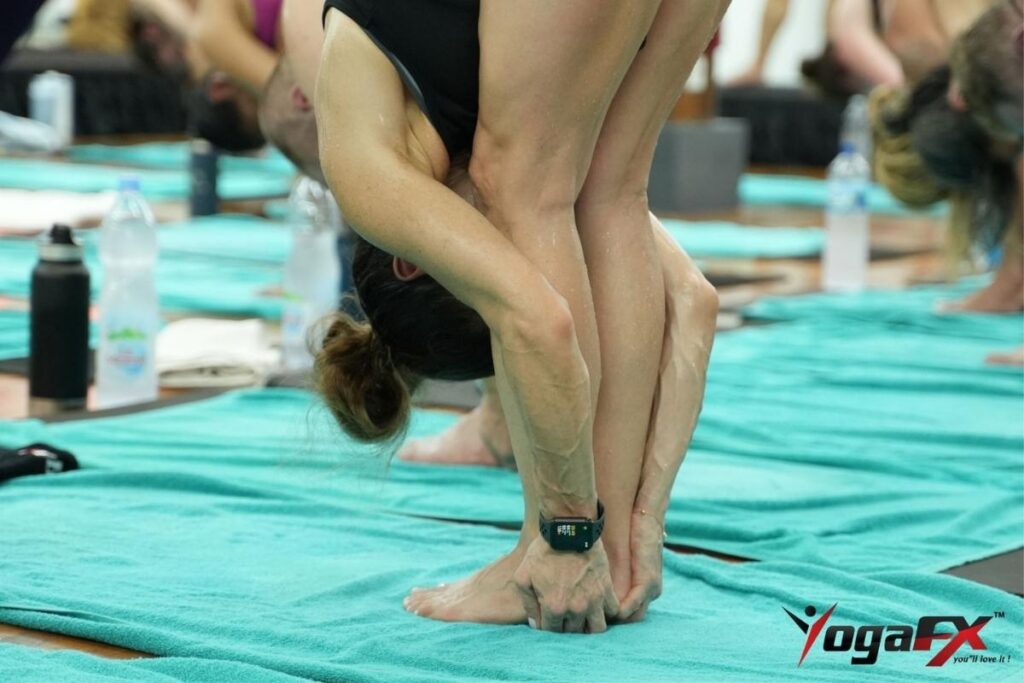
A standard PVC yoga mat used for room-temperature Vinyasa or Hatha yoga becomes actively dangerous in a Bikram class within 10 to 15 minutes. The mechanism: standard closed-cell PVC mats rely on surface texture for grip. When sweat saturates the texture, the mat becomes slippery. In a Bikram class where the standing series demands single-leg balance, deep squats, and forward folds at elevated heart rate, a slippery mat is a fall risk.
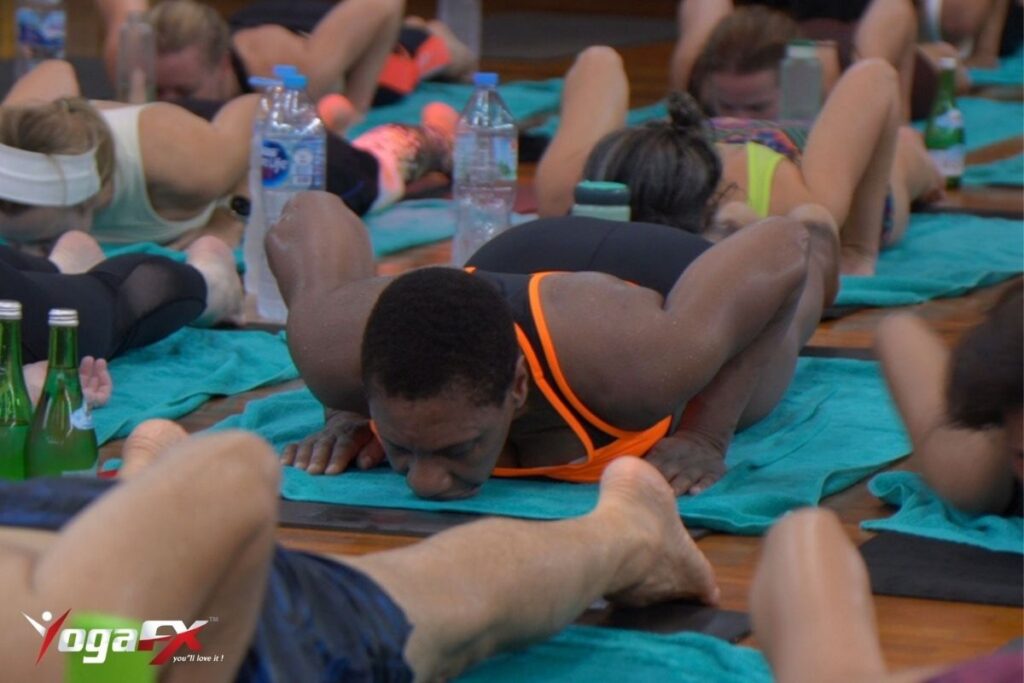
The Bikram sequence has specific demands on mat performance that differ from other yoga styles: 90 minutes of continuous sweating (most mats are only tested for 60-minute sessions), static standing balance postures (Balancing Stick, Standing Head to Knee, Standing Bow) that require absolute foot grip with no micro-slipping, and floor series prone postures (Cobra, Locust, Bow) that require the mat to not bunch or slide on the studio floor.
The Single Most Important Piece of Equipment: The Mat Towel
Before discussing mats, this needs to be said directly: the mat towel is more important than the mat. Most practitioners who are struggling with slipping in Bikram yoga are slipping because they do not have a mat towel, or they have a poor quality one that moves on the mat surface.
A mat towel is a large microfibre or cotton-blend towel that covers the entire mat surface. In humid heat conditions, natural heat like YogaFX Bali, or properly specified Bikram studios, the mat towel becomes grippier as it absorbs sweat, not slipperier. The more you sweat, the more grip the towel provides. This is the opposite of what standard mats do.
What to look for in a mat towel:
- Full-mat coverage: 183cm by 61cm minimum, the towel must cover the entire mat without bunching
- Non-slip backing: silicone grip dots or similar texture that anchors the towel to the mat beneath
- Absorbency: microfibre towels absorb more sweat than cotton at equivalent weight
- Machine washable: laundered after every class, durability under frequent washing matters
The Yogitoes Skidless Mat Towel is the most widely used at established Bikram studios globally. The Manduka Equa mat towel and Gaiam Yoga Mat Towel are common alternatives at different price points. At YogaFX Bali, the mat towel is essential from the first class, the natural humid heat produces more sweating from earlier in the session than dry electric-heated studios.
Mat Material Types: What Each Does at 40 Degrees
| Material | Wet Grip Behaviour | Heat Performance | Best For |
|---|---|---|---|
| Natural rubber (open-cell) | Grip increases as it gets wetter, the more you sweat, the more grip | Excellent, no degradation at 40°C. Slight off-gassing odour initially. | Practitioners who sweat heavily, warm climates like Bali |
| Polyurethane (PU) top layer | Absorbs moisture rather than repelling it, maintains grip without needing a towel for many practitioners | Excellent, specifically designed for heated practice | Practitioners wanting a mat-only solution without a towel |
| PVC (closed-cell) | Grip decreases when wet, slippery after 15 to 20 minutes of sweating without a towel | Adequate, does not degrade but does not improve with heat either | Budget option only when paired with a mat towel |
| Cork | Naturally antimicrobial, grip improves slightly when wet | Good, naturally heat-resistant. Heavier than rubber or PVC. | Practitioners with latex allergies, sustainability priority |
| TPE (thermoplastic elastomer) | Moderate grip when wet, better than PVC, not as good as rubber | Good, designed to be heat-stable | Budget practitioners wanting rubber-like performance |
Thickness: What Works for the Bikram Sequence
The Bikram sequence involves extended static standing postures, Awkward Pose, Triangle, the balance series, that require stable ground contact rather than cushioned instability. It also involves kneeling postures (Fixed Firm Pose) and seated floor work where joint protection matters.
- 3mm or less: insufficient knee and ankle cushioning for Fixed Firm Pose, kneeling, and seated transitions. Not recommended for consistent Bikram practice.
- 4mm to 5mm: the practical optimum. Stable enough for balance postures, cushioned enough for kneeling. The Manduka GRP Adapt (5mm), Jade Harmony (5mm), and Manduka eKO (5mm) all sit in this range.
- 6mm: the Manduka PRO is 6mm and is the most joint-protective mat in this category. Slightly less stable for single-leg balance postures than 5mm options but preferred by practitioners with knee issues.
- 8mm or more: too thick for Bikram. The instability of thick foam reduces balance posture performance and the extra material retains heat in ways that are uncomfortable in a 40-degree room.
Mat Size: Bikram Requires Full Coverage
The Bikram standing series requires wide-stance postures: Triangle Pose with feet 4 feet apart, Standing Separate Leg Stretching, and the entry into several balance postures where practitioners step forward significantly. Minimum dimensions for Bikram yoga: 183cm by 61cm (standard size). Taller practitioners (180cm or above) benefit from the extra-long 215cm versions offered by Manduka and Jade. The mat towel must match the mat dimensions, a towel shorter than the mat leaves exposed PVC at the foot end that will be slippery.
The Humidity Factor: Bali vs Electric-Heated Studios
In dry electric-heated studios (15 to 25 percent humidity), sweat evaporates from the mat surface relatively quickly. A natural rubber mat may need light moisture activation (a few drops of water at the start) to activate its grip before significant sweating begins.
In natural humid heat at YogaFX Bali (ambient humidity above 70 percent), sweat does not evaporate from the mat surface as quickly. The mat becomes saturated with moisture faster and stays saturated throughout the session.
In this environment: natural rubber mats grip extremely well from the first few minutes with no activation needed; budget PVC mats become slippery faster than in dry heat because sweat pools on the surface rather than evaporating; and cork mats perform particularly well because the natural cork texture maintains grip even when thoroughly saturated.
The mat towel is essential from class 1 in the Bali environment regardless of mat material.
Buying Guide by Budget
| Budget | Approach | What to Buy |
|---|---|---|
| Under USD 50 | Standard mat plus quality towel | Any stable 4mm to 5mm PVC or TPE mat plus a quality non-slip microfibre mat towel. The towel is the non-negotiable item in this budget tier. |
| USD 50 to 100 | Better mat plus towel, or entry natural rubber | Manduka eKO Lite (4mm natural rubber, around USD 72) or Jade Voyager (foldable travel, around USD 80). Still use a towel. |
| USD 100 to 150 | Quality natural rubber or dedicated hot yoga mat | Jade Harmony 5mm (around USD 110), Manduka eKO 5mm (around USD 88 to 108). Both grip well when wet without requiring a towel, though a towel remains useful for heavy sweaters. |
| USD 150 to 200 | Premium hot yoga mat, towel optional | Manduka GRP Adapt 5mm (around USD 138, PU top layer absorbs moisture), Manduka PRO 6mm (around USD 120 to 138, pairs with towel for hot yoga). The GRP is specifically designed for heated practice without a towel. |
| USD 200 and above | Top-tier performance | Liforme Classic (around USD 200 plus, eco-PU surface, AlignForMe guides). Excellent wet grip. The alignment guides are useful for learning Bikram postures in your first months of practice. |
What Practitioners at YogaFX Bali Actually Use
Across thousands of practitioners observed in daily classes at the Seminyak and Canggu studios, the practical pattern is clear. First-time visitors and short-stay practitioners most commonly arrive with a standard PVC mat and discover the mat towel necessity by their second class. Long-term practitioners and regular Bali residents overwhelmingly use natural rubber mats, Jade and Manduka eKO are the most common brands, with or without a mat towel depending on their individual sweat output.
Teacher training candidates specifically benefit from a mat with durable joint cushioning. The 6-day intensive involves multiple sessions per day with extensive kneeling in posture clinics and teaching practice. A 5mm to 6mm mat reduces the cumulative knee stress of this volume significantly.
The most consistent recommendation across all instructor experience: invest in the mat towel first. A USD 30 mat towel on a USD 40 mat performs better in a Bikram class than a USD 200 mat without a towel.
Mat Care for Bikram Practice
- After every class: wipe down with a yoga mat cleaner spray or diluted tea tree oil and water. Allow to air dry before rolling, rolling a damp mat traps moisture and promotes bacterial growth.
- Weekly deep clean: for natural rubber mats, a damp cloth with mild soap. Do not submerge natural rubber mats in water, this degrades the rubber over time. For PU-topped mats, follow manufacturer guidelines.
- Mat towels: machine wash after every use. Do not use fabric softener, it reduces the grip of microfibre towels. Air dry or low heat tumble dry.
- Storage: unroll and store flat or loosely rolled in a well-ventilated location. Tight rolling of a damp mat accelerates material degradation and odour development.
FAQ
Do I need a special mat for Bikram yoga?
Yes. Standard closed-cell PVC mats become slippery within 15 to 20 minutes of sweating in a 40-degree Celsius class, creating a fall risk during balance postures. You need either a mat made from natural rubber or polyurethane (which grips when wet) or a standard mat paired with a non-slip mat towel. The mat towel is the most important equipment purchase for Bikram practice regardless of which mat you own.
What is the best mat for Bikram yoga in 2026?
For no-towel performance: the Manduka GRP Adapt (5mm, around USD 138) with a polyurethane top layer that absorbs moisture, or the Jade Harmony (5mm, around USD 110) with natural rubber that grips better as it gets wetter. For a budget option: any stable 4mm to 5mm mat plus a quality non-slip microfibre mat towel (under USD 50 combined). The Liforme Classic (around USD 200 plus) adds alignment guides useful for learning Bikram postures. All prices approximate as of 2026.
Is the mat towel necessary for Bikram yoga?
For most practitioners in most conditions: yes. Even the best hot yoga mat has a sweat absorption limit. Practitioners who sweat heavily will saturate the mat surface within 30 to 40 minutes. A mat towel extends effective grip throughout the full 90-minute class and is more hygienic (easier to wash than a mat after every session). The only practitioners for whom a towel is consistently optional are those with relatively low sweat output using a dedicated hot yoga mat (Manduka GRP Adapt or similar).
What thickness yoga mat is best for Bikram?
4mm to 5mm is the practical optimum. This thickness provides adequate cushioning for kneeling postures (Fixed Firm Pose) while maintaining the stability required for single-leg balance postures. The Manduka PRO at 6mm is preferred by practitioners with knee concerns. Mats thinner than 4mm lack adequate joint protection for the floor series. Mats thicker than 6mm reduce balance stability and retain heat in uncomfortable ways.
Can I use a regular yoga mat for Bikram yoga?
You can, but you need to pair it with a non-slip mat towel to compensate for the slipping that standard PVC mats produce when wet. Without a mat towel, a standard mat becomes slippery and unsafe in a Bikram class within 15 to 20 minutes. A USD 25 to 35 non-slip microfibre mat towel transforms a standard mat into functional Bikram equipment. Most first-time Bikram practitioners discover the mat towel necessity in their first class.
Does the Bali humidity affect which mat I should use?
Yes. In Bali's natural tropical heat at YogaFX (ambient humidity above 70 percent), sweat pools on mat surfaces rather than evaporating as it does in dry electric-heated studios. This makes natural rubber mats particularly effective because they perform better as humidity increases. Budget PVC mats are more problematic because sweat accumulates on the surface faster. Regardless of which mat you bring to YogaFX Bali, arrive with a quality mat towel, the humid heat makes this non-negotiable from class one.