
Bikram yoga at home is possible, and for established practitioners it is a legitimate maintenance tool between studio sessions. For most beginners and for anyone wanting the full documented physiological benefits of the practice, it has specific limitations that no home setup can fully address. Understanding both sides allows practitioners to use home practice intelligently rather than either dismissing it or expecting it to replicate a studio experience.

Bikram yoga can be practiced at home, but with significant differences from studio practice. The full physiological benefits documented in peer-reviewed research were measured in studio conditions at 40 degrees Celsius with 40 percent humidity. A home setup with a portable infrared heater and humidifier can approximate these conditions in a small, well-insulated room. Without heat, the practice produces flexibility and strength benefits but not the cardiovascular thermoregulatory demand that generates the documented calorie burn and cardiovascular conditioning. Home practice works best as a supplement to studio attendance, not a replacement.
The Honest Assessment: What Home Practice Can and Cannot Deliver
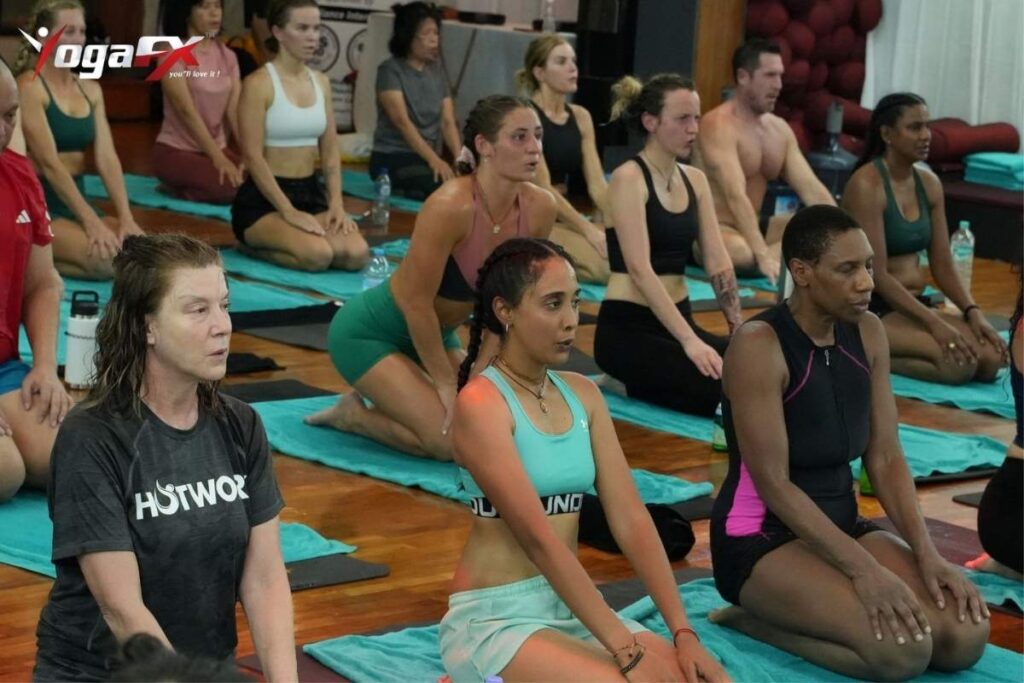
What Home Practice Can Deliver
- Sequence familiarity: practicing the 26-posture sequence at home between studio classes deepens dialogue retention, posture timing, and body awareness in ways that accelerate studio performance
- Flexibility maintenance: even without full studio heat, consistent home practice prevents the regression that occurs during gaps in studio attendance
- Strength work: the standing series and floor series produce real lower body and posterior chain strengthening regardless of temperature
- Mental practice: the concentration and focus demands of the balance postures are available at any temperature
- Recovery sessions: at room temperature or moderate warmth (28 to 32 degrees C), the sequence functions as an excellent active recovery session on rest days from studio practice or other training
What Home Practice Cannot Deliver
- The full cardiovascular thermoregulatory demand: the heat-driven cardiovascular conditioning (average 80 percent of maximum heart rate throughout a session, University of Wisconsin 2014) requires maintaining the full temperature and humidity specification. Most home setups approximate but do not fully achieve this.
- Heat-enhanced connective tissue extensibility: the rapid flexibility gains documented from consistent Bikram practice depend specifically on 40-degree Celsius heat reducing muscle viscosity and connective tissue resistance. Lower temperatures produce slower gains.
- The full calorie burn: 333 to 460 kcal per 90 minutes is specific to the full thermal environment. Room temperature practice of the same sequence produces approximately 60 to 70 percent of this calorie expenditure.
- Verbal instruction quality: following a recorded audio class or YouTube video is significantly different from being in a room where an instructor is observing your practice and correcting specific issues in real time. The feedback loop is absent.
- Safety monitoring: a studio instructor monitors the room for heat distress and can intervene. Home practice eliminates this safety layer.
How to Set Up a Home Bikram Practice Room
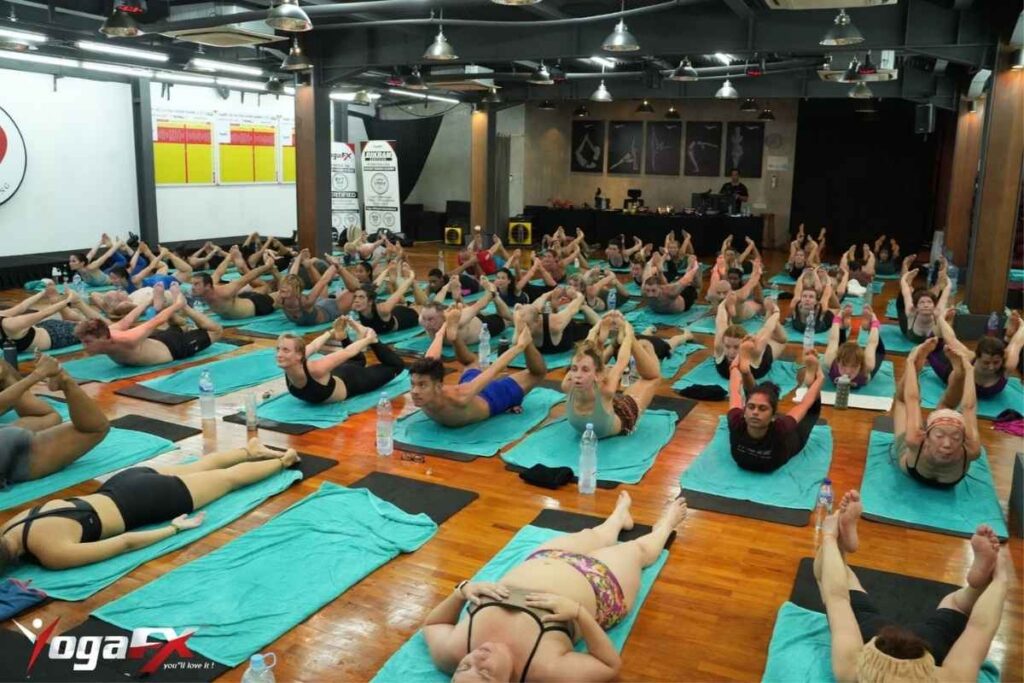
Space Selection
The most important decision is room size. Smaller rooms reach and maintain target temperature faster and with less equipment. A bathroom (6 to 10 square metres) is the most practical option for solo practice - it is already sealed, has a floor that handles water, and is easily heated with a single portable heater. A small bedroom (10 to 15 square metres) works with two heaters. Anything larger requires significant heating infrastructure.
The room must be sealable with minimal air gaps. Block the gap under the door with a rolled towel. Close all vents. The temperature will drop significantly within minutes in a leaky room. A small, sealed room that reaches 38 to 40 degrees Celsius is more useful than a large room that reaches 32 degrees. Setting up your personal practice space requires an adjustments checklist; here is a breakdown of the Bikram yoga online format and what it covers for remote students.
Heating
Portable infrared heaters are the most practical option for home Bikram rooms. They heat the space rather than just the air, which more closely approximates the penetrating heat of a properly designed yoga studio. A 1500-watt infrared panel heater is sufficient for a bathroom-sized space. Two are needed for a bedroom-sized space. If your home space cannot safely reach studio temperatures, look at Bikram yoga without heat - what you keep and what you lose to set realistic practice goals.
Pre-heat the room for 20 to 30 minutes before starting practice. Walking into a partially heated room and waiting for it to reach temperature while standing adds unnecessary time and produces an uneven thermal experience. Set up, turn on the heater, leave, change, and enter a room that has already reached the target temperature.
Target temperature: 40 degrees Celsius (105 degrees Fahrenheit). A room thermometer mounted at standing height - not floor level - is essential for monitoring. Floor temperature is significantly lower than head-height temperature in any heated room.
Humidity
The 40 percent humidity requirement is the most commonly omitted element in home Bikram setups. Without humidity control, the heat is dry, which causes rapid sweat evaporation, faster surface dehydration, and reduced deep tissue warming. A portable warm-mist humidifier running during practice reaches and maintains 40 percent relative humidity in a small, sealed room. A hygrometer (humidity meter) allows monitoring - inexpensive and accurate.
A simpler approach that many home practitioners use: hang wet towels near the heat source. This adds moisture to the air as the towels evaporate. Less precise than a humidifier but produces a noticeably more comfortable practice environment than dry heat alone.
Mirror
The Bikram sequence is specifically designed to be practiced in front of a full-length mirror. The mirror is a teaching tool, not a vanity element - it provides the visual feedback that replaces part of what a studio instructor provides. Without a mirror, proprioceptive alignment errors accumulate over sessions without correction. A full-length mirror (minimum 180cm by 60cm) mounted on a wall opposite the practice space is worth the investment for any regular home practitioner.
Equipment Summary and Cost
| Item | Approximate Cost | Notes |
|---|---|---|
| Portable infrared heater (1500W) | USD 60 to 120 | One for bathroom, two for bedroom. Look for a thermostat-controlled model. |
| Warm-mist humidifier | USD 30 to 60 | Runs during practice. Check capacity against room size. |
| Thermometer and hygrometer combo | USD 10 to 20 | Monitor both temperature and humidity. Essential for targeting the specification. |
| Full-length mirror | USD 30 to 80 | Wall-mounted preferred for stability. Minimum 180cm by 60cm. |
| Non-slip yoga mat (4 to 5mm) | USD 40 to 110 | Natural rubber preferred for humid conditions. |
| Mat towel (full coverage, non-slip backing) | USD 25 to 45 | Essential regardless of mat choice in heated practice. |
| Total setup cost | USD 195 to 435 | One-time investment. Ongoing cost: electricity for heater during sessions. |
Bikram Yoga at Home Without Heat
Many practitioners, particularly beginners building familiarity with the sequence, practice at room temperature without attempting to heat their space. This is a valid and useful approach with specific applications.
Room temperature practice of the 26-posture sequence is appropriate for: learning the sequence before beginning studio practice, maintenance between studio sessions, active recovery practice on non-studio days, and travel situations when studio access is unavailable.
What room temperature practice does not provide: the cardiovascular thermoregulatory demand, the heat-enhanced flexibility gains, or the cortisol reduction mechanism documented in the Harvard depression research (PubMed: 37883245). For these outcomes, regular studio attendance is required.
Free Sequence Resources for Home Practice
YouTube Classes
Multiple free Bikram and 26 and 2 classes are available on YouTube at 30-minute, 60-minute, and 90-minute formats. Searching "Bikram yoga 60 minutes" or "26 and 2 yoga 90 minutes" returns several options. The quality varies by instructor - look for channels with verified instructors who specify the full 26-posture sequence rather than modified or abbreviated versions. For a closer look at paid apps and subscription options beyond free YouTube content, see our guide on what apps and subscriptions can (and can't) replace.
Audio Classes
Audio-only instruction allows practice without a screen, which is preferable for practitioners who want to maintain the mirror-focused attention that studio practice requires. Yoga Is Medicine provides downloadable audio classes. The audio format is closer to studio instruction than video because it provides verbal cueing without the visual distraction of watching a screen.
The Sequence Written Out
The full 26 and 2 sequence with posture names, hold times, and sets is available in the Bikram yoga asanas reference article on this site. For practitioners who already know the sequence, a printed reference on the floor is a simpler tool than a YouTube video running on a phone or laptop.
How to Structure a Home Practice Routine
For Beginners (Building Sequence Familiarity)
Use a guided YouTube or audio class for the complete sequence. Do not attempt to heat the room initially - learning the sequence at room temperature with good instruction is more valuable than struggling with heat management simultaneously. Begin with the 60-minute format before attempting the full 90-minute sequence.
For Established Practitioners (Maintenance Between Studio Classes)
60-minute heated practice on non-studio days maintains heat tolerance, flexibility, and sequence timing. Follow a recorded class or practice independently if the sequence is memorised. Focus on posture depth in the standing balance series, where quality degrades fastest without regular studio reinforcement.
Recommended Frequency
For practitioners using home practice as a studio supplement: 1 to 2 home sessions per week alongside 2 to 3 studio sessions produces the most complete practice development. The studio sessions provide the heat environment, instructor feedback, and community that home practice cannot replicate. The home sessions extend the weekly practice volume without adding studio costs.
Safety Considerations for Home Hot Yoga
- Never practice alone in a fully heated room if you are new to Bikram yoga. Heat adaptation needs to develop with someone present or with the ability to exit immediately if distress occurs.
- Have at least 2 litres of water accessible and drink between postures rather than waiting until you feel thirsty.
- Keep the room temperature at 38 to 40 degrees C maximum. Higher temperatures are not more beneficial and in a poorly ventilated home room can become genuinely dangerous.
- If you feel dizzy, nauseous, or experience heart palpitations, exit the room immediately, cool down with cool water, and hydrate.
- Do not practice in a heated room if you are unwell, have a fever, or are in the first trimester of pregnancy.
FAQ
Can Bikram yoga be done at home?
Yes, with limitations. The sequence can be practiced at home with or without heat. A full heated home setup (infrared heater, humidifier, sealed room) approximates studio conditions for under USD 435 in equipment. Without heat, home practice provides sequence maintenance, flexibility work, and strength benefits but not the documented cardiovascular thermoregulatory outcomes or heat-enhanced flexibility gains. Home practice works best as a supplement to regular studio attendance, not a replacement.
How do I heat a room for Bikram yoga at home?
Use a 1500-watt portable infrared heater in a small (6 to 15 square metres), well-sealed room. Pre-heat for 20 to 30 minutes before practice. Add a warm-mist humidifier to reach the 40 percent humidity specification - hanging wet towels near the heat source is a lower-cost alternative. Monitor temperature at standing height with a room thermometer. Target: 40 degrees Celsius (105 degrees Fahrenheit) with approximately 40 percent humidity.
Where can I find free Bikram yoga classes for home practice?
YouTube has multiple free Bikram and 26 and 2 yoga classes at 30, 60, and 90-minute formats. Search "Bikram yoga 90 minutes" or "26 and 2 yoga class" for full sequence options. Yoga Is Medicine (yogaismedicine.com) provides audio downloads suitable for practice without a screen. The bikram yoga asanas reference article on this site provides the full sequence with dialogue cues for independent practice.
Can I learn Bikram yoga at home without going to a studio?
Partially. The sequence can be learned from video instruction at home, and many practitioners use this to build familiarity before starting studio practice. However, developing correct posture alignment, heat adaptation, and the specific breathing patterns of the sequence benefits significantly from a studio instructor's real-time observation and correction. Home learning from video is a useful starting point; it does not substitute for in-person instruction.
Is Bikram yoga at home without heat worth doing?
Yes, for specific purposes. Room temperature practice maintains sequence timing, posture depth, and structural flexibility between studio sessions. It also works well as an active recovery session on non-studio days. The documented cardiovascular and heat-specific benefits require the full thermal environment, so room temperature practice produces different outcomes than heated studio practice - but valuable outcomes nonetheless.
How often should I practice Bikram yoga at home?
Most practitioners use home practice as a supplement to studio attendance: 1 to 2 home sessions per week alongside 2 to 3 studio sessions produces comprehensive practice development. If studio access is unavailable for an extended period, daily home practice (heated or room temperature) maintains conditioning. For pure home practice without any studio sessions, 3 to 4 sessions per week with a heated setup produces meaningful fitness and flexibility outcomes, though slower than equivalent studio practice.