Yoga can genuinely help plantar fasciitis, but the mechanism is specific: tight calf muscles and a stiff Achilles tendon are documented risk factors for the condition, and postures that stretch the calf and ankle complex address that risk factor directly. Yoga is not a treatment for the underlying inflammation itself, and during an acute flare-up, certain standing postures need real modification rather than a push-through-it approach.

Understanding that distinction, contributing risk factor versus direct treatment, is the difference between using yoga sensibly alongside standard care and expecting it to resolve an acute flare on its own.
How Plantar Fascia, Calves, and Yoga Actually Connect
The plantar fascia is a thick band of tissue running from the heel to the ball of the foot, supporting the arch and absorbing impact with every step. According to the American Academy of Orthopaedic Surgeons, tight calf muscles and a tight Achilles tendon are established anatomical risk factors, and stretching the arch and the heel cord is described as the most effective conservative approach once the condition develops.
This is precisely where yoga's relevance comes in: the calf, Achilles, and plantar fascia function as one connected chain, and a tight upper section of that chain transfers more strain onto the fascia itself with every step.
This means yoga's role is best understood as addressing a contributing risk factor, calf and ankle flexibility, rather than treating the inflamed tissue directly. Someone with chronically tight calves who develops plantar fasciitis from running or prolonged standing may find that consistent calf and ankle stretching, delivered through a structured practice, reduces recurrence risk once the acute phase has settled.
It is not a substitute for the conservative treatments, rest, appropriate footwear, and in persistent cases professional care, that address the condition directly.
The mechanical logic is straightforward once laid out. Every step involves the ankle flexing to allow the heel to lift while the foot is still bearing weight, and that motion pulls on the Achilles tendon, which in turn transfers tension through the calcaneus into the plantar fascia itself.
When the calf and Achilles are short and inflexible, less of that motion happens at the ankle, and more of the mechanical demand shifts down into the fascia, which is not designed to be the primary shock absorber for a stiff ankle above it.
Restoring calf and ankle range of motion redistributes that load back toward where it belongs, which is the reasoning behind why stretching is the first-line conservative recommendation from orthopaedic sources before more invasive treatments are considered.
Footwear and body weight are the other two commonly cited risk factors, and yoga has no direct bearing on either. Anyone using yoga as part of a broader plantar fasciitis management plan should treat calf flexibility as one input among several, not the whole picture, and should still address footwear and load management, particularly in running or prolonged standing occupations, alongside any stretching routine.
Postures That Help, and Ones to Modify Carefully
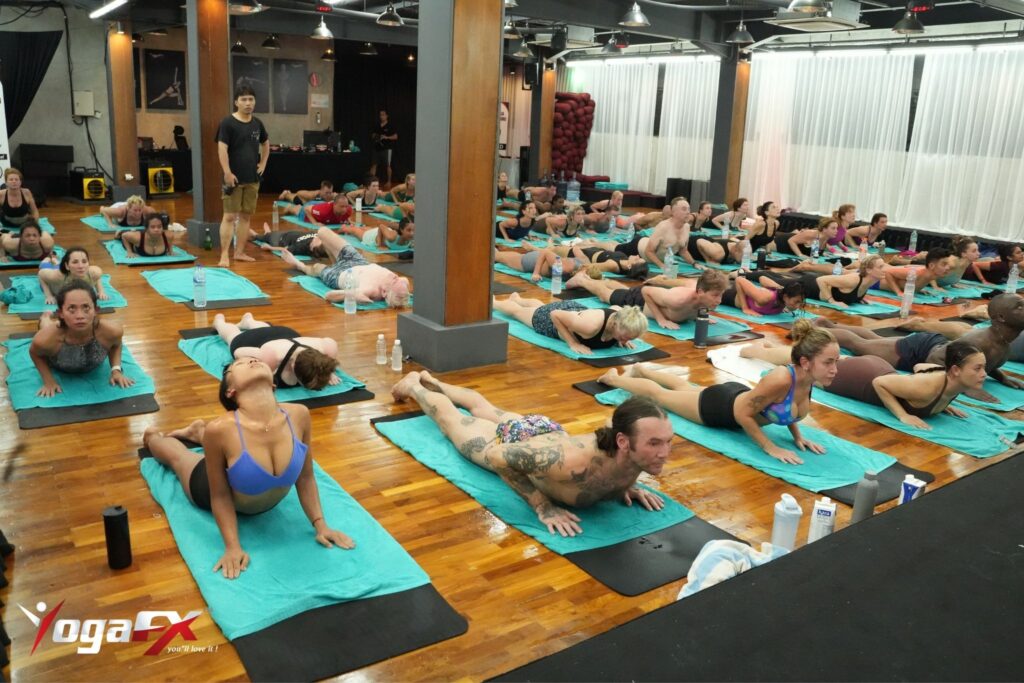
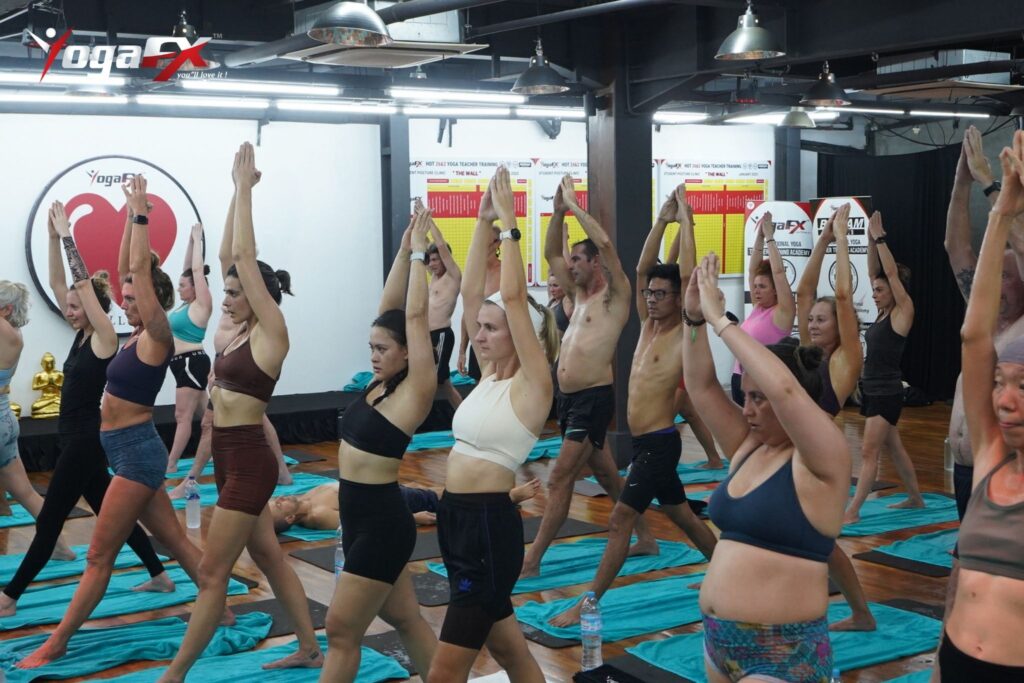
Within the Bikram 26-posture sequence, several standing postures directly stretch the calf and Achilles complex, while a few demand caution during an acute flare.
- Half Moon Pose (Ardha Chandrasana). The standing leg's calf and ankle bear sustained load through the lateral bend, providing a controlled calf stretch that most students can perform even with mild plantar fascia sensitivity, provided the standing foot is not actively painful to bear weight on.
- Standing Separate Leg Stretching. The forward fold stretches the entire posterior chain, including the calves, without direct load-bearing pressure through the arch, making it one of the more accessible postures during a mild flare.
- Awkward Pose (Utkatasana), approached carefully. The squat position loads the arch directly through the forefoot. During an acute flare, this is a posture to modify, coming up slightly onto a more neutral foot position or reducing depth, rather than a posture to avoid entirely once symptoms have calmed.
- Standing Head to Knee Pose. A demanding single-leg balance that asks the standing foot's intrinsic muscles to stabilise under sustained load. Worthwhile for building the small foot muscles that support the arch once symptoms have settled, but one to approach gently, closer to the wall for support, during an active flare.
- Standing Bow Pulling Pose and Balancing Stick. Both single-leg balance postures ask the standing foot's intrinsic muscles and arch to stabilise under load. These are reasonable to practice with awareness once acute inflammation has settled, but worth approaching gently, with a wider stance or wall support, during a genuine flare.
The standing series as a whole, performed barefoot on a sticky mat with direct, sustained pressure through the arch and heel, is where most of the relevant work happens. This is different from a seated or floor posture, which places little demand on the arch at all, which is why the modifications below focus specifically on the standing portion of a class rather than the sequence overall.
Our full reference guide to all 26 Bikram poses covers the complete standing series in more depth, including hold times and common alignment errors relevant to anyone modifying for a foot condition.
What to Avoid During an Acute Flare-Up
The first few steps after waking are typically the most painful phase of plantar fasciitis, and that same principle applies to a cold studio floor before the body and the tissue have warmed up.
Three modifications matter most during an acute flare: avoid deep, sustained loading directly through the forefoot in postures like Awkward Pose until pain has settled; skip repeated jumping or fast transitions between standing postures if your studio includes them, since impact loading is the mechanism most closely tied to fascia irritation in the research; and prioritise the seated and floor series over any standing posture that becomes sharply painful, rather than pushing through on the logic that yoga is inherently good for the body.
Arriving a few minutes early to walk around the room before class starts, rather than stepping straight from a cold locker room floor into the first standing posture, gives the plantar fascia a gentler warm-up than the sequence alone provides in its opening minutes.
Some students also find a thin pair of grippy socks useful during the standing series if bare-heel contact with the floor is itself uncomfortable, though this is a personal comfort choice rather than a requirement, and most studios are used to accommodating it without issue.
A useful general rule: mild stretching sensation in the calf during a posture is consistent with the kind of stretching that helps. Sharp, localised pain in the heel or arch during weight-bearing is not something to work through, and is a signal to modify the posture, reduce depth, or substitute a seated variation for that round.
Why Heat and Consistent Practice Help the Underlying Tightness
Heat increases tissue extensibility, which is part of why a calf stretch performed in a 40°C room reaches a deeper range than the same stretch performed cold.
Mr. Ian Terry, E-RYT 500, who has taught more than 12,000 hours of Bikram-format classes, notes that practitioners dealing with chronically tight calves specifically often describe more noticeable and more lasting improvement in ankle mobility from consistent heated practice than from occasional room-temperature stretching, since the heat allows a genuine stretch rather than a resisted one.
A 2025 systematic review covering 43 studies and 942 participants (Willmott et al., PMC12488547) documented consistent improvements in range of motion from this heated, fixed-sequence format, a relevant data point for anyone specifically targeting calf and ankle flexibility as a plantar fasciitis risk-reduction strategy rather than a general wellness goal.
Consistency matters more than any single session's intensity here, in the same way it does for other overuse conditions.
A single deep calf stretch does little for chronically shortened tissue; three to four sessions a week, sustained over months, is closer to what produces a durable change in flexibility, which is also why the postures above work best as part of a regular practice rather than a one-off remedy reached for only when the foot already hurts.
Someone practicing once every few weeks is unlikely to see the same calf and ankle mobility gains as someone attending three sessions a week, regardless of which specific postures either of them favours.
For runners and cyclists specifically, whose sport-specific patterns often include the same tight calf and Achilles complex that predisposes to plantar fasciitis, our guide to yoga for cyclists and runners covers the broader cross-training picture, including how the standing series addresses posterior chain tightness beyond the foot alone.
What Else Belongs Alongside a Yoga Practice
Yoga addresses one risk factor among several, and the other commonly cited factors respond to different interventions entirely. Footwear with adequate arch support and cushioning reduces the load the fascia absorbs with every step, and this matters more for someone standing or walking for long stretches during the day than any amount of studio practice.
Gradual load management, not suddenly increasing running mileage or standing hours, gives the fascia time to adapt rather than accumulate microtrauma faster than it can repair.
And for anyone whose pain has lasted more than a few weeks despite conservative changes, a podiatrist or physiotherapist can assess for contributing factors like foot structure or gait mechanics that a general yoga practice cannot address on its own.
The practical takeaway is sequencing: yoga is a reasonable, low-cost addition to a plantar fasciitis management plan, best introduced once acute symptoms have settled enough to tolerate gentle standing postures, and best combined with the footwear and load-management changes that address the other major risk factors directly. Treating yoga as the entire plan, while ignoring footwear or continuing to spike training load, is where the physical practice's genuine benefit tends to get lost.
FAQ
Can yoga help plantar fasciitis?
Yoga may help by stretching tight calf muscles and the Achilles tendon, both documented risk factors for plantar fasciitis. It addresses a contributing factor rather than treating the inflamed tissue directly, and should complement, not replace, standard conservative care such as rest and appropriate footwear.
Which yoga poses are best for plantar fasciitis?
Postures that stretch the calf and Achilles without direct forefoot loading, such as Half Moon Pose and Standing Separate Leg Stretching, are generally more accessible. Deep squatting postures like Awkward Pose should be modified during an acute flare since they load the arch directly.
Should I do yoga if my plantar fasciitis is actively flaring up?
Gentle, modified practice is usually fine, but avoid deep forefoot loading, jumping, or any posture that produces sharp heel or arch pain during weight-bearing. Mild calf-stretch sensation is fine; sharp localised pain in the foot itself is a signal to modify or substitute a seated variation.
Does the heat in hot yoga help with plantar fasciitis specifically?
Heat increases tissue extensibility, which allows a deeper, more effective calf and Achilles stretch than the same stretch performed cold. This makes heated practice a reasonable format for addressing the tight-calf risk factor, though it does not treat active inflammation directly.
This article discusses general risk factors and yoga's supporting role. It is not medical advice; plantar fasciitis should be diagnosed and managed by a healthcare professional, particularly if pain is severe, worsening, or has lasted more than a few weeks.