
Opening a hot yoga studio is a different project from opening a general yoga studio, and most business guides treat them as equivalent. The hot room infrastructure - the heating and humidity system that defines the practice - is a capital investment unique to this format. So are the credential requirements, the instructor hiring standards, and the specific post-2019 branding decisions that any new Bikram or 26&2 studio owner needs to make before they open their doors.

This guide covers the practical questions that the generic yoga studio guides do not: hot room specification, realistic startup costs for a heated studio, the legal and credential requirements specific to Bikram or 26&2 instruction, and the honest reasons why hot yoga studios fail, because understanding the failure modes is the most useful preparation for building one that does not.
If you are already a certified instructor and want to understand the credential pathway before studio ownership, the full picture is on our how to become a Bikram yoga teacher page.
Step 1: Define Your Format Before You Sign a Lease
The most consequential decision you make before opening is whether you are opening a Bikram or 26&2 yoga studio (fixed sequence, scripted dialogue, specific temperature specification) or a general hot yoga studio (heated room, variable format). These are different businesses with different credential requirements, different room specifications, and different target markets.
The naming landscape post-2019 matters here. The Bikram Yoga trademark was acquired by KPC Group in March 2023. Most studios teaching the authentic 26-posture sequence now operate under names like 26 and 2 yoga, original hot yoga, or hot 26&2.
The 2015 US Ninth Circuit ruling established that yoga sequences cannot be copyrighted, which means you can teach the sequence freely under any descriptive name without licensing fees. What you are choosing is a brand identity, not a legal requirement.
Step 2: The Hot Room - What Generic Guides Miss
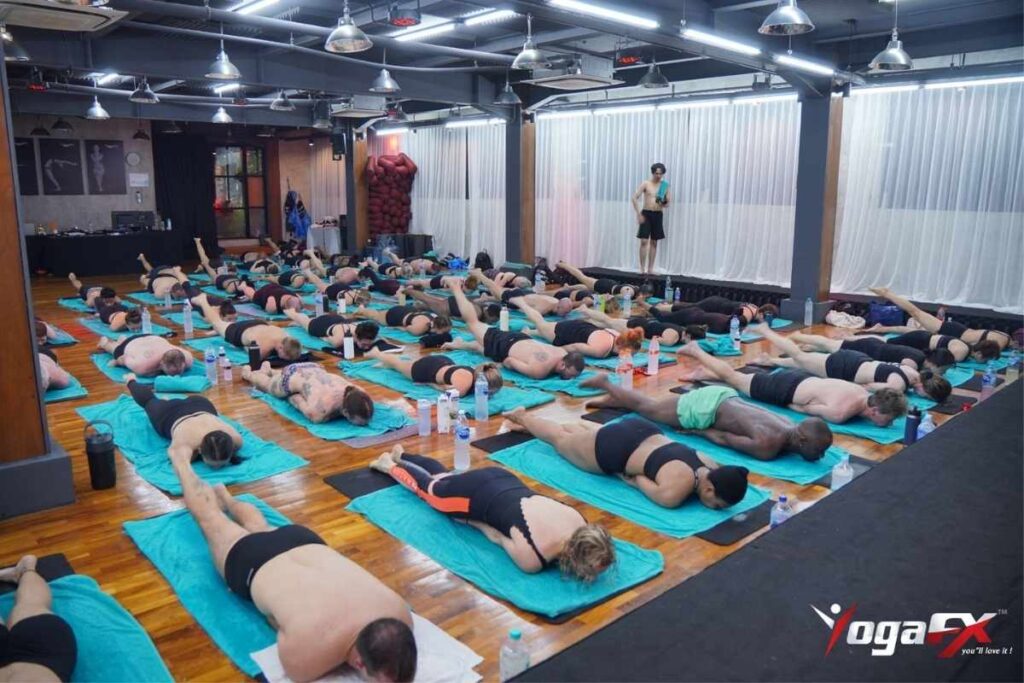
The hot room is the single biggest differentiator between a hot yoga studio and any other fitness space. Every design and budget decision flows from the requirement to sustain 40 degrees Celsius with 40 percent relative humidity for multiple 90-minute sessions per day. Most general yoga studio guides skip this entirely. From a market positioning standpoint, weighing the pros and cons of Bikram yoga versus Pilates for studio owners dictates your equipment investment and student retention strategy.
Heating System Options
| System | Capital Cost (installed) | Heat Quality | Key Consideration |
|---|---|---|---|
| Forced air HVAC (commercial) | USD 8,000 to 25,000 | Fast, controllable, dry | Requires separate humidification system. Most common in urban studios. |
| Infrared panel heating | USD 5,000 to 15,000 | Radiant warmth, dry | Lower operating cost than forced air. Still requires humidification to reach spec. |
| Combination radiant + convection | USD 10,000 to 20,000 | Best distribution | More even floor-to-ceiling gradient. Preferred for larger rooms. |
Humidity: The Most Overlooked Specification
The Bikram specification is 40 degrees Celsius with 40 percent relative humidity. Most electric heating systems produce dry air: heated air holds less moisture, typically reducing relative humidity to 10 to 20 percent without active humidification. This is not the Bikram specification.
A dedicated humidification system - either warm mist humidifiers for small studios or a centralised humidification unit for larger spaces - is a separate budget line from the heating system. Budget USD 2,000 to 8,000 for humidification depending on room volume. Install a humidity sensor at body height, not ceiling height, where practitioners actually experience the moisture. Most HVAC contractors who have not worked on yoga studios underestimate this requirement significantly.
Room Dimensions and Ceiling Height
Minimum practical dimensions for a Bikram class:
- Ceiling height: minimum 14 feet (4.3 metres). Balancing Stick requires horizontal body extension with arms overhead. Lower ceilings produce a claustrophobic feel in heat and limit full range for taller practitioners.
- Floor area: approximately 21 square feet (2 square metres) per practitioner. A 20-student class requires roughly 420 square feet of practice floor - not total room area. Add space for the instructor position, entry and exit paths, and temperature sensor placement.
- Target class capacity. Most financially sustainable hot yoga studios run 15 to 25 students per class. Plan room size around your target capacity: a 20-student room needs approximately 500 to 600 square feet total room area.
Mirrors and Flooring
Floor-to-ceiling mirrors on the front wall are non-optional for a Bikram studio. The verbal dialogue instructs practitioners to use their reflection for self-correction throughout the standing series. Side wall mirrors are standard in most established studios and allow the instructor to observe the full room simultaneously. Mirror installation cost: USD 3,000 to 10,000 depending on room size. Use commercial-grade mounting hardware - the combination of heat, humidity, and daily cleaning products creates a challenging environment for standard residential mirror adhesive.
Flooring must be non-slip, easy to clean, and able to withstand daily mopping in a heated environment. Cork, rubber, and purpose-built yoga studio flooring all work. Budget USD 5 to 15 per square foot installed. Getting your environmental controls right is non-negotiable for safety and brand compliance. Once your heating elements are mapped, check our full hot room specification guide to ensure proper humidity and fresh air exchange.
Step 3: Realistic Startup Cost Breakdown
The Biz2Credit data answering the PAA "How much to open a Bikram yoga studio?" gives a range of $15,000 to $100,000 for a general yoga studio. A hot yoga studio with proper heating infrastructure sits at the upper end of that range or above it. Here is a realistic breakdown for a leased space requiring modification:
| Cost Item | Minimal Setup | Full Studio Build |
|---|---|---|
| Heating system (installed) | USD 5,000 to 8,000 | USD 15,000 to 25,000 |
| Humidification system | USD 1,500 to 3,000 | USD 4,000 to 8,000 |
| Floor-to-ceiling mirrors | USD 3,000 to 5,000 | USD 6,000 to 10,000 |
| Flooring | USD 2,000 to 5,000 | USD 8,000 to 15,000 |
| Changing rooms and showers | USD 3,000 to 8,000 | USD 15,000 to 30,000 |
| Sound system | USD 500 to 1,500 | USD 2,000 to 5,000 |
| Reception and front of house | USD 1,000 to 3,000 | USD 5,000 to 15,000 |
| Studio management software (annual) | USD 1,200 to 2,400 | USD 2,400 to 6,000 |
| Business licenses, insurance, permits | USD 2,000 to 5,000 | USD 5,000 to 10,000 |
| Marketing and launch | USD 2,000 to 5,000 | USD 10,000 to 20,000 |
| 3-month operating reserve | USD 10,000 to 20,000 | USD 25,000 to 50,000 |
| Total estimate | USD 31,000 to 65,000 | USD 97,000 to 194,000 |
The operating reserve is the most commonly underestimated line item. Hot yoga studios typically take 12 to 18 months to reach break-even membership levels. Heating a 50 to 80 square metre room to 40 degrees for four to six daily sessions adds significantly to monthly utility costs versus a room-temperature studio - plan for USD 500 to 1,500 per month in additional electricity.
Step 4: Instructor Credentials and Hiring
A hot yoga studio is only as good as its instructors. The minimum credential requirement for any instructor teaching the authentic 26-posture sequence:
- Yoga Alliance RYT 200 from a Registered Yoga School, verifiable at yogaalliance.org. This is the baseline credential required by studio insurance providers and by most employers.
- 26&2 or Bikram-specific certification covering the verbal dialogue, posture methodology, and the specific demands of teaching in a heated environment. A general RYT 200 without hot yoga specialisation does not prepare an instructor to teach this format.
To run teacher trainings from your studio, the lead instructor must hold a Yoga Alliance E-RYT 500 (requires 2,000 or more logged post-certification teaching hours) and your studio must register as a Yoga Alliance RYS 200 school (USD 595 initial registration, annual renewal). This is how your graduates earn portable RYT 200 credentials that studios anywhere will recognise.
Instructor compensation in the US market runs USD 35 to 75 per class for experienced certified instructors. At five to six classes per week per instructor, plan for USD 700 to 1,800 per month per instructor for a part-time teaching schedule. You need a minimum of two to four instructors to cover scheduling flexibility from the first day of operations.
In addition to general commercial property insurance, you must factor in how your staff is covered. Read more about selecting the right insurance for yoga instructors to share with your teaching team
The most sustainable studios build their instructor base by training their own practitioners through an affiliated teacher training programme rather than continuously hiring externally. An instructor who learned to teach at your studio teaches at your quality standard. Details on the YogaFX credential pathway - which awards RYT 200 and Bikram certification simultaneously - are on the instructor training page.
Step 5: Legal Requirements
Legal requirements vary by jurisdiction but the categories are consistent:
- Business license: required for legal operation in all US jurisdictions. Apply through your city or county clerk. Cost: USD 50 to 400.
- Zoning permit: confirm your chosen location is zoned for commercial fitness use. HVAC modifications for a heated room may require a separate building permit.
- Health and safety inspection: a space heating to 40 degrees Celsius with multiple occupants is subject to fire code and ventilation requirements. Engage a fire safety inspector before finalising the room build-out.
- Business insurance: general liability plus professional liability (yoga-specific) plus commercial property. Budget USD 2,000 to 5,000 annually. Yoga Alliance membership provides access to group insurance rates for certified instructors.
- Yoga Alliance RYS registration (if running teacher trainings): USD 595 initial registration.
Step 6: Studio Management Software
You need class booking, membership management, payment processing, and instructor scheduling from day one. The dominant platforms in the yoga studio market:
- Mindbody: USD 99 to 499 per month. The largest consumer-facing app - many practitioners search for classes directly in the Mindbody app, giving you passive discovery.
- Glofox: USD 110 to 300 per month. Strong mobile app and client communication tools.
- Mariana Tek: boutique and premium studio focus. Higher price point, strong membership management.
- Zen Planner: USD 99 to 348 per month. Good for studios with significant membership volume and retail.
Choose with three to five years in mind, not just the opening week. Migrating from one platform to another after you have hundreds of active memberships is operationally painful.
Financial Model: What to Expect
A studio with 80 square metres of practice space, two instructors, and classes five to six days per week has approximately:
- Monthly fixed costs: rent (USD 2,000 to 8,000 depending on market), heating utilities (USD 500 to 1,500), instructor pay (USD 3,000 to 6,000), software (USD 100 to 500), insurance (USD 150 to 400 monthly). Total approximately USD 6,000 to 17,000 per month.
- Break-even membership base: at USD 120 per month average membership rate, 50 to 75 active members covers fixed costs. Achievable in months 6 to 12 with active marketing.
- Profitable membership base: 100 to 150 active members at USD 120 per month produces USD 12,000 to 18,000 monthly revenue. After instructor and overhead costs, studio owner income in the USD 50,000 to 120,000 annual range becomes achievable.
Why Hot Yoga Studios Fail
The Reddit r/smallbusiness thread on opening a yoga studio (50 or more comments) surfaces the same failure modes repeatedly. Understanding them is more valuable than any motivational guide.
Undercapitalisation
The primary cause of hot yoga studio failure. A studio that opens with USD 30,000 in capital and a heating system that costs USD 1,500 per month to run has approximately 20 months of runway before fixed costs alone exhaust capital - before accounting for fit-out costs, instructor pay, or marketing. The three-month operating reserve is not optional.
Pricing Too Low
A hot yoga studio drop-in price of USD 15 to 20 is not viable at the operating cost structure of a heated studio. The heating costs, HVAC maintenance, instructor pay, and software costs require USD 25 to 35 minimum drop-in rates to cover variable costs. Monthly membership pricing below USD 100 in most US markets produces revenue below break-even. The instinct to price low to attract early members creates an expectation that is very difficult to raise later.
Instructor Dependence on the Owner
Studios that rely entirely on the owner teaching every class have a self-employed job with overhead, not a business. Transitioning from owner-instructor to studio operator requires hiring, training, and trusting other instructors with your brand. Studios that fail to make this transition cannot scale past the owner's personal teaching capacity.
Launching Without a Core Practitioner Base
Studios that open cold - without an existing community who have committed to memberships before opening - take significantly longer to reach sustainability. A pre-launch founding member programme (discounted rates for practitioners who commit before opening) that converts 30 to 50 members before the doors open changes the financial trajectory of the first six months dramatically.
Poor Location
The barrier of an inconvenient location is higher for a 90-minute heat class than for a 45-minute drop-in format. Locations without accessible parking or proximity to public transit, or in residential areas without daytime population, require significantly more marketing investment than fitness-corridor or commuter-transit locations.
The Credential Pathway: From Teacher to Studio Owner
The most common pathway to hot yoga studio ownership runs through teaching: get certified, teach at existing studios for two to three years, build a community, then open. The teaching years serve three functions that accelerate studio success: developing a practitioner community that becomes your founding member base, observing how a working studio operates from the inside, and accumulating the teaching hours needed for E-RYT 500 (which enables running your own teacher trainings - the revenue stream that separates financially sustainable studios from those dependent entirely on class memberships).
The YogaFX programme awards RYT 200 and Bikram certification simultaneously, positioning graduates to teach across studio environments and dedicated hot yoga studios from day one. More on the programme structure at course inclusions and upcoming course dates.
FAQ
How much does it cost to open a Bikram yoga studio?
A minimal leased-space setup with proper hot room infrastructure costs USD 31,000 to 65,000. A full dedicated hot room build-out costs USD 97,000 to 194,000. The heating and humidity infrastructure (USD 6,500 to 33,000 depending on system) is the primary cost above a standard room-temperature yoga studio. A three-month operating reserve is essential and frequently underestimated. General yoga studio guides quote $15,000 to $100,000 (Biz2Credit), but hot yoga studios with proper heated room specification reliably sit at the upper end of that range.
Is owning a hot yoga studio profitable?
Yes, once a sustainable membership base is established - typically at 100 to 150 active members at USD 120 per month average. Most studios are loss-making for the first 12 to 18 months. Studio owners who reach profitability tend to be those who were adequately capitalised for the development period, priced correctly from launch, and not wholly dependent on the owner teaching every class.
What credentials do I need to open a Bikram yoga studio?
At minimum: Yoga Alliance RYT 200 from a Registered Yoga School plus a 26&2 or Bikram style-specific certification for at least one instructor. To lead teacher trainings from your studio: E-RYT 500 (2,000 or more logged teaching hours) for the lead instructor, plus Yoga Alliance RYS 200 school registration (USD 595). E-RYT 500 typically takes three to five years of full-time teaching to achieve.
Should I open a Bikram yoga studio or a 26 and 2 yoga studio?
The practice is identical. The naming decision is a branding choice. In most US markets in 2026, "26 and 2 yoga" or "original hot yoga" avoids the association with Choudhury's post-2019 controversy while remaining descriptive of the practice. Using "Traditional Bikram Hot Yoga (26 and 2)" in your marketing captures both audiences. Joining an independent 26&2 studio network is a third option for owners who want community affiliation alongside branding clarity.
Why do yoga studios fail?
The most common causes: undercapitalisation (running out of money before membership reaches break-even), pricing too low to cover the real cost structure of a heated studio, owner-dependency on teaching every class without building an instructor team, opening without a founding member base, and poor location selection that requires excessive marketing spend to drive attendance. Understanding these failure modes before signing a lease is worth more than any business plan template.