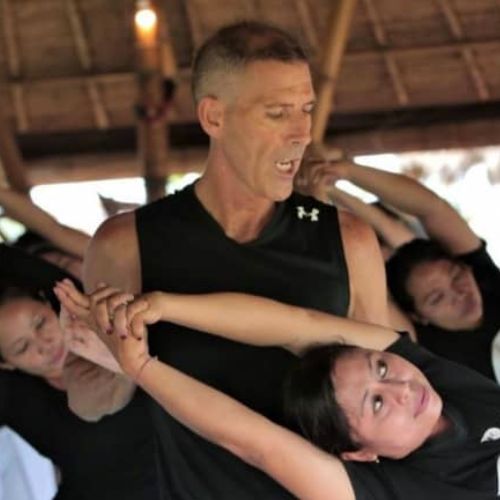
Most commentary on the Bikram documentary comes from outside observers. This account comes from inside. Mr. Ian Terry trained for five years, from 2014 to 2019, directly with Bikram Choudhury, the founder of the Bikram Hot 26&2 method, and served as assistant teacher on Choudhury's staff during that time. What follows is not a defence of Choudhury, nor a dismissal of the film's content. It is an account of what the documentary accurately captured, what it could not show from its external vantage point, and what has happened in the years since.

'Bikram: Yogi, Guru, Predator' (Netflix, 2019, directed by Eva Orner) documents the rise and fall of hot yoga founder Bikram Choudhury through interviews with former students and teachers, footage from his training events, and accounts of the multiple sexual assault allegations against him. Choudhury left the United States in 2016 and was convicted in absentia by a California court in 2023. The documentary accurately depicts the institutional dynamics that enabled the allegations. It could not depict the specific quality of the yoga teaching methodology that made the practice genuinely valuable - and which is why the 26-posture sequence survived Choudhury's collapse.
What the Documentary Is
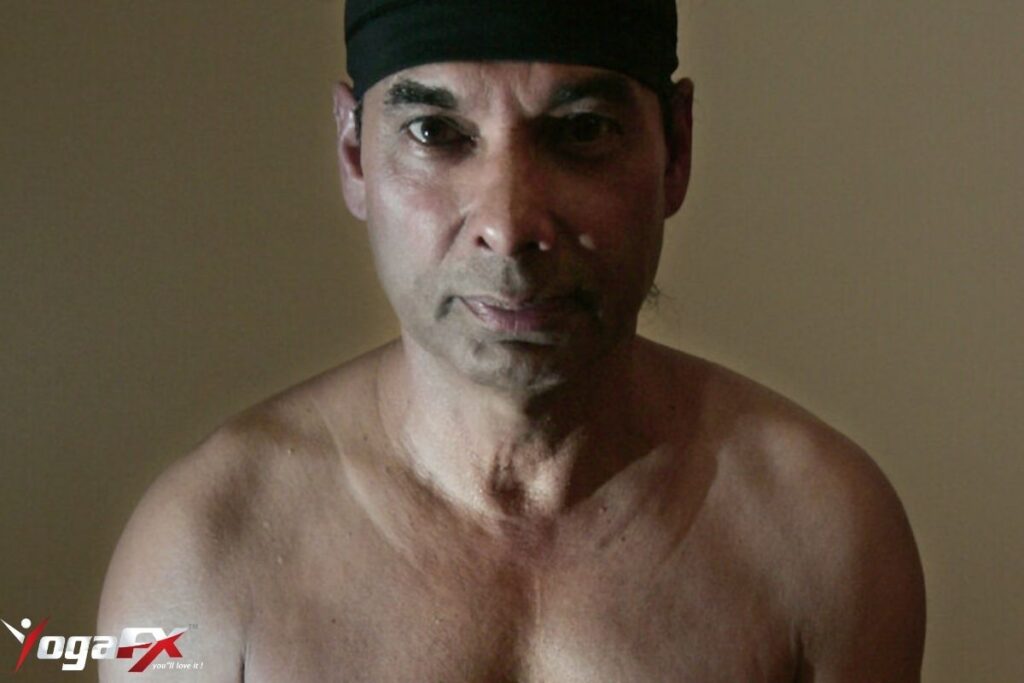
'Bikram: Yogi, Guru, Predator' is a 2019 documentary film directed by Eva Orner, an Academy Award-winning documentary filmmaker. It was released internationally on Netflix on November 7, 2019.
Core facts: Director: Eva Orner. Release: September 10, 2019 (Toronto International Film Festival premiere); November 7, 2019 (Netflix worldwide). Running time: 1 hour 26 minutes. Rotten Tomatoes: 96 percent critics, 73 percent audience.
The film's structure follows a chronological arc: Choudhury's early life and training in India, his arrival in the United States in 1971, the global expansion of the Bikram yoga franchise through the 1990s and 2000s, the first public allegations from 2013 onwards, and the subsequent legal proceedings. It draws primarily on interviews with former students, teachers, and legal figures involved in the cases against Choudhury.
What the Film Covers
The documentary covers in detail: Choudhury's background and training under Bishnu Ghosh in Calcutta; his establishment in Los Angeles in the 1970s and the early development of the celebrity practitioner base; the global franchise expansion to more than 1,650 studios; the teacher training events and the culture that developed around them; the first civil lawsuit filed by Minakshi Jafa-Bodden in 2013 and the subsequent civil cases from other former students and employees; Choudhury's denial of all allegations and his legal defence; his departure from the United States in 2016; and the status of the cases at the time of filming.
What the Documentary Got Right
The Institutional Culture
The documentary's most important contribution is its accurate depiction of the institutional culture that developed around Choudhury and his training events. The late-night lecture format, the extreme deference demanded from trainees, the personality cult dynamics, and the atmosphere in which dissent or questioning was discouraged - all of this is accurately captured.
Having attended training events during the same period the documentary covers, the institutional culture it describes is recognisable. The educational content of the training was genuine. The surrounding culture was what the film depicts. These two things coexisted, which is what made the situation as damaging as it was. The people who were harmed were people who came for the yoga and encountered something else that the institutional culture had made possible.
The Scale of What Was Built
The documentary accurately conveys the scale of what Bikram Choudhury built. More than 1,650 licensed studios across more than 40 countries. Teacher training events enrolling hundreds of trainees twice yearly. A global community of practitioners and instructors who had invested significantly, financially and personally, in the method. This scale is relevant because it explains both the reach of the harm and the reason the practice survived - a method with that depth of practitioner investment does not simply disappear because its founder's conduct becomes public.
The Victims' Accounts
The film provides the accounts of the women who came forward. These accounts are documented, verified to the degree that civil and criminal court proceedings verify them, and factually the most important part of the film. The first civil trial in 2016 resulted in a jury award of USD 6.4 million in punitive damages. The 2023 criminal conviction in absentia for rape and false imprisonment represents the legal conclusion of a decade of proceedings.
The film could not have known in 2019 that the criminal proceedings would reach a conviction in 2023. What it correctly established is that the accounts of multiple individuals were credible and corroborated.
What the Documentary Could Not Show
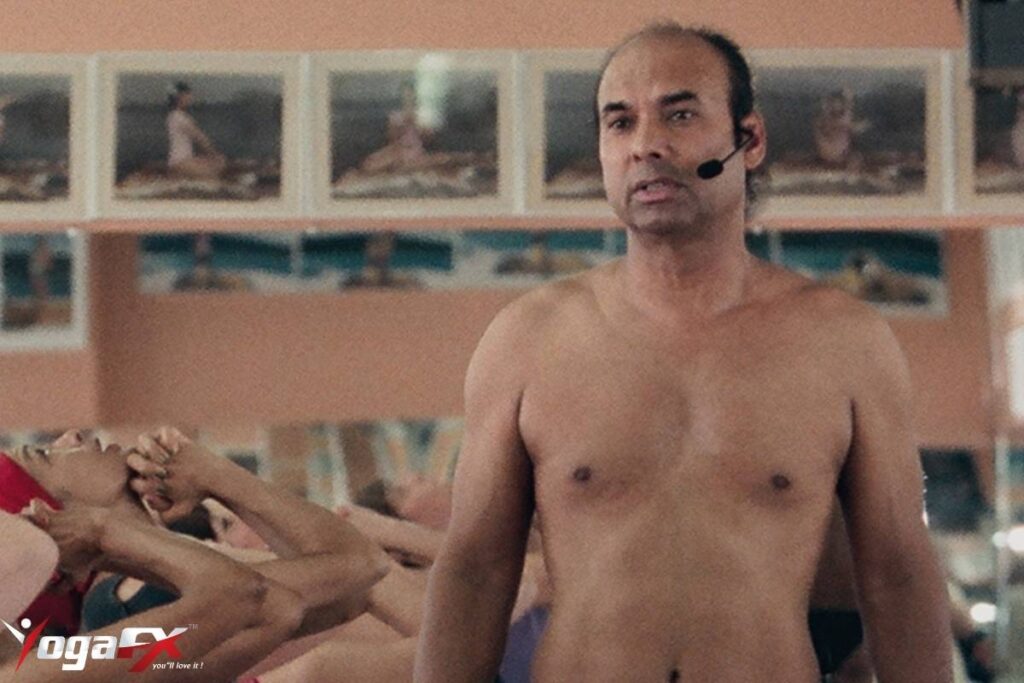
Documentaries about institutions necessarily work from the outside. There are things about the Bikram yoga world that the film could not show because they are not visible from an external vantage point.
The Actual Quality of the Teaching Methodology
The most significant thing missing from the documentary is any depiction of what the teaching methodology was actually like when it was working. This absence is understandable - it is not what the film is about - but it explains a question the film leaves implicit rather than answering: why did hundreds of people continue returning to Choudhury's training events despite increasingly widespread knowledge of the allegations?
The posture clinic format, at its best, produced genuinely useful learning. The dialogue delivery training had a specific and exacting standard that produced instructors who could teach competently from their first certification day. The physiological depth of the method - the documented outcomes that three peer-reviewed studies subsequently confirmed - was real and available regardless of what Choudhury was doing in other contexts.
The film cannot show this because showing it would complicate the clean narrative of a predator using yoga as a vehicle for abuse. The truth is more uncomfortable: a genuinely effective teaching method was built by a person who committed serious crimes. Both things are true simultaneously. The documentary's framing, appropriately focused on the harm, does not address the first part.
The Experience of People Who Came for the Yoga
The film's perspective is necessarily that of the people who were harmed, and their accounts deserve the central place the film gives them. What it cannot equally show is the experience of the much larger number of people who attended training events, learned the method, and left with valuable credentials and a genuine practice.
Having trained directly with Choudhury for five years, from 2014 to 2019, the experience was not uniformly what the documentary depicts. The yoga content was substantive. The teaching quality was high. The colleagues who attended those events were serious practitioners who went on to train thousands of teachers globally. What the documentary appropriately highlights is that those legitimate educational experiences coexisted with harm that the institutional culture enabled.
What Was Happening to the Practice After 2019
The documentary covers the period up to approximately 2019. What it cannot cover is what happened after its release: the 2023 criminal conviction, the rebranding of studios to 26 and 2 yoga and original hot yoga, the emergence of independent certification organisations, and the continuation of the 26-posture sequence by thousands of instructors operating entirely independently of Choudhury.
The film leaves the viewer with the impression that the Bikram yoga world was ending. What actually happened is that it restructured. The institutional structures built around Choudhury collapsed. The method did not.
Choudhury After the Documentary: 2019 to 2026
| Year | Development |
|---|---|
| 2016 | Choudhury leaves the United States as civil lawsuits accumulate and a criminal investigation begins. Continues teaching internationally, primarily in Europe and India. |
| 2017 | Netflix documentary filming begins. Civil cases continue. |
| 2019 | Documentary released November 7. Global rebranding of studios accelerates. Independent certification organisations begin formalising. |
| 2020 to 2022 | Choudhury continues teaching in India and Europe. Criminal investigation in California progresses. |
| 2023 | California court convicts Bikram Choudhury in absentia on criminal charges including rape and false imprisonment. Sentence issued. Choudhury has not returned to the United States to serve the sentence. |
| 2024 to 2026 | Choudhury continues teaching internationally. The 26-posture sequence continues to be practiced globally as 26 and 2 yoga, original hot yoga, and hot 26 and 2 by thousands of instructors trained in the original method. |
Why the Practice Survived
The most interesting question the documentary raises without answering is: why did the 26-posture sequence survive the collapse of Choudhury's institutional structures? The answer has three components visible only from inside the practice community.
1. The Method Works Independently of Its Systematiser
The 26 postures were drawn from the Hatha yoga tradition of Bishnu Ghosh in Calcutta. They existed before Choudhury formalised them, and they exist after him. The three peer-reviewed studies that document the method's outcomes - University of Wisconsin 2014 (PubMed: 24700459), Tracy and Hart 2013 (PubMed: 23438366), Harvard MGH 2023 (PubMed: 37883245) - were conducted on the method itself. The research validates the practice independent of any endorsement from Choudhury. Practitioners who experienced genuine physical and mental health improvements from consistent practice did not lose those improvements because of what the documentary revealed about its founder.
2. The Scripted Dialogue Made It Transferable
The Bikram teaching methodology is built around a scripted verbal dialogue that any certified instructor can deliver. Unlike teaching systems that depend on the ongoing presence and interpretation of a single master teacher, the Bikram sequence is teachable and transmissible without Choudhury's active participation. Every instructor who mastered the dialogue became an independent carrier of the method. When Choudhury fled and the institutional infrastructure collapsed, those instructors continued teaching.
3. The Lineage Distributed Before the Collapse
The 2015 US court ruling that yoga sequences cannot be copyrighted, combined with the institutional fragmentation following the allegations, meant that by the time the documentary aired in 2019, the method had already distributed to thousands of independent operators globally. The original Bikram Yoga College of India structure could collapse without taking the method with it because the method's practitioners and teachers were already operating independently of that structure.
YogaFX represents this third category: trained in the method directly with Choudhury from 2014 to 2019, operating entirely independently of any structure Choudhury now controls, continuing to train teachers in the original sequence with direct lineage credentials.
The Documentary as a Starting Point, Not an Ending
People who watch 'Bikram: Yogi, Guru, Predator' and then search for Bikram yoga or 26 and 2 yoga are not rejecting the practice because of what they saw. They are trying to understand the relationship between what the documentary showed and what they have experienced or are considering experiencing.
The relationship is: the practice and the person who systematised it are separable, and the separation has been made. The method continues. The institutional infrastructure that enabled the harm has collapsed. The 26-posture sequence is now taught by thousands of independent instructors, most operating under different names that specifically do not reference Choudhury. The research base continues to grow, independently of any organisational events. The Harvard MGH 2023 depression RCT was conducted and published four years after the documentary aired.
Understanding what the documentary was - an accurate account of institutional failure and serious harm - and what it was not - an account of a yoga practice without genuine value - is the starting point for engaging with the current state of the method honestly.
FAQ
What is the Bikram yoga documentary called?
'Bikram: Yogi, Guru, Predator' (2019), directed by Eva Orner. Available on Netflix. Released at the Toronto International Film Festival on September 10, 2019 and globally on Netflix on November 7, 2019. Running time: 1 hour 26 minutes. Rotten Tomatoes: 96 percent critics.
What happened to Bikram Choudhury after the documentary?
Choudhury had already left the United States in 2016 before the documentary was released. He continued teaching in India and Europe after the documentary aired. In 2023, a California court convicted him in absentia on criminal charges including rape and false imprisonment. He has not returned to the United States to serve the resulting sentence. He continues to teach yoga internationally.
Is Bikram yoga still practiced after the documentary?
Yes, widely. The 26-posture sequence continues to be practiced and taught globally by thousands of certified instructors, the majority now operating under alternative names: 26 and 2 yoga, original hot yoga, hot 26 and 2. Most operate entirely independently of Bikram Choudhury. The Harvard MGH 2023 randomised controlled trial on hot yoga and depression was conducted and published four years after the documentary, demonstrating that the practice continues to be studied and validated independently of organisational events.
Is Bikram yoga a cult?
The yoga practice itself is not a cult. Documented accounts describe cult-like dynamics, extreme deference, discouraged dissent, within Choudhury's own training events specifically, not within the broader practice of the 26-posture sequence. The large majority of instructors and studios teaching the method today, including YogaFX, operate independently of Choudhury and those institutional dynamics.
Should I still do Bikram yoga after watching the documentary?
The practice itself - 26 postures, 40 degrees Celsius, 90 minutes, scripted verbal dialogue - produces documented health outcomes independent of what Choudhury did. The peer-reviewed research validates the method, not the man. Whether to practice is a decision about the practice, not about Choudhury. Thousands of practitioners who watched the documentary have continued practicing, most now under instructors operating independently of the original franchise structure.
Where can I watch the Bikram documentary?
'Bikram: Yogi, Guru, Predator' is available on Netflix globally. Also available on Apple TV and other streaming platforms in various markets. The 86-minute runtime makes it accessible in a single sitting. The Rotten Tomatoes 96 percent critics score reflects the quality of its construction as a documentary, separate from its subject matter.
What is the connection between YogaFX and the Bikram documentary?
Mr. Ian Terry of YogaFX trained for five years, from 2014 to 2019, directly with Bikram Choudhury, the founder of the Bikram Hot 26&2 method. The documentary covers the same period from an external perspective. YogaFX operates entirely independently of Choudhury and any institutional structure he controls. The 26-posture sequence taught at YogaFX is the authentic original method with direct lineage credentials; it is not affiliated with Choudhury's ongoing activities or any organisation he currently operates.