
Becoming a hot yoga instructor means completing a 200-hour Registered Yoga Teacher (RYT 200) training at a school registered with Yoga Alliance, with a focus on hot or Bikram-style instruction if that is your goal. Duration ranges from immersive programmes completed in under two weeks to part-time formats spread across several months. There is no age limit. Once certified, the job itself looks different from what most people imagine before they start: less about performing perfect postures yourself, and far more about voice, observation, pacing, and managing a room of strangers safely through 90 minutes of heat.
This guide covers both sides of the question: the practical path to certification (how long it takes, what it costs, whether there is an age limit, what you actually learn, how to choose a school) and the working reality once you are teaching (daily structure, what the income actually looks like, and what separates instructors who last from those who burn out within a year).
How Long Does It Take to Become a Hot Yoga Instructor?
The honest answer is that it depends entirely on the format you choose, and none of the common formats is objectively superior. Each is a genuine trade-off.
| Format | Typical Duration | The Trade-Off |
|---|---|---|
| Immersive intensive | 6 days to 4 weeks, full-time | Fast and fully immersive, but demanding. You need to clear your schedule entirely and travel is often required. Daily practice teaching compresses the learning curve significantly. |
| Part-time, in-person | 4 to 6 months, evenings and weekends | Fits around a job or family commitments without travel. Slower to complete, and momentum can be harder to sustain across months rather than days. |
| Weekend modular | 6 to 12 months, one weekend per month | Maximum flexibility for people who cannot take extended time off. The longest path to certification, and the gap between modules can make retention harder. |
| Online plus short in-person intensive | Self-paced online study plus 7 to 10 days in person | Combines flexible early learning with a compressed hands-on component. Requires self-discipline during the online portion. |
None of these formats is inherently better. An intensive suits someone who can take dedicated time away and learns well through immersion. A part-time or weekend format suits someone who cannot leave a job or family for an extended stretch and prefers to absorb material gradually. Practitioners discussing this decision on Reddit consistently note that the real work of becoming a confident teacher starts after certification regardless of which format you choose, so the format question is really about which structure gets you to a completed RYT 200 without burning out or losing momentum.
How Much Does Hot Yoga Instructor Training Cost?
Pricing across the hot yoga instructor and Bikram teacher training market varies considerably depending on format, location, and what is included. Programmes at established studio chains and dedicated training academies generally fall somewhere between roughly $1,000 at the lower end for stripped-back local programmes, up to $7,000 or more for premium residential intensives at major studio brands, with most quality 200-hour programmes clustering in the middle of that range once accommodation, materials, and certification fees are factored in.
What typically drives the price difference is not the certification itself, since an RYT 200 is an RYT 200 regardless of where you earn it, but what is bundled around it: accommodation, meals, the number of contact hours with lead trainers, group size, and whether additional certifications, such as a specific hot yoga instructor style credential, are included or sold separately.
YogaFX's programme sits within this broader market range at USD 1,699 to 2,799 depending on accommodation package, combining the RYT 200 hours with Bikram-specific certification in a single fee. That positioning is useful context for comparison shopping rather than a reason on its own. The more useful question to ask any programme, regardless of price, is what exactly is included for that fee and how many of the hours are spent actually practice-teaching rather than sitting in lecture.
Is There an Age Limit to Become a Hot Yoga Instructor?
No. There is no upper or lower age limit set by Yoga Alliance or by individual training schools for enrolling in a 200-hour programme. It is genuinely common for people to begin teacher training in their 40s, 50s, and 60s, often after years of practising as students and deciding to formalise that experience into a teaching credential. Building a solid student base is rewarding, but the natural step for long-term financial growth is moving from instructor to studio owner to scale your impact.
As you map out your teaching career, it’s vital to understand the structural differences between Bikram and Power Yoga teaching methods and certifications.
What actually matters is physical readiness for the specific demands of hot yoga instructor, not a number on a calendar. Hot yoga teacher training involves sustained practice in a heated room across consecutive days, which is a real physical demand regardless of age. The more useful self-assessment questions are whether you currently have an established practice, whether you have any condition that affects heat tolerance or cardiovascular exertion, and whether you can realistically sustain daily practice for the duration of the programme you are considering. A conversation with your physician is reasonable if you have any underlying health condition, but age by itself is not a barrier.
What You Actually Learn
Curricula vary by school, but most credible 200-hour hot yoga instructor programmes cover the same core areas, even if the balance between them differs:
- Anatomy and physiology, with specific attention to how heat affects the cardiovascular system, connective tissue, and hydration needs.
- Posture clinic work, breaking down alignment, common student errors, and modifications for each posture in the sequence.
- The teaching dialogue, including how to memorise and deliver it, covered in detail in our dialogue memorisation guide.
- Teaching methodology, including voice projection, pacing, classroom management, and how to read a room of students at different ability levels.
- Practice teaching, where you teach real or peer classes under observation and receive direct feedback. This is consistently the component that separates confident new hot yoga instructor from those who struggle in their first months of paid teaching.
- Business and ethics, covering the practical and professional side of working as a hot yoga instructor, from liability considerations to studio etiquette.
The exact breakdown of contact hours across these areas is worth asking any school directly. A programme that is heavy on lecture and light on practice teaching will leave you with the certification but not necessarily the confidence to walk into a real class. Our full course inclusions page breaks down exactly how these components are structured in our own programme, for reference.
How to Choose the Right School
Rather than comparing schools by marketing claims, a small set of objective criteria will tell you most of what you need to know:
- Yoga Alliance registration. Confirm the school is a Registered Yoga School (RYS) so your completed hours actually count toward an RYT 200 credential recognised industry-wide. This is verifiable directly on the Yoga Alliance website.
- Instructor-to-trainee ratio. A smaller ratio means more individual feedback during posture clinics and practice teaching, which is where most of the real skill-building happens.
- Actual practice teaching hours. Ask specifically how many hours of the programme are spent with you teaching, not just observing or being lectured to.
- Post-training support. What happens after you graduate. Some programmes end the moment you receive your certificate; others provide ongoing mentorship as you start teaching real classes, which is when most new instructors actually have questions.
- Transparency on total cost. Confirm what is and is not included in the quoted price, including accommodation, materials, and any additional certification fees, before comparing across schools.
These criteria apply regardless of which school or format you are considering, and asking these specific questions tends to surface the difference between programmes quickly, far more reliably than comparing marketing copy.
What the Job Actually Looks Like, Day to Day
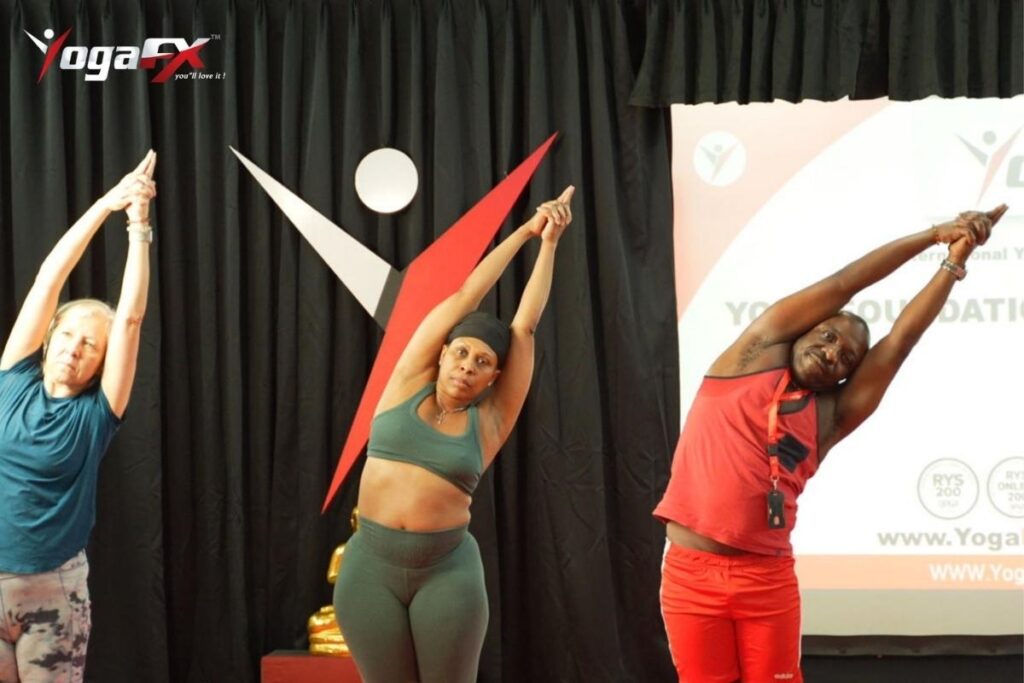
Certification is the entry point, not the job itself. Most new instructors are surprised by how much of teaching has nothing to do with the postures and everything to do with the room.
A typical teaching day involves arriving early to check the room temperature and humidity, greeting students by name as they arrive, watching the clock against the studio's class schedule, and delivering 90 minutes of continuous verbal instruction while constantly scanning the room for students who are struggling with the heat, out of alignment, or simply having an off day. The physical demand of teaching in a heated room, multiple classes a week, is real and cumulative. Most working instructors teach a mix of peak and off-peak time slots, since studios need coverage across early morning, lunchtime, and evening classes, and new hot yoga instructor often start by picking up the less popular slots before building a regular following.
The part that surprises people most is how much of the job is about voice and pacing rather than physical performance. You are not doing the postures yourself for most of the class. You are watching, cueing, adjusting your tone, and managing the energy of a room that may include a first-timer who is terrified of the heat sitting next to someone who has practised for ten years. Reading that gap correctly, class after class, is the actual skill that takes time to develop.
Stepping onto the podium for your first few real public classes can be overwhelming, but being aware of what new Bikram instructors most commonly get wrong will fast-track your confidence.
What the Income Actually Looks Like
Most hot yoga instructors are paid per class rather than salaried, and per-class rates vary widely by city, studio brand, and experience level. A newly certified instructor teaching part-time at one or two studios should not expect this to function as a full-time income in the first year. The instructors who do eventually build a full-time living from teaching typically reach that point by combining several income streams rather than relying on one studio's class roster alone: a regular schedule across multiple studios, private clients, workshops, and occasionally moving into leading their own hot yoga instructor trainings once they have enough experience.
This is worth being honest about up front rather than discovering it after certification. Teaching hot yoga can absolutely become a full-time, sustainable career, and many instructors do build exactly that, but it is closer to building a freelance practice than stepping into a guaranteed full-time role the day you graduate. The instructors who last tend to be the ones who treat the first year or two after certification as a deliberate period of building a class roster and reputation, not a shortfall to be anxious about.
If you want to see how one programme answers these questions in practice, including how it supports graduates after certification, our homepage and upcoming course dates are publicly available to review.
FAQ
How long does it take to become a hot yoga instructor?
It depends on the format. Immersive intensives can be completed in as little as 6 days to a few weeks of full-time study. Part-time programmes typically run 4 to 6 months. Weekend modular formats can take 6 to 12 months. No single format is faster in a way that matters more than fit. The right choice depends on whether you can take extended time away or need to study around an existing schedule.
Is 40 too old to become a yoga teacher?
No. There is no age limit for yoga teacher training, and it is common for people to begin in their 40s, 50s, and 60s. What matters is physical readiness for the specific demands of the programme, particularly heat tolerance for hot yoga instructor formats, not age itself.
How much does hot yoga instructor training cost?
Costs across the market range from roughly $1,000 for stripped-back local programmes to $7,000 or more for premium residential intensives at major studio brands, with most quality 200-hour programmes in between once accommodation and materials are included. The certification itself is standardised through Yoga Alliance, so price differences mostly reflect what is bundled in, such as accommodation, group size, and contact hours.
Can you make a living as a hot yoga instructor?
Yes, but it usually takes building a roster across multiple studios, private clients, and additional offerings like workshops, rather than relying on a single studio's class schedule. Most new instructors should not expect full-time income in their first year of teaching.
Do I need to already be an advanced practitioner to start teacher training?
No, though most schools recommend a consistent practice of at least several months to a year before enrolling, so you arrive with enough familiarity with the postures and the heat to focus on learning to teach rather than learning to practise for the first time.