
The history of hot yoga is longer and more layered than the standard account "Bikram Choudhury started it in the 1970s" captures. The lineage begins in Calcutta in the 1930s, runs through postwar Japan, arrives in California via Hollywood celebrity networks, peaks at 1,650 licensed studios globally, weathers a major institutional collapse, and emerges in 2026 as a research-validated practice with a new institutional identity.
This is the complete chronological account, including the details that most history articles omit: the Bishnu Ghosh lineage, the Japan origin of the heated studio, Shirley MacLaine's role in bringing the practice to American celebrity culture, the 2015 copyright ruling that changed the legal landscape permanently, and the 2023 institutional acquisition that gave the Bikram Yoga brand name a new corporate owner.
Hot yoga originated from the hatha yoga tradition developed by Bishnu Ghosh in Calcutta between the 1930s and 1960s. His student Bikram Choudhury formalised the 26-posture sequence and introduced the heated studio concept in Japan in the early 1970s, after observing the physiological effects of sauna heat on tissue pliability. Choudhury brought the format to California in the mid-1970s and expanded it globally through a franchise model.
The practice reached 1,650 studios globally at its peak in 2006. Following Choudhury's departure from the US in 2016 and the 2019 Netflix documentary, most studios rebranded to 26 and 2 yoga or original hot yoga. In March 2023, KPC Group acquired the Bikram Yoga brand name. The 2025 Willmott systematic review of 43 studies is the most comprehensive research validation of the practice to date.
The Foundation: Bishnu Ghosh and the Calcutta Tradition (1930s to 1960s)
The history of hot yoga begins not with Bikram Choudhury but with his teacher, Bishnu Charan Ghosh, the younger brother of the renowned yogi Paramahansa Yogananda. Ghosh founded the College of Physical Education in Calcutta in the 1920s and developed a systematic approach to physical culture yoga that combined hatha yoga postures with the principles of therapeutic exercise.
Ghosh's institution became one of the most significant centres of yoga therapy and physical culture in India between the 1930s and 1960s. His approach was specifically therapeutic, he used yoga postures to rehabilitate injured and ill practitioners at a time when therapeutic applications of yoga were not academically established. The 26 postures that would later become the Bikram sequence are drawn directly from the Ghosh tradition. bikramyogahb.com (October 2025) states this lineage precisely: "The traditional yoga method and system we specialize in was developed in Calcutta, India, between the 1930s and 1960s by Bishnu Ghosh."
Bikram Choudhury began studying under Ghosh as a child and was reportedly a competitive yoga posture champion in India. After a knee injury in his early life, Ghosh's therapeutic yoga methods were credited with his recovery, an experience that reportedly shaped Choudhury's belief in the specific therapeutic power of the postures he would later systematise.
The Heated Studio Innovation: Japan in the Early 1970s
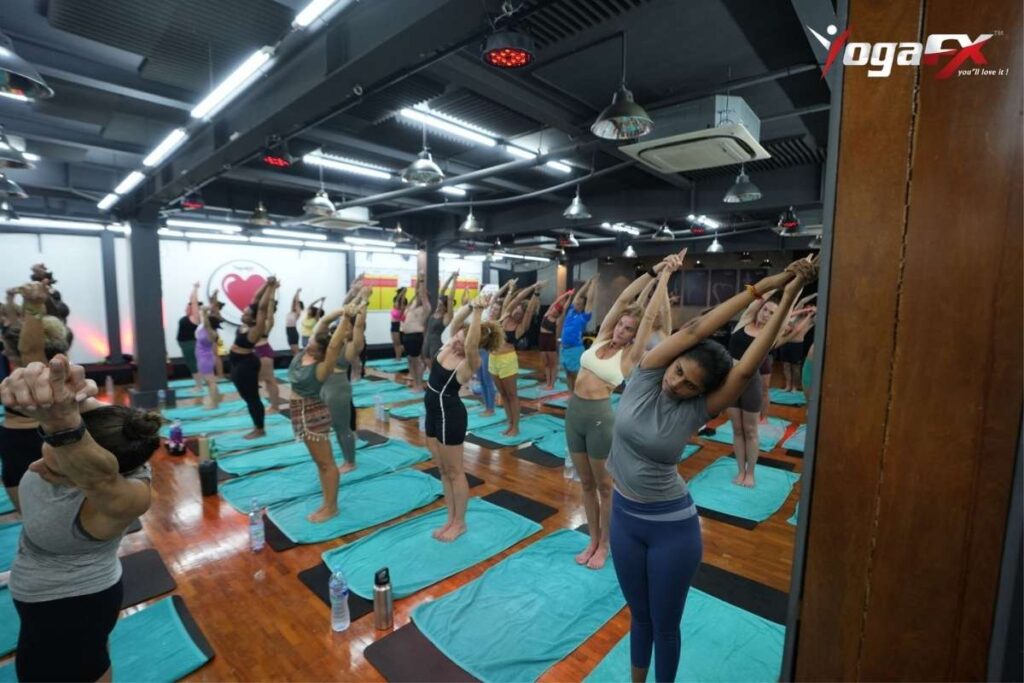
The introduction of heat into yoga practice is not an ancient Indian tradition, it is a 1970s innovation that began in Japan, not India. Yoga International provides the account most consistent with the history of hot yoga sources: "The first heated yoga studio can be traced back to Japan in the 1970s. Bikram Choudhury was teaching in Japan and he was intrigued by the saunas his Japanese students frequented."
The specific motivation: Choudhury observed that the tissue pliability and range of motion accessible in a heated sauna environment enabled his students to achieve posture depths that were unavailable in a room-temperature yoga setting. The heated environment was not designed to recreate India, it was designed to recreate the physiological conditions that saunas produce. Wikipedia notes that Choudhury "claimed to have devised it from traditional hatha yoga techniques, but then increased the temperature of the studios while in Japan to represent the heat of India." The retrospective framing as Indian heat replication may have come later as a marketing identity; the initial impetus was the sauna observation.
The specific temperature specification, 40 degrees Celsius with 40 percent relative humidity, emerged from this experimentation. The humidity element is particularly significant: the humid heat of a sauna produces different tissue effects from dry heat, and the Bikram specification preserves this distinction from the original Japanese innovation.
The California Launch: 1973 to 1979
Bikram Choudhury arrived in the United States in the early 1970s, settling in California. His first American studio opened in Beverly Hills, which placed him immediately adjacent to the Hollywood entertainment industry and the celebrity wellness culture that would become central to the practice's American expansion. The industry underwent a massive cultural evolution following the release of the Netflix documentary that changed Bikram yoga and sparked a global studio rebranding movement.
The celebrity dimension: "Hot yoga became synonymous with celebrity wellness" (bodenyc.com). The specific practitioner account most responsible for this was Shirley MacLaine. yogacreatives.com (December 2023) states: "Hot yoga is largely because of Shirley MacLaine. She ended up in a yoga class taught by Bikram, a bodybuilder who had learned yoga from Bishnu Ghosh." MacLaine's public profile, an Oscar-winning actress with a substantial wellness-focused platform, brought Bikram's practice into the awareness of a Los Angeles social network that spread it through word of mouth in exactly the demographics that would sustain it.
The celebrity association that began with MacLaine established a pattern that continued throughout the 1980s and 1990s: Jennifer Aniston, Madonna, Lady Gaga, and the Rockettes all became associated with the practice. Kareem Abdul-Jabbar credited it with extending his NBA career. Andy Murray incorporated it into his Wimbledon preparation.
The Complete Historical History of Hot Yoga Timeline
| Period | Key Development |
|---|---|
| 1930s to 1960s | Bishnu Ghosh develops therapeutic hatha yoga system in Calcutta. The 26 foundational postures established. |
| Early 1970s | Bikram Choudhury teaches in Japan, introduces heated studio concept after sauna observation. First heated yoga classes practiced. |
| 1973 | Choudhury opens first US studio in Beverly Hills. Shirley MacLaine becomes practitioner and key early advocate. |
| 1980s to 1990s | Global expansion via teacher training and word of mouth. Studios open across North America, UK, Australia, Europe. |
| 2002 to 2006 | Formal franchise programme at peak. Studios reach 1,650 in at least 40 countries globally. |
| 2013 | Tracy and Hart study (PubMed: 23438366): first rigorous research, 20 percent strength increase, flexibility and body composition at 8 weeks. |
| 2014 | University of Wisconsin study (PubMed: 24700459): 333 to 460 kcal per session, 80 percent max HR, direct metabolic measurement. |
| 2015 | US Ninth Circuit Court ruling: yoga sequences cannot be copyrighted. Choudhury's copyright claims fail. Practice becomes freely teachable. |
| 2017 | Netflix documentary "Bikram: Yogi, Guru, Predator" released. Multiple former students come forward with serious allegations. |
| 2019 to 2022 | Rebranding across the studio network. "26 and 2 yoga" and "original hot yoga" become primary alternative names. COVID-19 compounds studio closures. |
| 2023 | Harvard MGH RCT (PubMed: 37883245): 60 percent of depression participants reduce symptoms by 50 percent or more. KPC Group acquires Bikram Yoga brand (March). |
| 2025 | Willmott et al. systematic review (PMC12488547): 43 studies, 942 participants, most comprehensive hot yoga research ever published. |
The 2015 Copyright Ruling: A Legal Turning Point
One of the most consequential events in the history of hot yoga received relatively little public attention: the 2015 US Ninth Circuit Court of Appeals ruling in Bikram's Yoga College of India v. Evolation Yoga.
Choudhury had attempted to copyright the 26-posture sequence, arguing that it qualified as a creative work entitled to copyright protection. The Ninth Circuit ruled against him, holding that yoga sequences are functional, collections of exercises, rather than expressive works, and therefore do not qualify for copyright protection under US law.
The evolution from lineage to competitive athletic discipline reached a milestone in Southeast Asia, showcased by Indonesia's results at the first World Yogasana Championship.
The practical consequence was immediate and lasting: any certified instructor could teach the Bikram 26-posture sequence without paying licensing fees to Choudhury's organisation, without franchise obligations, and without any ongoing relationship with the Yoga College of India. This ruling laid the legal groundwork for the independent studio proliferation that followed the 2019 rebranding. When studios dropped the Bikram name and adopted 26 and 2 yoga or original hot yoga branding, they were exercising a legal right that had been established four years earlier.
The Institutional Collapse and Rebranding: 2017 to 2022
The 2017 Netflix documentary and subsequent civil and criminal proceedings produced the most significant institutional disruption in history of hot yoga. Multiple former students and teacher training participants came forward with serious allegations of sexual misconduct and workplace abuse. Choudhury was convicted in absentia and departed the United States. The lineage has successfully decoupled from its historical controversies, bringing us to where Bikram yoga stands today as an inclusive, wellness-first practice.
The studio network responded in two ways. Some studios closed, unable to sustain the combination of COVID-19 lockdowns (2020) and reduced demand. yogaismedicine.com reported in December 2021 that well over 50 percent of Bikram yoga studios in the United States had closed since spring 2020. Most surviving studios rebranded, the 2015 copyright ruling meant there was no legal obligation to maintain the Bikram name, and significant brand liability in continuing to use it. The community's response, documented in the Reddit r/yoga thread: "The practice and community are much greater than the man himself."
The KPC Group Acquisition: March 2023
In March 2023, the Bikram Yoga brand name was acquired by KPC Group, a US healthcare company expanding its KPC Lyfe holistic health initiative. The bikramyoga.com domain, the original institutional home of Bikram yoga now operates under KPC Group as an Original Hot Yoga programme. For the teaching community, the acquisition has produced no observable change in the practice. The 2015 copyright ruling means the sequence remains freely teachable regardless of who owns the trademark.
Hot Yoga in 2026: The Post-Rebranding Landscape
In 2026, the practice taught as hot yoga exists in three simultaneous forms: the authentic 26-posture Bikram sequence taught under names including 26 and 2 yoga, original hot yoga, and hot 26 and 2 in electric-heated studios globally; the Original Hot Yoga programme at bikramyoga.com under KPC Group ownership; and the broader hot yoga market, which has expanded significantly since 2019 to include hot Vinyasa, hot Pilates, infrared yoga, and various heated formats that use the "hot yoga" label without teaching the fixed sequence.
The Willmott 2025 systematic review found that Bikram yoga remained the most commonly studied format in the hot yoga research literature, representing 74 percent of the studies reviewed, followed by generalised hot yoga (19 percent), Hatha (5 percent), and Vinyasa. This research preponderance reflects both the practice's history of hot yoga primacy and its ongoing scientific relevance. Tracing the lineage back to Calcutta reveals how the Hatha yoga roots of the Bikram sequence formed the blueprint for modern therapeutic heat.
Natural Heat: The Original Environment
One dimension of the history of hot yoga that most accounts overlook: the heated studio was an innovation designed to recreate physiological conditions, not a preference. The specific temperature and humidity specification, 40 degrees Celsius with 40 percent relative humidity was developed to approximate sauna conditions that produce specific tissue effects.
At YogaFX Bali, natural tropical heat provides 40 degrees Celsius with ambient humidity above 70 percent without electric heaters. This is the closest available approximation to the original physiological intent of the Bikram format and the conditions under which the most significant research outcomes have been measured. The global network of electric-heated studios approximates these conditions; Bali's natural climate meets them without approximation.
FAQ
How did hot yoga originate?
Hot yoga originated from the hatha yoga tradition developed by Bishnu Ghosh in Calcutta between the 1930s and 1960s. Ghosh's student Bikram Choudhury formalised the 26-posture sequence and introduced the heated studio concept in Japan in the early 1970s, after observing that sauna heat produced specific tissue pliability effects. Choudhury brought the format to California in the mid-1970s, where celebrity practitioner networks spread it through Hollywood and then globally. The practice reached 1,650 licensed studios by 2006.
When did hot yoga become popular?
Hot yoga began gaining broader popularity in the late 1970s through the early 1980s, driven by celebrity practitioner endorsements in Los Angeles, Shirley MacLaine's early association is credited with bringing it into Hollywood wellness networks. The global boom occurred from the 1990s through the mid-2000s, reaching 1,650 studios globally by 2006. Hot yoga remains popular in 2026: Newsweek reported in March 2025 that approximately 36 percent of American yoga practitioners engage in hot yoga.
Where did hot yoga come from?
The lineage has three geographical origins: the foundational posture system was developed in Calcutta, India by Bishnu Ghosh from the 1930s onwards; the heated studio innovation was introduced in Japan in the early 1970s by Bikram Choudhury; and the modern hot yoga studio format was established in California in the mid-1970s when Choudhury opened his first US studio in Beverly Hills.
Who invented hot yoga?
Bikram Choudhury is credited with developing the modern hot yoga studio format in the early 1970s, specifically the combination of a fixed 26-posture sequence in a heated room. However, the posture sequence he systematised was drawn from the therapeutic hatha yoga tradition developed by his teacher Bishnu Ghosh in Calcutta. The heated studio innovation originated in Japan. Choudhury's specific contribution was formalising the sequence, specifying the temperature, and building the institutional framework that spread the practice globally.
Why is hot yoga no longer called Bikram yoga?
Following the 2017 Netflix documentary about Bikram Choudhury's conduct and subsequent legal proceedings, most studios voluntarily dropped the Bikram name to separate the practice from its founder. The 2015 US Ninth Circuit copyright ruling had already established that no licensing fees were required to teach the sequence. Studios adopted 26 and 2 yoga, original hot yoga, and similar alternatives. In March 2023, KPC Group acquired the Bikram Yoga trademark. The practice itself is unchanged.
What is the theory behind hot yoga?
The physiological theory: heat reduces connective tissue viscosity and increases extensibility, enabling deeper posture range at equivalent effort. Heat also produces thermoregulatory cardiovascular demand that is independent of the postures themselves, increasing total metabolic work. The 2025 Willmott systematic review (PMC12488547), reviewing 43 studies covering 942 participants, confirmed that hot yoga produces improvements in body composition, balance, flexibility, bone mineral density, and some physical performance indices compared to non-exercise and room-temperature yoga conditions.