
Hot hatha yoga is traditional Hatha yoga practiced in a room heated to roughly 95 to 100°F (35 to 38°C). Classes are slow and static, with each posture held for 5 to 10 breaths and the focus on alignment and breathwork. The heat helps muscles loosen, so it suits beginners and intermediate practitioners.

This guide covers what a class feels like, how hot hatha compares with Bikram and Vinyasa, what the research says, and how to get through your first session. It comes from the team at YogaFX, founded by Mr. Ian Terry, E-RYT 500, who has more than 12,000 teaching hours behind him.
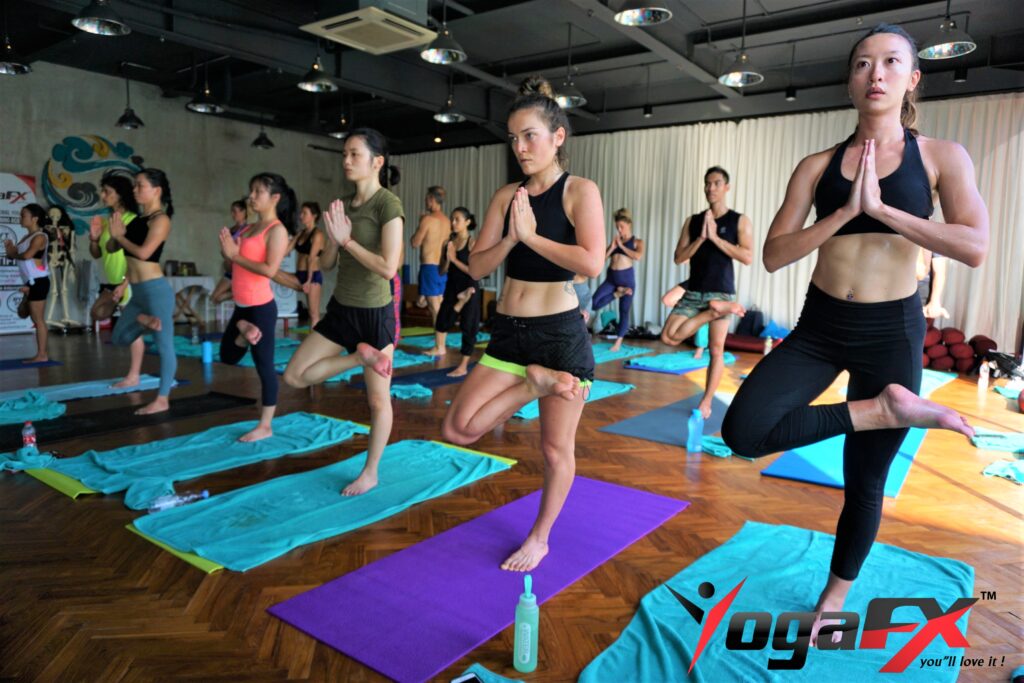
What Is Hot Hatha Yoga? A Clear Definition
Hatha is the root of most posture-based yoga practiced today. The word covers the physical side of yoga: asana (postures), pranayama (breath control), and meditation. Hot hatha yoga keeps that foundation and adds a heated room.
Three features define it:
- Heat. The room sits at about 95 to 100°F (35 to 38°C), warm enough to loosen muscles without the intensity of a 105°F room.
- Pace. Movements are slow and intentional. You hold each posture for 5 to 10 breaths instead of flowing from one shape to the next.
- Instruction. A teacher chooses and cues the sequence, so classes change from day to day.
Studios usually heat the space with infrared panels or conventional heaters, and humidity varies from one studio to the next. That's why two classes with the same label can feel quite different. Check the posted temperature before you book.
The heat has a practical job. Warm muscles stretch further with less strain, so long holds feel productive instead of punishing. It doesn't make the practice more advanced, and it isn't a shortcut to anything. You still do the work in every posture.
How a Hot Hatha Yoga Class Usually Unfolds
Most classes run 60 to 90 minutes, and the teacher builds the sequence. Even so, the shape is fairly consistent from studio to studio.
- Arrival and breath. You settle on the mat and take slow, deep breaths while your body adjusts to the heat.
- Warm-up. Gentle spinal and hip movements prepare the joints for longer holds.
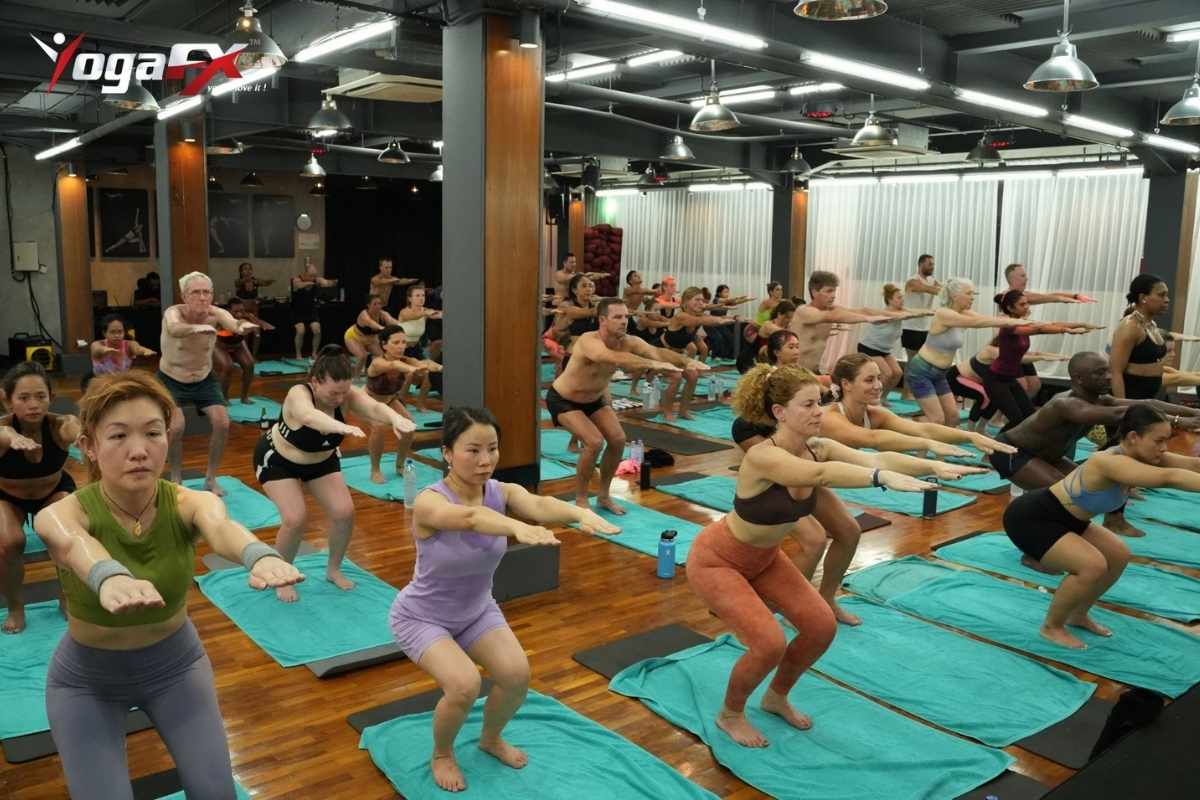
- Standing postures. Shapes such as Chair Pose, Warrior II, and Triangle Pose are held for 5 to 10 breaths each.
- Balance work. Single-leg postures train focus and the small stabilising muscles of the ankle and hip.
- Seated and floor work. Forward folds, twists, and hip openers use the warmth to lengthen tight areas.
- Backbends and counterposes. Gentle backbends are followed by forward folds to balance the spine.
- Final relaxation. Savasana lets your heart rate settle and your breathing return to normal.
Every hold lasts 5 to 10 breaths, which is roughly 30 seconds to a minute for most people. That gives you time to notice what a posture is doing. Slowness exposes weak spots quickly, such as a collapsing knee or a tight hip, and it gives you time to fix them.
Sustained holds also ask your stabilising muscles to work longer than a flowing class would. For example, a long Chair Pose builds leg endurance in a way that moving through the same shape quickly does not. As a result, many students say hot hatha feels gentler than it looks but tires them more than they expect.
Hot Hatha Yoga vs Bikram vs Vinyasa: 5 Real Differences
People often assume any heated class is Bikram, so it helps to separate the three styles by what actually changes. The table shows the main differences, and the sections below explain each one.
| Feature | Hot Hatha | Bikram (Hot 26&2) | Vinyasa |
|---|---|---|---|
| Temperature | 95 to 100°F (35 to 38°C) | About 105°F (40°C), 40% humidity | Room temperature or warm |
| Pace | Slow and static, 5 to 10 breaths per posture | Measured, with set timing inside a 90-minute class | Fast and flowing |
| Sequence | Teacher-led, varies by class | Fixed: 26 postures and 2 breathing exercises | Teacher-led, varies by class |
| Instruction | Cued, often with demonstration and props | Scripted dialogue, no demonstration or music | Cued, often with music |
| Best for | Beginners to intermediate | People who want consistency | Intermediate to advanced |
1. Temperature
Hot hatha sits at roughly 95 to 100°F (35 to 38°C). A Bikram room is held at about 105°F (40°C) with 40% humidity, and both numbers are specifications, not approximations. Our guide to the Bikram hot yoga room explains why those numbers matter. Vinyasa is usually taught at room temperature or only slightly warm.
2. Pace
Hot hatha is slow and static. Vinyasa is fast and flowing, linking breath to movement. Bikram sits in between: each posture has a set timing inside the 90-minute class, so nothing is rushed or extended.
3. Sequence
In hot hatha, the teacher chooses the postures, so no two classes need to match. Bikram is a fixed order of 26 postures and 2 breathing exercises. If you like knowing exactly what comes next, fixed wins. If you like variety, teacher-led wins.
4. Instruction style
A hot hatha teacher may demonstrate, adjust, and offer props such as blocks and straps. In the original format taught at YogaFX, the teacher delivers a word-for-word spoken dialogue, with no demonstration and no music. Both are valid, but they ask different things of you. One asks you to follow a person, and the other asks you to listen and respond to the words.
5. Who it suits
Hot hatha suits beginners and intermediate practitioners who want alignment and stability. Bikram suits people who value consistency and measurable progress. Vinyasa tends to suit intermediate to advanced students who enjoy coordination challenges. Where you land depends on what you want from the room.
For a fuller look at the two oldest styles side by side, read our Bikram yoga vs Hatha yoga comparison.
Hot Hatha Yoga Benefits: What the Research Actually Says
Here is the honest starting point: very few studies use the label hot hatha itself. Most heated yoga research uses Bikram or a related heated format, so the closest evidence has to be read with that in mind.
Flexibility and joint comfort
Warm tissue is easier to stretch, and long holds let you ease into a posture rather than force it. A 2025 systematic review by Willmott et al. pooled 43 studies and 942 participants and linked Bikram yoga with gains in flexibility, bone density, and wellbeing. That evidence is about Bikram rather than hot hatha, but the heated environment and the Hatha postures overlap.
Mood and stress
A 2023 trial from Massachusetts General Hospital, published in the Journal of Clinical Psychiatry, tested heated hatha yoga in adults with depression. After 8 weeks, 59% of the yoga group had cut their symptoms by at least half, compared with about 6% of the waitlist group. Separately, a 2022 study by Hui et al. found that hot yoga reduced state anxiety.
These results are encouraging, but they don't make yoga a replacement for treatment. If you're managing depression or anxiety, speak with a healthcare professional before changing your routine.
Calories and fitness
The best-known measurement is for Bikram. A University of Wisconsin study by Porcari et al. recorded about 333 calories in women and 460 in men over 90 minutes at roughly 80% of maximum heart rate. Hot hatha is slower, so it may burn less, and no equivalent figure exists for it.
What sweat does and doesn't do
Heat makes you sweat, and sweating is how your body cools itself. Sweat is not a measure of anything leaving your body, and the weight you lose on the scale after class is water that returns when you rehydrate. Drink enough before, during, and after class instead of chasing the sweat.
This article is educational and is not medical advice. Consult a healthcare professional before starting a heated yoga practice, especially if you have a medical condition.
Who Hot Hatha Yoga Suits, and Who Should Be Careful
Hot hatha is a good entry point for most healthy adults. It's gentler than a 105°F room and slower than a flow class, so you can learn the postures without feeling rushed. It tends to work well if you:
- are new to yoga or returning after a long break
- want to improve flexibility and alignment
- prefer holding postures to moving continuously
- plan to build up to hotter or fixed-sequence styles later
Heat adds stress to your cardiovascular system. Speak with a healthcare professional before your first class if any of these apply:
- you are pregnant or think you might be
- you have a heart condition or blood pressure concerns
- you are sensitive to heat or have fainted before
- you take medication that affects hydration or temperature regulation
A good studio will ask about these at sign-up. If yours doesn't, tell the teacher yourself before class starts.
Tips for Your First Hot Hatha Yoga Class
A few small choices make the first class far more comfortable.
- Hydrate early. Drink about 16 ounces (500 ml) of water two hours before class, then keep sipping during and after.
- Wear moisture-wicking clothes. Light, breathable fabric moves with you, while heavy cotton gets soaked and clings.
- Bring two towels. A mat towel keeps your hands and feet from slipping, and a face towel handles the sweat. Our checklist of what to bring to a hot yoga class covers the rest.
- Eat light and early. A heavy meal in the last hour or two before class competes with the heat for your body's attention.
- Arrive 10 to 15 minutes early. You can adjust to the temperature and tell the teacher about any injuries.
- Honor your limits. If the heat feels overwhelming, rest in Child's Pose and breathe until you settle. If you feel dizzy, nauseous, or faint, sit down and leave the room if you need to.
Child's Pose isn't failure. It's part of the practice, and experienced students use it all the time. A good teacher who sees you rest will not think less of you.
Start with one or two classes in your first week and build gradually. Your body adapts to heat over several sessions, so the second and third class usually feel easier than the first.
How Often Should You Practice Hot Hatha Yoga?
Most beginners do well with two classes a week. That gives your body time to recover and adapt, and it's enough to feel progress within a month. Three or four classes a week suit people who already handle the heat comfortably.
- Weeks 1 and 2: one or two classes, with the focus on hydration and learning the shapes.
- Weeks 3 and 4: add a third class if recovery feels good, and hold postures a little longer.
- Month 2 onward: adjust by feel and notice changes in flexibility and breath.
Rest days matter. If you feel drained, headachy, or unusually sore, take an extra day off. Consistency beats intensity, and a lighter week now protects the habit you're building.
5 Common Mistakes in Your First Hot Hatha Classes
- Skipping water until class starts. By then you're already behind, so drink well in the hours before.
- Pushing through the heat instead of resting. Dizziness is a signal to pause, not a test to pass.
- Forcing depth because the muscles feel warm. Heat makes tissue stretchier, which can hide strain. Go to your edge, not past it.
- Wearing the wrong fabric. Heavy cotton and loose tops get in the way once you start to sweat.
- Comparing yourself with the person beside you. Their history and body aren't yours, so work with your own breath.
From Hot Hatha to the Original Hot 26&2 Method at YogaFX
Hot hatha and Bikram share a family tree. The 26 postures of the Bikram sequence were systematised from classical Hatha yoga postures, which is why many students find hot hatha familiar ground. The difference is structure: a fixed order, a precisely controlled room, and a scripted dialogue.
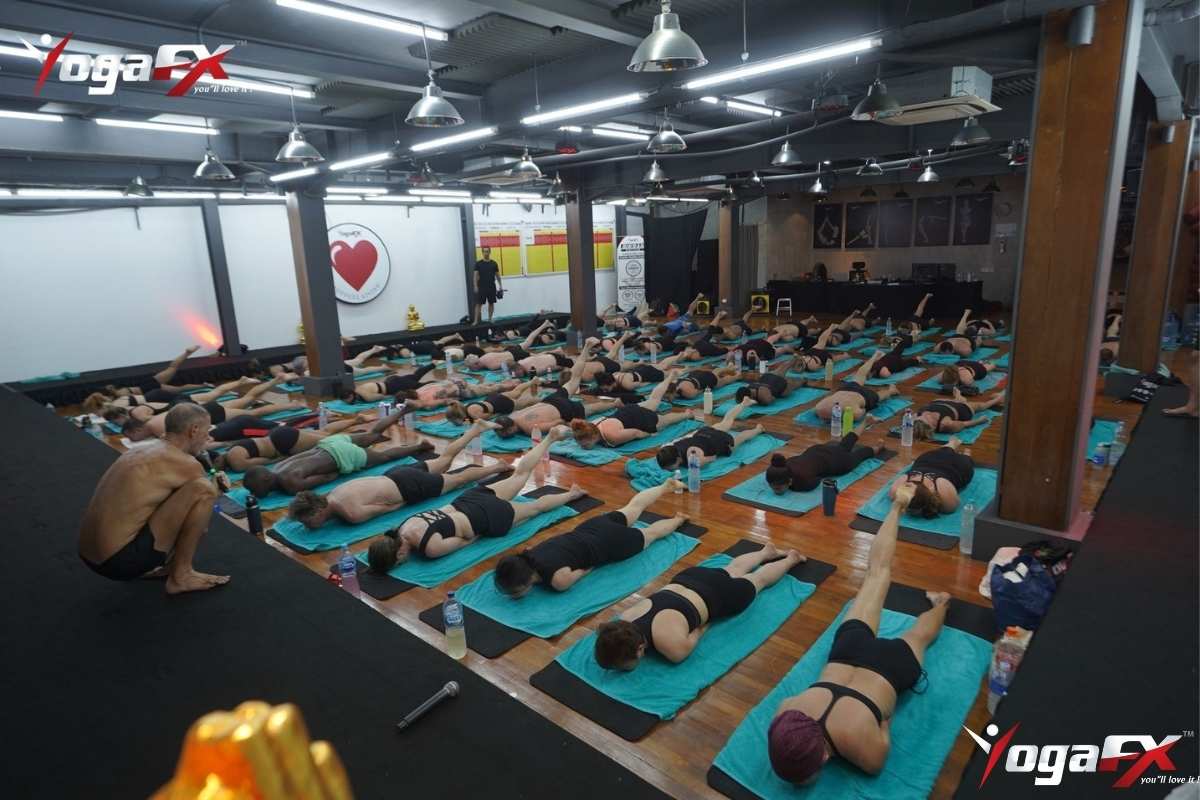
At YogaFX, classes in Seminyak and Canggu follow that original format. Each class runs 90 minutes in natural tropical heat at about 40°C and 40% humidity, with no electric heaters, no music, and no demonstration.
Mr. Ian Terry, E-RYT 500, founded YogaFX in 2017. He has more than 12,000 teaching hours, has trained 1,500+ graduates from 80+ countries, and trained with the method's founder between 2014 and 2019. In June 2026 he was confirmed as a Master Trainer of the Republic of Indonesia Yogasana Sports Federation.
Graduates who review the programme often describe the six days as the hardest thing they have done, then say it rebuilt their confidence. That fits what the format asks of you: a lot of heat, a lot of repetition, and very little room to hide.
If you want to teach, the standard route is a Yoga Alliance RYT 200 certification. YogaFX runs a 6-day hybrid programme: you study the theory and dialogue online first, then finish with an in-person intensive in Bali. Graduates earn Yoga Alliance RYT 200 plus the Bikram Hot 26&2 200-Hour International Yoga Certification.
The next intensive runs from check-in on Sunday 24 January 2027 to check-out on Friday 29 January 2027. Our guide to hot yoga certification explains the types and hours, and the course dates page lists every batch.
Hot Hatha Yoga FAQ
Is hot hatha yoga good for beginners?
Yes. The slower pace and long holds give beginners time to learn alignment, and the teacher can offer modifications as you go. Heat makes muscles feel looser, but it also raises the cardiovascular load, so start with one or two classes a week, rest in Child's Pose whenever needed, and tell the teacher about any health conditions first.
How hot is a hot hatha yoga class?
Most hot hatha classes run between 95 and 100°F (35 to 38°C). That is cooler than a Bikram room, which is held at about 105°F (40°C) with 40% humidity. Exact settings vary by studio, so check the temperature before your first class and ask whether the room uses infrared or conventional heating.
How many calories does hot hatha yoga burn?
There is no reliable figure for hot hatha specifically. The best-known measurement is for Bikram: a University of Wisconsin study found about 333 calories for women and 460 for men in a 90-minute class. Hot hatha is slower, so it may burn less, and any exact number should be treated as an estimate.
Is hot hatha yoga hard?
It can be demanding, but the difficulty comes from sustained holds and heat rather than speed. Holding a posture for 5 to 10 breaths challenges strength and focus, and the warm room raises your heart rate. Most healthy beginners manage it by pacing themselves, drinking water, and resting whenever the temperature feels overwhelming.
What is the difference between hot hatha and Bikram yoga?
Hot hatha is teacher-led, slower, and held at 95 to 100°F, so the sequence changes from class to class. Bikram is a fixed 26-posture, 2-breathing-exercise sequence in about 105°F heat, delivered as a scripted dialogue. Hot hatha suits beginners who want variety; Bikram suits people who want consistency.
Can I become a hot yoga teacher?
Yes. A Yoga Alliance RYT 200 certification from a registered school is the standard route. YogaFX offers a 6-day hybrid intensive in Bali covering the Hot 26&2 method. This is independent training, not official Bikram Choudhury Teacher Training, and it carries Yoga Alliance RYT 200 plus a Bikram Hot 26&2 200-hour certification.
Still have questions? Take the YogaFX readiness quiz and tell the team where you are in your practice, so they can point you to the right next step.