
The question of what Bikram yoga body transformation actually looks like has two different types of answer in search results: personal stories (impressive but anecdotal) and research data (rigorous but abstracted from lived experience). This guide integrates both — the published research timeline and the real practitioner accounts — to give an accurate picture of what consistent Bikram practice produces, when, and under what conditions. True Bikram Yoga Body Transformation isn't just aesthetic; it's psychological. The intense focus required during class triggers a meditative state, providing sustainable hot yoga and anxiety relief that carries over into your daily life.
The research is specific. The Tracy and Hart (2013) study measured outcomes at 8 weeks of 3 to 4 sessions per week: 20 percent deadlift strength increase, significant lower back and hamstring flexibility gains, body fat reduction with lean muscle gain. The University of Wisconsin 2014 study measured 333 to 460 kcal per 90-minute session at 80 percent of maximum heart rate. The Harvard MGH 2023 trial documented depression reduction in 60 percent of participants at 8 weeks of 2 to 3 sessions per week. These are not anecdotes.
Bikram yoga body transformation follows a predictable timeline when practiced at 3 to 4 sessions per week. Week 1 to 2: sleep quality improvement, heat adaptation beginning. Week 3 to 4: first measurable flexibility gains in forward folds and Eagle Pose. Week 5 to 8: visible body composition changes begin, 20 percent posterior chain strength increase documented at 8 weeks (Tracy and Hart 2013).
Month 3 to 4: continued body fat reduction, lean muscle gain measurable, mental health improvements consolidating. Month 5 to 6: sustained Bikram Yoga Body Transformation across all domains — flexibility, strength, body composition, and mood stability. Results depend entirely on consistency and frequency.
The Research Foundation: What the Studies Actually Measured
| Study | Frequency and Duration | Primary Transformation Findings |
|---|---|---|
| Tracy and Hart 2013, Colorado State University (PubMed: 23438366) | 3 to 4 sessions per week, 8 weeks | 20% deadlift strength increase. Significant lower back and hamstring flexibility gains. Body fat reduction with lean muscle gain. 9% balance improvement. |
| Porcari et al. 2014, University of Wisconsin (PubMed: 24700459) | Single session measurement | 333 kcal (women, avg 68kg) to 460 kcal (men, avg 82kg) per 90-minute session. 80% max HR throughout. Direct metabolic measurement. |
| Nyer et al. 2023, Harvard MGH (PubMed: 37883245) | 2 to 3 sessions per week, 8 weeks | 60% of participants with moderate to severe depression reduced symptoms by 50% or more. 44% achieved full remission. |
| Willmott et al. 2025, systematic review (PMC12488547) | Multiple studies, 43 total, 942 participants | Consistent improvements in flexibility, balance, bone mineral density, and physical performance indices across the hot yoga research base. |
The Bikram Yoga Body Transformation Timeline: Week by Week
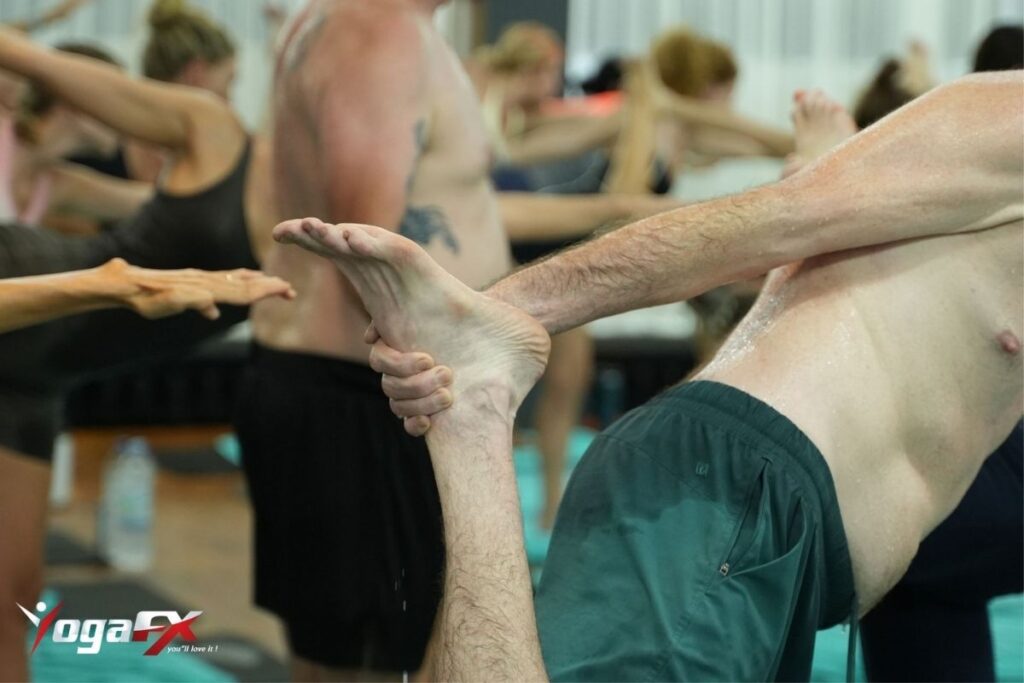
Week 1 to 2: The Hardest Phase and First Changes
The first two weeks of Bikram yoga are not where Bikram Yoga Body Transformation is visible — they are where transformation is being built beneath the surface while the surface experience is simply difficult. What practitioners experience: heat adaptation is in progress but not complete. The class that will eventually feel manageable feels like survival. Post-class fatigue is significant. The cardiovascular peak of the standing series (postures 5 to 7) requires maximum effort.
What is actually happening physiologically: plasma volume expanding (one of the first cardiovascular adaptations to sustained heat exercise); sweat onset time decreasing (the body becomes more efficient at cooling from the first minute rather than after 10 to 15 minutes); sleep quality improving (typically the first measurable benefit, appearing from sessions 1 to 5 for most practitioners); and appetite regulation changing (increased hunger reflecting the combined caloric demand of exercise and thermoregulation).
The Oprah Magazine 60-day Bikram Yoga Body Transformation account (Paige Williams, published) describes the first two weeks: the first 10 days were the worst of her life. This is an accurate characterisation. It is also temporary.
Week 3 to 4: The Transition
Around sessions 8 to 12 for most practitioners, heat adaptation becomes perceptibly easier. The class that required survival-mode management begins to feel manageable. This shift is physiological, not motivational — the thermoregulatory system has adapted to the specific demands of sustained exercise in 40-degree heat. The first visible Bikram yoga body transformation markers appear:
- Flexibility improvements in standing forward folds — particularly in Standing Separate Leg Stretching and Hands to Feet Pose
- Eagle Pose arm wrap deepening — the posterior shoulder capsule extensibility increase that heat-enhanced practice produces becomes visible
- Reduced post-class fatigue — the thermoregulatory tiredness of weeks 1 and 2 converts to the positive post-class energy elevation that experienced practitioners describe
- Face and skin changes — practitioners consistently report improved skin clarity from circulation effects and pore clearing of sustained perspiration
Week 5 to 8: The Research-Documented Bikram yoga body transformation Period
This is the 8-week window that the Tracy and Hart (2013) study measured. The documented outcomes at the 8-week mark of 3 to 4 sessions per week:
- 20 percent posterior chain strength increase (measured as deadlift improvement) — the prone floor series loading of the spinal erectors, glutes, and hamstrings produces measurable muscle strength that compounds with each session
- Significant lower back flexibility gains — the combination of heat-enhanced connective tissue extensibility and progressive daily loading produces gains that room-temperature flexibility work cannot match at the same rate
- Significant hamstring flexibility gains — the most commonly restricted muscle group in adults who sit for work
- Body fat reduction with lean muscle gain — body composition changes that produce visible physical Bikram yoga body transformation even when total scale weight changes modestly
- 9 percent balance improvement — the single-leg balance series develops proprioceptive and ankle stability that transfers visibly to daily movement quality
The Paige Williams 60-day account (Oprah Magazine): 14 pounds lost, 5 inches from the waist, LDL cholesterol improvement — consistent with the research direction. The Notes of Nomads account (notesofnomads.com, 3 months) describes significant decrease in belly bulge, more toned arms, and general improved strength within 1 month. Individual variation is significant, but the direction is consistent.
Month 3 to 4: Consolidation and Deeper Change
By month 3, practitioners at consistent 3 to 4 sessions per week have completed approximately 36 to 48 sessions. Body composition changes are now clearly visible and commented on by others. The practice itself has changed in quality — posture depths accessible at month 3 were not available at month 1, because of cumulative thermal and mechanical preparation rather than increased effort. Mental health improvements are consolidating, and spinal mobility across all planes has improved measurably.
Month 5 to 6: The Sustained Bikram Yoga Body Transformation State
The Reddit r/yoga thread "Bikram yoga update 3x/week for 6 months" (30 or more comments) captures the 6-month state. Body composition stabilises at a new set point. Muscle tone is visible and different from gym-trained aesthetics — the posterior chain and core development from the Bikram sequence produces a physique quality practitioners describe as "longer and leaner." Flexibility that was aspirational in month 1 is functional in month 6.
Heat tolerance has transferred — practitioners at 6 months find warm weather, saunas, and other heat contexts noticeably more comfortable than before practice began. If you think lifting weights is the only way to build muscle tone, seeing how Bikram yoga compares to gym training for strength through pure isometric holds will surprise you.
Bikram Yoga Body Transformation by Dimension
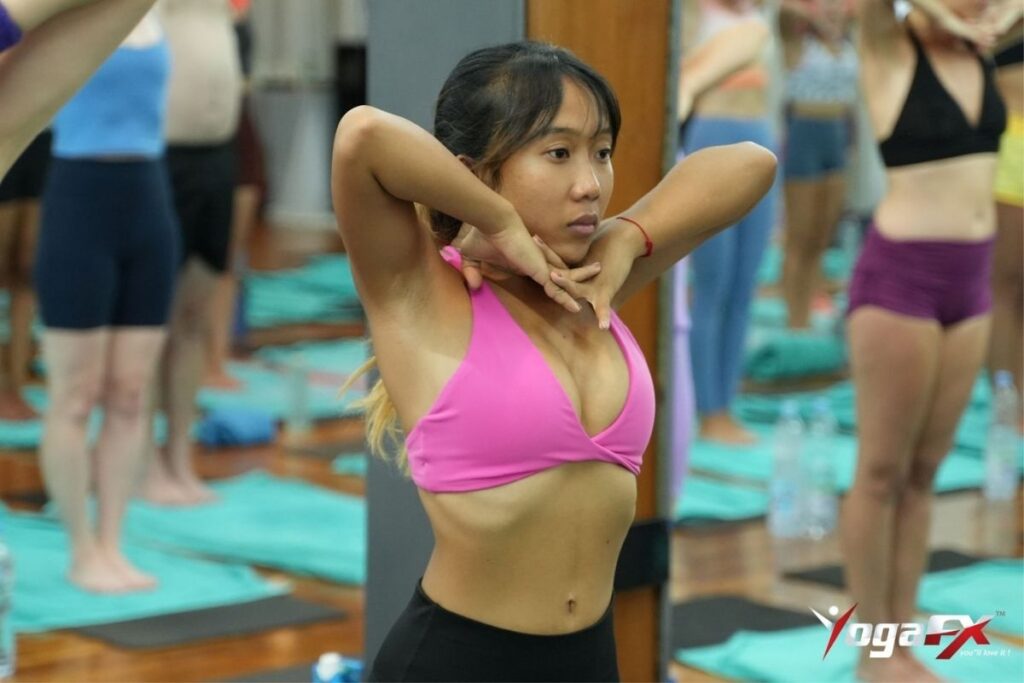
Body Composition: Fat Loss and Muscle Development
The body composition Bikram yoga body transformation works through three simultaneous mechanisms. Direct calorie expenditure: 333 to 460 kcal per 90-minute session at 3 sessions per week produces approximately 1,000 to 1,400 kcal per week in exercise expenditure. Lean muscle development: the 20 percent posterior chain strength increase represents genuine muscle development — and lean muscle increases resting metabolic rate between sessions. Hormonal regulation: consistent heat exercise produces cortisol regulation effects that reduce stress-related fat storage, particularly around the abdomen.
The honest qualifier: body composition Bikram Yoga Body Transformation from Bikram yoga alone, without dietary adjustment, produces moderate rather than dramatic scale weight changes. Most published accounts combining significant weight loss with Bikram practice also involved dietary awareness. The body composition changes — fat reduction with muscle gain — are consistently reported even when total scale weight changes modestly.
When analyzing shifts in body fat percentage versus lean muscle mass, it becomes clear how Bikram yoga specifically affects weight loss through metabolic conditioning.
Flexibility Transformation
The flexibility Bikram yoga body transformation is the most universally reported and the most visible. The areas that change most significantly: lower back (Tracy and Hart specifically documented this at 8 weeks — the area where heat-enhanced connective tissue extensibility produces the fastest gains); hamstrings (the second most documented improvement); thoracic spine (Camel Pose's maximum extension practiced daily in 40-degree heat produces thoracic mobility gains — practitioners at 6 months stand differently from practitioners at 6 weeks); and hip flexors (the standing and floor series kneeling postures address restriction that contributes to lower back pain in adults who sit for work).
Strength Transformation
The strength Bikram yoga body transformation is the least expected by new practitioners who think of yoga as a flexibility practice. The 20 percent deadlift strength increase (Tracy and Hart 2013) specifically measures posterior chain muscle capacity. The muscles that develop most significantly: spinal erectors (the prone backbend series loads these through the full extension range against gravity), gluteus maximus (same floor series loading plus single-leg balance demands), ankle and intrinsic foot musculature (the standing balance series develops stability that conventional fitness training does not address), and core stabilisers (the sustained isometric demands of the standing balance series develop functional stability rather than visible muscle definition).
Mental and Psychological Bikram Yoga Body Transformation
The Harvard MGH 2023 RCT (Nyer et al., PubMed: 37883245) is the strongest peer-reviewed evidence: approximately 60 percent of participants with moderate to severe depression reduced symptoms by 50 percent or more at 8 weeks, 44 percent achieved full clinical remission, versus 6.3 percent in the control group. The research mechanism: whole-body hyperthermia from sustained heat exposure produces antidepressant effects documented across multiple research modalities.
The transformation in stress tolerance deserves specific mention. Practitioners who sustain 90 minutes of physical challenge in 40-degree heat multiple times per week develop a specific discomfort tolerance that transfers to professional and personal contexts. This is one of the most consistently reported non-physical benefits from practitioners who reach month 3 and beyond.
When Transformation Does Not Go As Expected
The Reddit thread "Bikram yoga update 3x/week for 6 months" included a notable detail: increased neck pain. This is a real experience that deserves honest treatment rather than dismissal. Neck pain in consistent Bikram practitioners typically has one of three causes:
- Pranayama chin compression: the prescribed chin-to-chest position during the exhale phase can strain cervical flexors in practitioners with existing cervical restriction. Fix: reduce the depth of chin compression and discuss the modification with your instructor.
- Half Moon lateral neck position: the arms-touching-ears position can load the cervical spine laterally if the arm position is not correct. Ensure the arms are stretching overhead rather than pulling the head to the side.
- Floor series neck loading: Cobra Pose and Locust Pose in full expression load the cervical extensors against gravity. Practitioners with cervical spine issues should reduce range and consult a physiotherapist before continuing at full expression.
Consistent Bikram yoga is a significant physical training stimulus. Like any training stimulus, it produces adaptation when managed correctly and can produce overuse symptoms when not managed correctly. Specific pain developing with consistent practice is a signal to reduce intensity, seek instructor guidance, and consult a physiotherapist — not to continue through pain on the assumption that it will resolve. If you want to kickstart your physical evolution quickly, committing to the 30-day challenge and what it produces is the most effective catalyst.
Transformation by Frequency: What Practice Volume Produces
| Outcome | 1 session per week | 3 to 4 sessions per week | Daily (5 to 7) |
|---|---|---|---|
| Body composition change | Minimal | Measurable at 8 weeks per research | Faster initial gains |
| Flexibility gains | Slow — insufficient for full adaptation | Significant at 8 weeks per Tracy and Hart | Faster but requires recovery management |
| Heat adaptation | Often incomplete | Complete by weeks 2 to 3 | Complete within 1 to 2 weeks |
| Strength development | Limited | 20% posterior chain increase at 8 weeks | Similar to 3x — diminishing returns above 4x |
| Mental health outcomes | Some benefit per session | Significant at 8 weeks per Harvard 2023 | Comparable to 3x — frequency above 3x not linearly more effective |
| Sustainability | Difficult to maintain adaptation | Research-validated optimal frequency | Requires careful recovery and nutrition management |
The Natural Heat Difference in Transformation
Most Bikram Yoga Body Transformation accounts — the Oprah story, the Guardian account, the Reddit threads — describe practice in electric-heated studios at 15 to 25 percent humidity. YogaFX Bali operates in natural tropical heat at 40 degrees Celsius with ambient humidity above 70 percent.
Practitioners who have trained in both environments consistently describe the natural humid heat as producing faster early flexibility gains and more complete deep tissue thermal penetration than equivalent electric dry heat. The connective tissue extensibility changes that drive Bikram's flexibility Bikram Yoga Body Transformation are temperature and humidity dependent — not temperature alone. This is the original heat environment the sequence was designed for, and where the transformation it produces is most complete.
FAQ
How long does it take to see body transformation from Bikram yoga?
The first measurable changes — sleep quality, skin improvement, early flexibility gains in forward folds — typically appear within 1 to 3 weeks at 3 or more sessions per week. Visible body composition changes begin around weeks 5 to 6. The documented research outcomes (20 percent strength increase, significant flexibility gains, body fat reduction) are measured at the 8-week mark of 3 to 4 sessions per week (Tracy and Hart 2013). Full visible transformation commented on by others typically emerges at month 2 to 3. The Paige Williams 60-day Oprah account (14 lbs, 5 inches waist) represents the upper range of individual transformation potential at that frequency.
What does Bikram yoga do to your body over time?
Over 3 to 6 months of consistent 3 to 4 sessions per week: body fat reduction with lean posterior chain muscle development, significant lower back and hamstring flexibility gains, 20 percent or greater posterior chain strength increase, improved single-leg balance and ankle stability, measurable mental health improvement including depression symptom reduction, and the specific thoracic mobility development from consistent Camel Pose practice. The physique change is distinctive — practitioners describe it as "longer and leaner" reflecting the posterior chain emphasis of the sequence.
Does Bikram yoga change your body shape?
Yes, in a specific way. The sequence particularly develops the posterior chain (glutes, hamstrings, spinal erectors) through the prone floor series, and core stabilisers through the standing balance series. Combined with heat-enhanced flexibility gains, the body shape change is described as longer, more open through the thoracic spine, with visible posterior chain development. This is different from gym-trained body shape — it does not emphasise the anterior chain (chest, biceps, anterior shoulder) that gym training typically prioritises.
Is Bikram yoga good for weight loss?
Yes, through two mechanisms. Direct calorie expenditure: 333 to 460 kcal per 90-minute session (UW 2014 direct measurement). At 3 sessions per week this produces approximately 1,000 to 1,400 kcal weekly exercise expenditure. Metabolic rate elevation: the lean muscle development from the sequence increases resting metabolic rate between sessions.
The body composition change from consistent practice is typically more visible in measurements (waist circumference, body fat percentage) than on the scale, because simultaneous fat loss and muscle gain can produce modest scale weight change while producing visible shape Bikram Yoga Body Transformation. The impact on muscle definition and metabolic conditioning is profound, illustrating how Bikram yoga changes the male body over continuous months of practice.
Can you get fit with just Bikram yoga?
Yes, for most fitness dimensions. Cardiovascular fitness (80 percent max HR sustained for 90 minutes per UW 2014), posterior chain and lower body strength (20 percent deadlift increase per Tracy and Hart 2013), flexibility across all major joints and muscle groups, balance and proprioception, and bone mineral density (Willmott 2025 systematic review). The dimension Bikram yoga does not develop is upper body pushing and pulling strength from chest, shoulder, and tricep patterns. For comprehensive upper body strength, adding gym training or Vinyasa yoga to Bikram practice is the recommended supplement.