
The benefits of hot yoga are real but narrower than the hype. Research links regular heated classes to better flexibility, leg and back strength, modest fat loss, steadier mood and lower anxiety. The heat itself mostly speeds up early flexibility and loads your heart. It doesn't clean your body or melt fat.

This guide ranks the benefits of hot yoga by how strong the evidence is. It also shows what the heat adds on top of the yoga. Then it covers when you'll feel each change and who should stay out of the hot room.
The 7 Benefits of Hot Yoga, Ranked by Evidence
The best single source is a 2025 systematic review by Willmott and colleagues. Pulling together 43 studies with 942 participants, it reported gains in flexibility, bone density and general well-being. So the benefits of hot yoga aren't just studio folklore. Still, not every finding carries the same weight, and some rest on a single small trial.
That's why the table below gives each of the benefits of hot yoga an honest evidence level, from strongest to weakest.
| No | Benefit | What the research shows | Evidence level |
|---|---|---|---|
| 1 | Flexibility | Big gains in lower back and hamstring range after 8 weeks | Moderate |
| 2 | Leg and back strength | Higher deadlift strength after 24 classes | Moderate |
| 3 | Body composition | Small drop in body fat, not dramatic weight loss | Moderate to low |
| 4 | Bone density and balance | Signals across the 2025 review, mostly small studies | Emerging |
| 5 | Mood and depression | 59% of a heated yoga group halved their symptoms | Promising |
| 6 | Anxiety and well-being | Lower state anxiety after hot yoga in a 2022 trial | Promising |
| 7 | Stress and inflammation | Shown for regular yoga in general, not heat specifically | General yoga evidence |
Two popular claims are missing from that list on purpose. Calorie burn and cardio fitness both sound like obvious benefits of hot yoga, yet the measured numbers are modest. We explain why further down.

How the Heat Shapes the Benefits of Hot Yoga
Every heated class mixes two things: the yoga and the room. Holding postures builds strength and range on its own. The heat changes the dose, because it warms your tissues and makes your heart work harder for the same pose.
1. Flexibility: the clearest heat effect
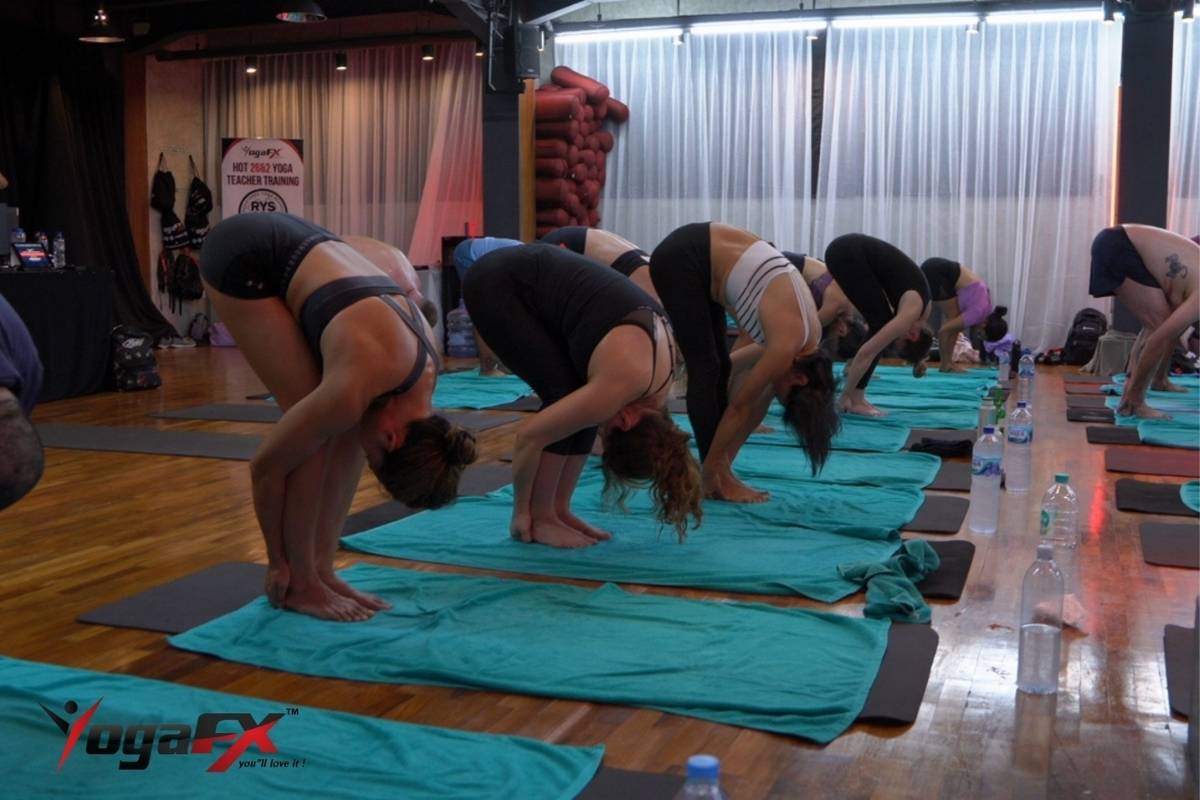
Heat makes muscles and fascia more pliable, so you may sink deeper into a forward bend than you could in a cool room. Most newcomers spot this change before any other. In Tracy and Hart's trial at Colorado State University, ten adults did 24 heated Bikram classes in eight weeks. Compared with an inactive control group, their lower back and hamstring flexibility rose substantially.
There's a trade-off, though. Extra range in a warm body can outrun the strength that protects your joints, so stay at your edge instead of hanging past it.

2. Leg and back strength
The same eight-week trial recorded higher deadlift strength in the yoga group. That makes sense, because long holds in postures such as Utkatasana (awkward pose) and the backbends load the legs, glutes and spine. So strength is one of the benefits of hot yoga that comes from the poses, not the room. In fact, a very hot room can limit how hard you push.
3. Body composition, not big weight loss
Tracy and Hart also saw a modest drop in body fat. Notice the word modest. The number on the scale after one class falls mostly because of sweat, and it comes back as soon as you drink.
Later work from the same Colorado State group measured energy use directly during a 90-minute Bikram class. Men burned about 460 kcal and women about 330 kcal. That's roughly a 90-minute brisk walk at 3.5 mph, according to the university's 2014 research summary. For style-by-style numbers, see how many calories hot yoga burns.
4. Bone density and balance
The Willmott review lists bone density and balance among the adaptations seen in heated practice. Long one-leg holds, as in Dandayamana Janushirasana (standing head to knee), are a likely reason. That makes balance one of the quieter benefits of hot yoga. Still, these signals come from small studies, so treat them as early findings.
5. Mood and depression symptoms
This is where the heat may matter most. In a 2023 randomised trial at Massachusetts General Hospital, led by Nyer, adults with depression practised heated hatha yoga for eight weeks. By the end, 59% of the yoga group had halved their symptom scores or better, against 6% of people on the waitlist.
However, the comparison group simply waited, rather than doing the same yoga in a cool room. So the trial shows the mental benefits of hot yoga are worth taking seriously, without proving the heat is the active ingredient. If mood is your main reason to practise, read our guide to Bikram yoga for anxiety.
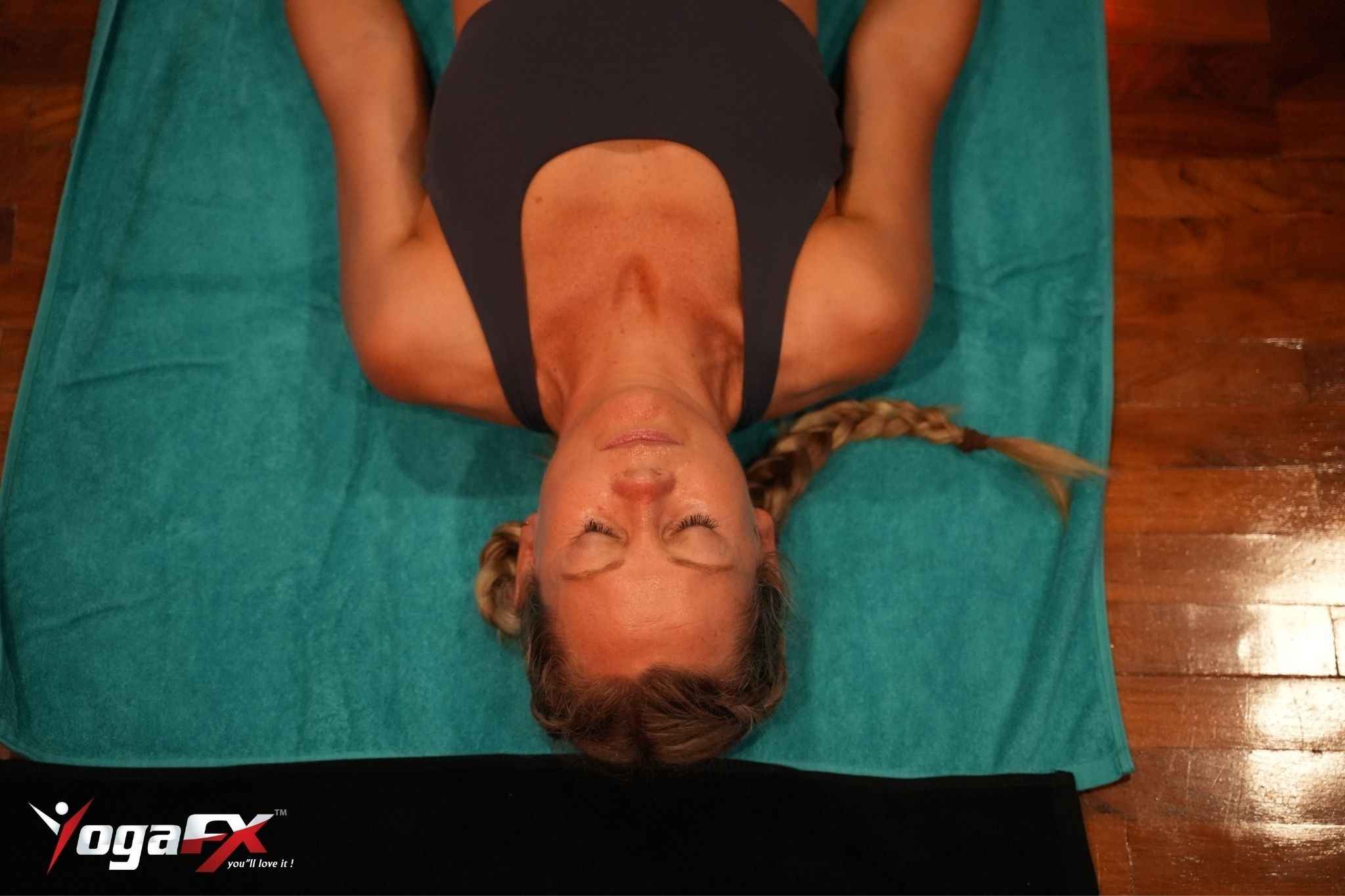
6. Anxiety and well-being
A 2022 trial by Hui and colleagues found that hot yoga lowered state anxiety. That means how anxious you feel right now, not anxiety as a personality trait. Many students describe the same thing in plainer words. The heat leaves no spare attention for worrying, so the mind gets a rest it rarely gets elsewhere.
7. Stress and inflammation
Johns Hopkins Medicine points to lower stress and lower inflammation as payoffs of regular yoga. That's a general yoga finding, not a heat finding. Many students say the hot room helps them switch off faster, but no study has tested that claim yet.
Heart Rate and Core Temperature: Real Load, Smaller Payoff
A racing pulse feels like one of the obvious benefits of hot yoga. Partly it is. But much of that heart rate goes to cooling you down, because blood is sent to the skin as well as the muscles.
An ACE-sponsored study at the University of Wisconsin-La Crosse tracked 20 regular Bikram practitioners through a full class. The numbers are worth knowing:
- Heart rate averaged about 80% of predicted maximum for men and 72% for women.
- Peak core temperature averaged 39.6°C (103.2°F) for men and 38.9°C (102.0°F) for women.
- 7 of the 20 went above 39.4°C (103°F), close to the 40°C (104°F) level where heat illness can occur.
Meanwhile, the Colorado State team noted that aerobic fitness stayed largely unchanged after eight weeks of heated practice. In other words, the heat is a real load on your body. It just isn't a shortcut to cardio fitness, so it's worth respecting rather than chasing.
When You'll Feel the Benefits of Hot Yoga: A Realistic Timeline
Most articles list the benefits of hot yoga without saying when they show up. Yet timing is what keeps people going after a rough first class. Here's a realistic sequence, based on how long the trials ran and what we see in our own classes.
Your first class
Expect a high pulse, heavy sweat and possibly some dizziness. Many people feel drained during the class and oddly calm afterwards. That calm is the earliest of the benefits of hot yoga, and it often arrives before any physical change.
Days 2 to 14: heat adaptation
Your body starts to handle the heat better with repeated exposure. In our six-day intensives, the shift often comes between day two and day four. After that point, the class stops feeling like survival and starts feeling like practice. The first physical benefits of hot yoga, such as easier forward bends, usually show up in this window too.
Weeks 6 to 8: measurable change
This is the window the studies measured. Tracy and Hart used 24 classes over eight weeks, and the MGH depression trial also ran for eight weeks. So try two to three classes a week for two months. That's a fair test of whether the benefits of hot yoga apply to you.
Month 3 and beyond: keeping it
Gains in flexibility and mood depend on regular practice. Warm tissue cools back down after class, so lasting range comes from repetition, not from one hot session. For a deeper look at frequency, read how often you should do Bikram yoga.
Does the Style Matter? Bikram, Vinyasa, Sculpt and Infrared
Hot yoga is an umbrella term, and the formats feel very different. That matters, because most published benefits of hot yoga come from one format: the fixed Bikram Hot 26&2 sequence.
- Bikram Hot 26&2. The same 26 postures and 2 breathing exercises every class, for 90 minutes, in a room near 40°C. Most of the research above studied this format. Our guide to the science-backed benefits of Bikram yoga goes posture by posture.
- Hot vinyasa and hot power yoga. Quick, flowing classes where movement pushes your pulse up before the heat adds its share. Research on this format is thin, so its claimed benefits of hot yoga mostly borrow from Bikram data.
- Hot sculpt and hot pilates. Dumbbells or pilates moves in a heated room. The resistance builds the strength, while the heat mainly adds sweat and heart rate.
- Infrared hot yoga. Overhead panels heat your body directly instead of the air, which many people find gentler. So far, no research shows infrared beats humid heat for health outcomes.
The practical rule is easy. Choose the class you can attend two or three times a week. Consistency drives the benefits of hot yoga far more than the heat source.
Hot Yoga vs Regular Yoga: Which Should You Choose?
Since heat isn't clearly superior, pick by goal and by how your body handles warmth. A quick guide:
- Go hot when early flexibility is the priority and a tough, sweaty class motivates you.
- Go hot when you practise mainly for stress relief or mood, since those are the most promising benefits of hot yoga.
- Stay unheated during pregnancy, with a heart condition, or if warm weather makes you feel faint.
- Stay unheated when calorie burn or arm and chest strength is the goal, because heat barely moves either one.
Mixing works well too. A common week is two hot classes for range and mood, plus one strength session at the gym.
Hot Yoga Myths That Don't Hold Up
A few claims about the benefits of hot yoga travel faster than the evidence. Here are the ones that come up most often:
- "Sweating cleans your body." Sweat is nearly all water plus some salt. Filtering waste is the job of your liver and kidneys.
- "You burn 1,000 calories a class." The Colorado State researchers called that figure an overestimate. Measured burn was closer to a long brisk walk.
- "Hotter is always better." Peak core temperatures in the La Crosse study already came close to heat illness levels, so more heat isn't a goal.
- "Flexibility from heat is permanent." Once you cool off, that extra give fades. Only repeated practice makes new range stick.
Hot Yoga Risks and Who Should Avoid It
Every one of the benefits of hot yoga comes with a matching risk. Most trouble starts when people rush their first weeks or push through warning signs:
- Heat illness. Feeling faint, sick, confused, headachy or suddenly cold is your cue to stop and cool off.
- Dehydration. A 90-minute humid class can drain more fluid than people expect.
- Overstretching. Heat lets ligaments go where muscles can't yet hold them.
- Light-headedness. Jumping up from the floor series can drop your blood pressure for a moment.
Certain groups need a doctor's go-ahead before stepping into a hot room, or should skip it. These include pregnant women, anyone with heart disease or poorly controlled blood pressure, and people who are feverish or have had heat stroke before. Add anyone taking medicines that change sweating or fluid balance, and people with heat-sensitive conditions such as multiple sclerosis.
This guide is for general education only. Please consult a healthcare professional before starting hot yoga if you're pregnant, have a heart condition or live with any long-term health issue.
How to Get the Benefits of Hot Yoga Safely
The benefits of hot yoga build on consistency, so the goal is to keep coming back, not to win one class. Five habits help:
- Drink ahead. Sip water through the day of class, then top up electrolytes if you practise often.
- Keep meals small. A light snack two hours out beats a heavy lunch an hour before.
- Begin at twice a week. Move to three when you leave class tired but not wrecked.
- Sit or lie down when dizzy. Slow nasal breathing usually settles it. If it doesn't, step outside.
- Leave 10% in reserve. Your deepest stretch on a hot day is rarely a safe one.
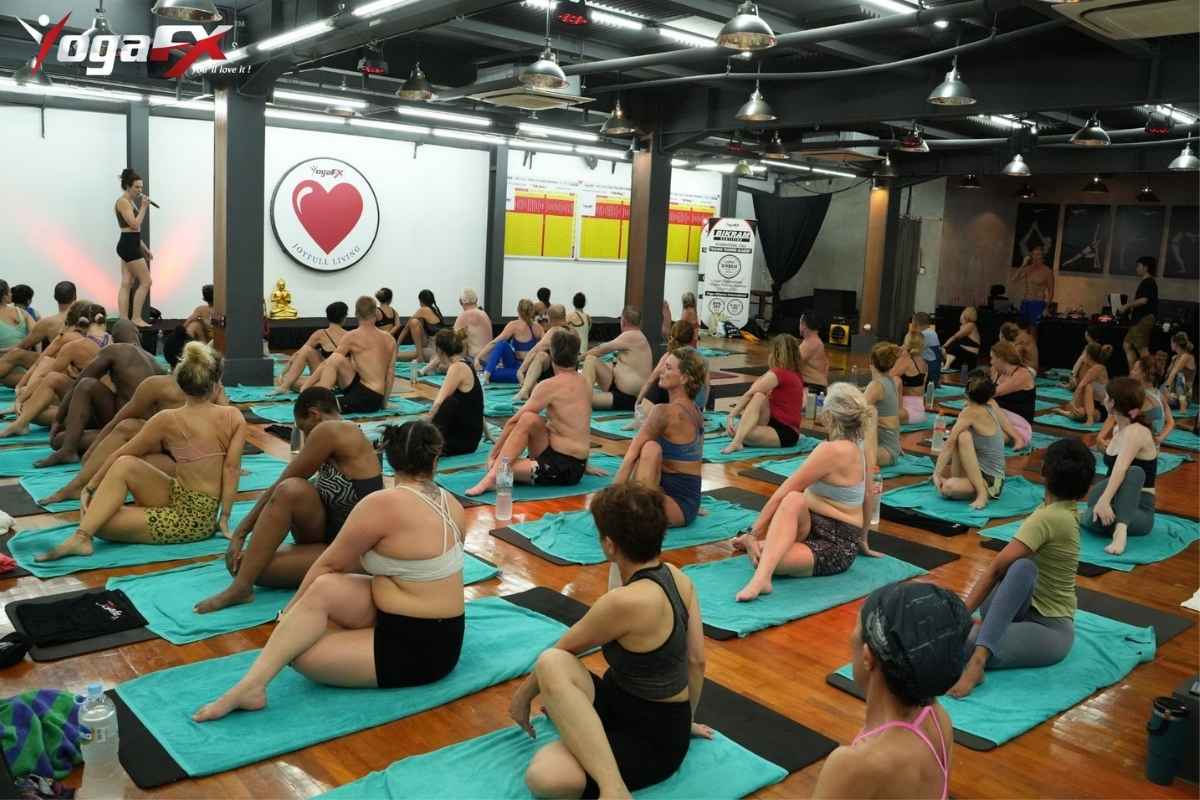
At YogaFX, teachers trained by Mr. Ian Terry teach beginners one simple rule. Rest on your mat whenever you need to, keep breathing through your nose, and rejoin the posture once your breath is calm. Staying in the room this way lets your body adapt to the heat, so each class feels a little less like survival.
Original Hot 26&2 Yoga in Natural Bali Heat with YogaFX
Want the benefits of hot yoga in the format most research used? YogaFX runs Original Hot 26&2 classes in Seminyak and Canggu, Bali. Each class lasts 90 minutes in roughly 40°C and 40% humidity. The warmth comes from Bali's tropical climate, not electric heaters, and teachers guide you with a scripted dialogue instead of music or demonstrations.
Mr. Ian Terry, E-RYT 500, leads the academy and has logged 12,000+ hours of teaching. Between 2014 and 2019 he spent five years training with Bikram Choudhury, who founded the Bikram Hot 26&2 method. Since opening in 2017, YogaFX has certified 1,500+ graduates from 80+ countries.

Reviews tell a familiar story. Kevin Edward wrote that he dreaded the early classes yet walked out feeling great. Chris Kusznir couldn't reach his toes on day one and finished able to complete every posture.
In this video you can watch a complete Bikram Hot 26&2 class filmed during the YogaFX six-day training. This fixed sequence is the one behind most published benefits of hot yoga.
Want to teach it rather than just practise? The Bikram Hot 26&2 Yoga Teacher Training MasterClass runs as a 6-day hybrid course:
- You study online at home, then join the in-person intensive in Bali.
- You graduate with two credentials: Yoga Alliance RYT 200-Hour and the Bikram Hot 26&2 200-Hour International Yoga Certification.
- The next intake runs 24-29 January 2027 at Soham Wellness Center in Seminyak.
- The Early Bird price is US$1,899 against a standard US$1,999, and interest-free plans start at US$250 a month.
Compare every option in our guide to Bikram teacher training dates, costs and formats for 2026-2027.
FAQ About the Benefits of Hot Yoga
Is hot yoga better than regular yoga?
Not clearly. A 2025 review of 43 studies found the benefits of hot yoga include flexibility, bone density and well-being. But the key mood trial compared yoga with a waitlist, not unheated yoga. Heat seems to speed early flexibility. Pick hot yoga if you enjoy it and handle warmth well.
Is hot yoga good for weight loss?
It helps a little. Colorado State researchers measured about 460 kcal for men and 330 kcal for women in a 90-minute class, similar to a long brisk walk. An eight-week trial found only a modest drop in body fat. Most weight lost in one class is sweat, which returns when you drink.
How long does it take to see results from hot yoga?
Many people feel calmer after their first class and notice easier forward bends within two weeks. Measurable changes take longer. In the main trials, flexibility, strength and mood improvements were recorded after eight weeks of regular classes. So give it two months before you judge.
How often should you do hot yoga to see benefits?
Two to three classes a week is a good target. Tracy and Hart's trial used 24 classes over eight weeks, and saw clear flexibility and strength gains. Beginners can start with two classes a week, then add a third once the heat feels manageable and recovery between sessions is good.
Who should not do hot yoga?
Skip it or get a doctor's approval first if you're pregnant or have heart disease or poorly controlled blood pressure. The same applies if you have a fever, a history of heat stroke, or take medicines that affect sweating or fluid balance. When in doubt, consult a healthcare professional before booking your first heated class.
Still have questions? Send Mr. Ian and the YogaFX team a WhatsApp message and a real person will reply. Curious whether you're ready to teach? Try the hot yoga teacher readiness quiz and see how the MasterClass fits your plans.