Lower back pain affects approximately 80 percent of adults at some point in their lives, making it one of the most searched health topics in the world. Bikram yoga is consistently cited both as a practice that helps with lower back pain and - in older, less nuanced articles - as one that risks making it worse. Both claims contain truth, and both require the context that most resources skip: which postures help, which require modification, what the research actually documents, and crucially, the difference between the productive discomfort of a back being worked and the warning-sign pain that means stop.

Important: lower back pain has many causes, ranging from muscle tension to disc herniation to spinal stenosis to structural issues. Yoga may be a useful complement to professional care for many presentations of lower back pain, but it is not a substitute for medical assessment. If your lower back pain is severe, recent, accompanied by leg symptoms (numbness, tingling, weakness), or has not been assessed by a healthcare provider, please see a doctor before starting any yoga practice.
What the Research Shows
The most comprehensive peer-reviewed review of Bikram yoga's health effects, Hewett et al. 2015 (PMC4609431, cited 52 or more times), documented that Bikram yoga "has been shown to improve lower body strength, lower and upper body range of motion, and balance in healthy adults." The review specifically notes improvements in lumbar spine range of motion - the mobility dimension most directly relevant to lower back pain.
The Tracy and Hart (2013) study (PubMed: 23438366) measured significant lower back and hamstring flexibility gains after eight weeks of Bikram practice at three to four sessions per week. This is not a coincidence of the sequence design: the Bikram floor series specifically targets the posterior chain muscles and the multi-plane spinal mobility that most lower back pain interventions aim to restore.
The 2025 Willmott systematic review (PMC12488547), analysing 43 studies and 942 participants, confirmed improvements in functional health including flexibility and balance across the hot yoga research base, consistent with lower back pain reduction as a downstream outcome of these gains.
Why Bikram Yoga Helps Lower Back Pain: The Mechanisms
Multi-Plane Spinal Decompression in Every Class
One of the most clinically significant aspects of the Bikram sequence for lower back pain is that it addresses the spine in all planes of movement - flexion, extension, lateral flexion, and rotation - within a single 90-minute class. Most daily activities and most exercise programmes load the spine in primarily one or two planes, accumulating asymmetric compression.
The Bikram sequence systematically counteracts this: Half Moon addresses lateral flexion and decompression, the backbend series addresses extension, Standing Separate Leg Stretching addresses forward flexion, and Spine Twist addresses rotation. This multi-plane approach is what makes consistent Bikram practice meaningfully different from isolated stretching or single-plane exercise for lower back health.
Heat-Enhanced Muscle Relaxation
Chronic lower back pain frequently involves paraspinal muscle tension and spasm as both a cause and a consequence of the underlying issue. The 40-degree Celsius environment of Bikram yoga reduces muscle viscosity and spasm before any posture work begins. For many practitioners with lower back pain, this pre-relaxation from the heat environment is the primary reason their Bikram class produces more relief than an equivalent room-temperature yoga class at the same postures. Tight leg muscles frequently cause lumbar strain, making hot yoga for runners with lower back issues an essential addition to your cross-training routine.
Posterior Chain Strengthening
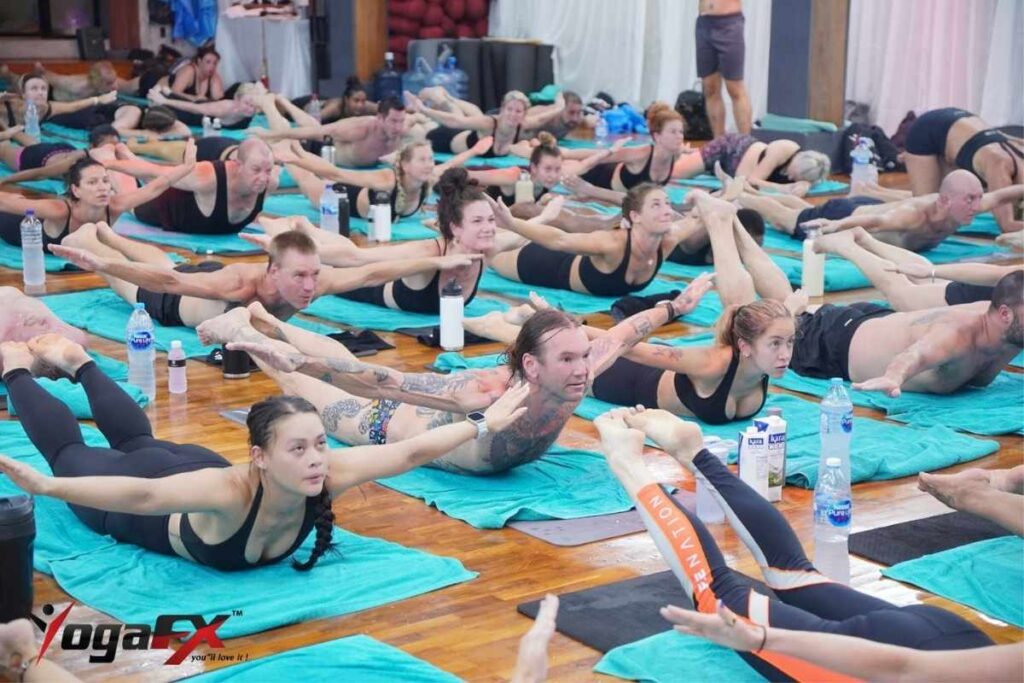
Lower back pain is frequently associated with weak posterior chain musculature - the glutes, hamstrings, and spinal erectors that support the lumbar spine against the loads of daily movement. The Bikram floor backbend series (Cobra, Locust, Full Locust, Bow) specifically loads the posterior chain in prone extension, a movement pattern that most daily activities and gym programmes do not address. The Tracy and Hart (2013) study documented a 20 percent deadlift strength increase after eight weeks of Bikram practice - a direct measure of posterior chain capacity improvement that is specifically relevant to lower back support.
Hamstring and Hip Flexor Release
Tight hamstrings pull on the ischial tuberosities, rotating the pelvis posteriorly and increasing lumbar spine load. Tight hip flexors pull the pelvis into anterior tilt, compressing the lumbar vertebrae. Both patterns are extremely common in adults who sit for work, and both are directly addressed by the Bikram sequence: the standing forward fold series (Hands to Feet, Standing Separate Leg Stretching, Standing Separate Leg Head to Knee) targets the hamstrings specifically, while Fixed Firm Pose and Camel Pose provide the deepest available hip flexor release in the sequence. Heat enhances both stretches by reducing connective tissue resistance before loading begins.
Posture-by-Posture Guide for Lower Back Pain
Not all Bikram postures are equal for lower back pain. The general principle documented by the Bikram yoga community - "go into backward bends but be careful with forward bends" - has a physiological basis, but requires nuance depending on the type and location of the back pain.
Most Beneficial Postures
| Posture | Primary Lower Back Benefit | Key Note |
|---|---|---|
| Half Moon (Posture 1) | Lateral spinal decompression, intercostal opening, lumbar side-bend mobility | Keep arms touching ears throughout. Lateral-only movement - no forward lean. |
| Half Tortoise (Posture 21) | Maximum lumbar decompression via traction. Heart rate drops measurably. Deep lower back release. | Hips must stay on heels - this is the fulcrum that creates lumbar traction. Hips lifting removes the benefit. |
| Rabbit Pose (Posture 23) | Maximum spinal flexion with traction-based decompression. Decompresses the entire posterior spinal column. | Hips must lift high toward ceiling. This is an active posture, not a child's pose. |
| Cobra (Posture 16) | Spinal erector strengthening in extension. Counteracts the forward flexion compression of sitting. | Lift comes from back muscle strength, not arm push. Keep elbows close to the body. |
| Full Locust (Posture 18) | Bilateral posterior chain loading - glutes, hamstrings, and spinal erectors simultaneously. Directly strengthens the muscles that support the lumbar spine. | Arms at shoulder height, both legs lifting equally. The symmetry matters for lower back benefit. |
| Wind-Removing Pose (Posture 14) | Hip traction and lumbar release through knee-to-shoulder compression. Massages the ascending and descending colon. | Extended leg stays flat on the mat. Both sides equally. |
Postures Requiring Caution or Modification
| Posture | Why It Needs Attention | Modification |
|---|---|---|
| Camel Pose (Posture 22) | Maximum spinal extension. Without correct technique (hips forward first), the extension collapses into the lumbar spine rather than opening the thoracic, causing the compression the Yale Daily News article from 2011 attributed to the posture itself. | Stage 1 only initially: hands on hips, push hips forward, lift chest. Do not reach for heels until the hip-forward mechanism is established and the extension feels through the thoracic spine, not the lower back. |
| Hands to Feet (Posture 2) | Maximum posterior chain stretch. For disc herniations or sciatica, sustained forward flexion can increase intradiscal pressure and worsen symptoms. | Bend knees sufficiently to keep the spine neutral. Focus on the spine's length rather than depth of the fold. If leg symptoms appear during the hold, reduce the depth or come out. |
| Standing Head to Knee (Posture 5) | Sustained forward fold with posterior chain load. Same disc pressure concern as above for specific presentations. | Hold the foot with knee bent. Do not extend the leg if forward flexion increases lower back or leg symptoms. |
| Spine Twist (Posture 25) | The only rotational posture in the sequence. Rotation is contraindicated for some disc herniations and should be approached carefully for facet joint issues. | Minimal rotation with both sit bones firmly grounded. Stop immediately if rotation produces leg symptoms. |
Addressing the Criticism: Does Bikram Yoga Hurt the Lower Back?
A 2011 Yale Daily News opinion piece claimed that Bikram yoga postures, "particularly the Hero and Camel poses, are especially likely to cause damage to lower back." This article still appears in search results for this keyword and deserves a direct response, because the concern it raises is real but the conclusion it draws is misleading.
Camel Pose does not damage the lower back when performed with correct technique. The critical cue is "push your hips forward, hips to the mirror" before reaching back. This hip-forward movement creates thoracic extension - the chest opens and the extension is distributed through the upper spine. Without it, the extension collapses into the lumbar spine, which can create compression.
The problem described in that article and in many of the Reddit discussions about lower back pain in Bikram is a technique error, not a design flaw in the posture. An instructor who does not deliver the hip-forward cue, or a practitioner who bypasses it, will feel the difference in exactly the location described. When working with structural asymmetry, utilizing the symmetry of the 26 postures makes Bikram yoga for scoliosis an effective routine for long-term spinal management.
The Reddit thread "Bikram/26/2 likes to load up on the lower back. Seems totally messed up" (80 or more comments, 2024) reflects a real experience that many practitioners have. The honest answer is that the Bikram sequence does load the lower back - the posterior chain is specifically targeted - and for practitioners with existing lower back sensitivity or poor technique in the extension postures, this load can produce discomfort before it produces the strengthening and flexibility improvements the research documents. The appropriate response is technique correction and graduated intensity, not avoidance of the practice.
Normal Discomfort vs Warning Signs
This distinction matters more for lower back pain than for almost any other area of the body:
Normal and Expected
- Muscular fatigue and achiness in the paraspinal muscles (alongside the spine) after the floor backbend series, particularly in the first 10 to 20 sessions. This is the posterior chain being loaded in a new pattern.
- Tightness and mild discomfort during sustained forward folds if the hamstrings are restricted. This should reduce progressively over sessions.
- A sense of "opening" or mild soreness in the sacroiliac joints following the twisting and lateral bending postures.
Stop and Seek Assessment
- Any pain that radiates down one or both legs, particularly below the knee. This may indicate nerve root involvement (disc herniation, stenosis, or sciatica) that requires medical assessment before continuing.
- Sharp, localised pain in a specific spinal segment during a particular posture. This is different from general muscular achiness and warrants investigation.
- Pain that worsens consistently over multiple sessions rather than improving. Some initial discomfort as the back adapts is normal. Pain that is measurably worse session by session is not.
- Any neurological symptoms: numbness, tingling, weakness in the legs or feet. These require medical evaluation regardless of cause.
Specific Lower Back Pain Presentations: What to Expect
Muscle Tension and Non-Specific Lower Back Pain
The most common presentation and the one most likely to respond well to Bikram yoga. The heat relaxes paraspinal muscle spasm before posture work begins, and the sequence's combination of posterior chain strengthening and multi-plane spinal mobility addresses both the cause (weak supporting musculature, restricted mobility) and the symptom (muscular tension). Most practitioners with non-specific lower back pain report measurable improvement within three to four weeks of consistent practice at three sessions per week.
Disc-Related Lower Back Pain
Disc herniations and disc degeneration require more careful management. The general principle is that spinal extension (backbends) tends to reduce disc symptoms for many presentations, while sustained forward flexion (forward folds) can increase intradiscal pressure and temporarily worsen them. This is consistent with the community guideline "go into backward bends, be careful with forward bends." For practitioners with a known disc herniation, physician or physiotherapist clearance and initial guidance from an experienced instructor who knows your situation is strongly recommended before starting practice.
Sacroiliac Joint Pain
SI joint pain can be addressed by Bikram yoga but requires attention to pelvic symmetry in all postures. The standing series balance postures and the floor series demand that both sides of the pelvis are loaded symmetrically - which is exactly what SI joint rehabilitation typically aims for. The Spine Twist posture (posture 25) should be approached with caution for active SI joint dysfunction and should be shallow until symptoms are stable.
Sciatica
Sciatica is nerve pain, not muscle pain - it radiates along the sciatic nerve path from the lower back through the buttock and down one leg, often with numbness, tingling, or a burning sensation, most commonly caused by a disc herniation or piriformis muscle tension compressing the nerve. This distinction matters for how yoga should be approached, because sciatica responds differently to spinal loading than ordinary muscular lower back pain does.
For sciatica caused by piriformis tightness, gentle hip-opening and glute-release work can bring meaningful relief, and the heat environment helps the piriformis and surrounding hip rotators release before any posture load begins. Wind-Removing Pose (posture 14) and Half Tortoise (posture 21) tend to be well tolerated because both provide traction and release without deep spinal flexion.
For sciatica caused by disc herniation compressing the nerve root, the same caution that applies to disc-related lower back pain applies here, often more strictly: sustained forward folds (Hands to Feet, Standing Head to Knee) and deep rotation (Spine Twist) can increase pressure on the nerve root and should be avoided or significantly modified while the nerve is irritated.
The clearest practical rule for sciatica in any yoga class, Bikram included: if a posture reproduces or intensifies the radiating leg pain, numbness, or tingling, come out of it immediately, regardless of how the posture is generally categorised. Sciatica that is new, severe, accompanied by leg weakness, or affecting bladder or bowel function is a medical emergency requiring immediate assessment, not a yoga modification question.
Practical Guidance: Starting With Lower Back Pain
- Tell your instructor before class. An experienced Bikram instructor can watch your technique specifically in the extension postures, cue you on the hip-forward Camel mechanism, and flag compensation patterns that could worsen lower back or sciatica symptoms.
- Prioritise the floor series. The decompression postures - Half Tortoise, Rabbit - and the posterior chain strengthening postures - Full Locust, Cobra - are where much of the specific lower back benefit comes from. If the standing series is uncomfortable, attend class and manage the intensity there while giving full attention to the floor series.
- Start at three sessions per week. The Tracy and Hart (2013) protocol that documented flexibility gains used three to four sessions per week over eight weeks. Below two sessions per week, heat adaptation may not fully develop and the structural changes accumulate more slowly.
- Allow six to eight weeks. The documented outcomes in the research appear at the eight-week mark, not the first class. Initial sessions may produce mild soreness in the paraspinal muscles as the posterior chain adapts to a new loading pattern. This typically resolves by session 5 to 10.
More detail on the full sequence of postures, including alignment cues and modifications, is on our Bikram yoga postures guide. Information on the heat environment and its physiological effects is at our Bikram yoga temperature guide. If your discomfort sits higher up the spine, between the shoulder blades or across the upper back rather than the lower back, our separate guide to upper back pain from yoga covers the distinct causes and fixes relevant to that region.
FAQ
Is Bikram yoga good for lower back pain?
Yes, for most presentations of lower back pain - particularly non-specific muscular lower back pain, tight hamstrings pulling on the lumbar spine, weak posterior chain musculature, and restricted lumbar mobility. The evidence base (Hewett 2015, PMC4609431; Tracy and Hart 2013, PubMed 23438366) documents improved lower back flexibility and posterior chain strength from consistent Bikram practice. Specific presentations, including active disc herniations with leg symptoms, require medical clearance before starting. The heat environment provides additional benefit by relaxing paraspinal muscle tension before posture work begins.
Can yoga help with sciatica?
It can, depending on the cause. Sciatica from piriformis tightness often responds well to gentle hip-opening and heat, which is why Wind-Removing Pose and Half Tortoise tend to be well tolerated. Sciatica from disc herniation needs more caution - deep forward folds and rotation can increase nerve root pressure. Any posture that reproduces radiating leg pain, numbness, or tingling should be stopped immediately, and new or severe sciatica warrants medical assessment before starting a yoga practice.
Which yoga poses should you avoid with sciatica?
Deep forward folds that load the hamstrings and lower back (Hands to Feet, Standing Head to Knee) and deep spinal rotation (Spine Twist) are the postures most likely to aggravate sciatica caused by disc herniation, since both can increase pressure on the compressed nerve root. These postures are not universally off-limits - the deciding factor is whether the specific posture reproduces your radiating leg symptoms, not the posture category itself. Stop immediately if any posture triggers or worsens leg pain, numbness, or tingling.
Which yoga is best for lower back pain?
For lower back pain specifically, Bikram yoga has advantages over room-temperature yoga formats: the heat relaxes paraspinal muscle spasm before any posture work, and the sequence addresses the spine in all planes within a single class - extension through the backbend series, flexion in the forward folds, lateral decompression in Half Moon, and rotation in Spine Twist. The posterior chain strengthening of the floor series directly addresses the muscular weakness that underlies most non-specific lower back pain. For practitioners who cannot tolerate heat, room-temperature yoga is still beneficial but produces the flexibility gains more slowly.
Should you do Bikram yoga if you have a herniated disc?
With caution and medical clearance. A disc herniation is not an automatic contraindication for Bikram yoga, but it requires specific attention: sustained forward flexion (Hands to Feet, Standing Head to Knee) can increase intradiscal pressure for some presentations and should be modified; the backbend series is generally more appropriate for disc herniations than forward folds; and any posture that produces or worsens leg symptoms (numbness, tingling, weakness) should be avoided and reported to your healthcare provider. Start with physician or physiotherapist clearance and guidance from an instructor who knows your specific presentation.
Can Bikram yoga worsen lower back pain?
Yes, if the extension postures - particularly Camel Pose - are practiced with poor technique. The most common error is reaching back in Camel without first pushing the hips forward, which collapses the extension into the lumbar spine rather than distributing it through the thoracic spine. This is a technique error, not a posture design flaw, and it is exactly what the Yale Daily News (2011) article and many Reddit discussions attribute to the posture itself. The fix is the hip-forward cue: push hips to the mirror before reaching back. Similarly, practitioners with disc herniations who do full depth forward folds without modification may worsen symptoms. Working with an experienced instructor who knows your history prevents both issues.
How long does it take for Bikram yoga to help lower back pain?
The Tracy and Hart (2013) study documented significant lower back flexibility improvements at eight weeks of three to four sessions per week. Many practitioners with non-specific lower back pain report noticeable improvement within three to four weeks. The heat-induced paraspinal muscle relaxation often produces immediate session-level relief from the first class. Structural changes - strengthening the posterior chain and restoring lumbar mobility - accumulate over the eight-week timeframe documented in the research.