
Anxiety affects approximately 40 million adults in the United States, making it the most common mental health condition in the country. Research into non-pharmacological interventions has grown substantially in recent years, and hot yoga has emerged as one of the more consistently studied formats. This article covers what the peer-reviewed evidence actually shows about Bikram yoga for anxiety, the physiological mechanisms involved, which specific postures are most relevant, and the honest caveats that anyone using yoga as part of a mental health approach should understand.
Important: this article is for informational purposes only. Anxiety disorders vary significantly in type and severity. Yoga may be a useful complement to professional care, but it is not a substitute for assessment and treatment by a qualified mental health professional. If you are experiencing significant anxiety, please speak with your doctor or a licensed therapist.
What the Research Bikram Yoga for Anxiety Actually Shows
Several peer-reviewed studies have now examined the relationship between hot yoga and anxiety. The most directly relevant is a 2022 study by Hui et al., published in Frontiers in Psychology (PMC10268545), which found that hot yoga is "particularly effective in reducing negative affect and state-anxiety in individuals who are under stress." The six-week trial documented significantly greater well-being improvements in the hot yoga group compared to controls.
The Harvard MGH 2023 randomised controlled trial (Nyer et al., PubMed: 37883245), which we cover in more detail in our benefits of hot yoga article, documented that eight weeks of Bikram hot yoga produced clinically significant reductions in depression symptoms in approximately 60 percent of participants, with anxiety as a secondary outcome also improving. The Harvard Health summary of this trial (Harvard Health, February 2024) specifically notes that "compared with people on the waiting list, people in the yoga group had significantly reduced depression symptoms," a finding that extends to anxiety in the study's broader outcome measures.
The 2025 Willmott et al. systematic review (PMC12488547), which analysed 43 studies covering 942 participants, confirmed improvements in psychological well-being measures across the hot yoga research base, consistent with the anxiety-reduction findings in the individual trials.
Why Hot Yoga Affects Anxiety: The Physiological Mechanisms
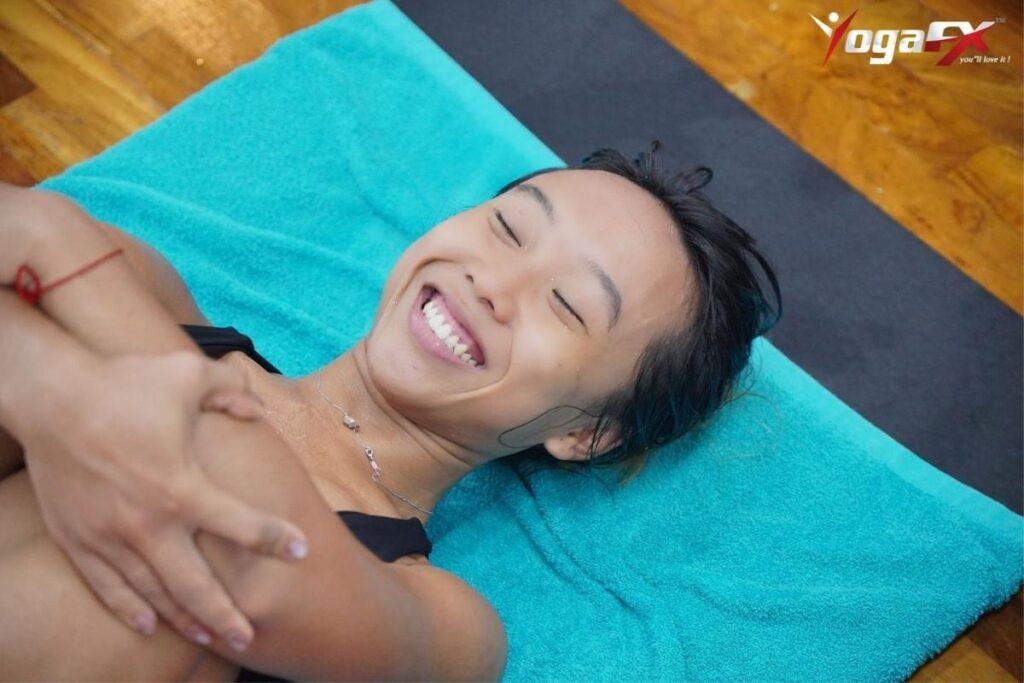
Understanding the mechanisms helps explain why Bikram yoga in particular, rather than general exercise, produces the anxiety-reduction effects documented in the research.
The Vagus Nerve and Parasympathetic Activation
The vagus nerve is the primary pathway of the parasympathetic nervous system, the system responsible for the "rest and digest" state that counteracts the "fight or flight" response activated by anxiety. Sustained yoga practice, particularly postures that involve controlled breathing, forward folds, and the parasympathetic-activating floor series, directly stimulates vagal tone. Higher vagal tone is associated with better emotional regulation, lower resting heart rate, and reduced anxiety reactivity.
In the Bikram sequence specifically, the floor series postures from Rabbit Pose through Camel Pose and Half Tortoise are among the most parasympathetic-activating postures in the sequence. Heart rate measurably drops during Half Tortoise, and the sustained forward compression of Rabbit Pose combined with conscious slow breathing produces a vagal stimulation effect that mirrors some medically used vagal nerve stimulation protocols.
Whole-Body Hyperthermia and Mood Regulation
The 40-degree Celsius environment of Bikram yoga produces whole-body hyperthermia, a sustained elevation of core body temperature that research has associated with serotonin and endorphin release. This is the same physiological mechanism studied in hot bath therapy and sauna use as adjunct treatments for depression and anxiety. The sustained heat exposure across 90 minutes produces a more pronounced and longer-lasting hyperthermia effect than brief heat exposure, which may partly explain why the research documents anxiety reduction specifically from hot yoga rather than from equivalent room-temperature yoga practice.
Stress Inoculation Through Controlled Discomfort
One of the most practically significant mechanisms is what researchers sometimes call stress inoculation: regular, repeated exposure to a manageable stressor (heat plus sustained physical effort) in a controlled environment gradually retrains the nervous system's threat response. Practitioners who complete a Bikram class in a 40-degree room multiple times per week develop measurably improved tolerance for physical discomfort and for the physiological sensations that accompany anxiety, including elevated heart rate, heat, and breathlessness. These are the same sensations that trigger anxiety responses in many people, and repeated safe exposure to them in a structured context reduces their threat signal over time.
This is consistent with the community experience documented in the r/yoga Reddit thread (30 or more comments) where practitioners describe hot yoga as helping them "emotionally regulate," specifically noting that "anxiety was significantly better when doing hot yoga 3x a week."
Mindful Focus and Present-Moment Attention
Anxiety is characterised in large part by ruminative thinking: the mind repeatedly returning to anticipated future threats or replaying past events. The Bikram sequence and its scripted verbal dialogue demand continuous present-moment attention. Practitioners cannot ruminate during a Bikram class because the physical demands of the standing balance series, the heat management, and the continuous instructional cues leave no cognitive bandwidth for worry. This forced present-moment attention across 90 minutes functions similarly to structured mindfulness practices, with the addition of the physical benefits that yoga provides alongside the attentional training.
Bikram Postures Most Relevant for Anxiety
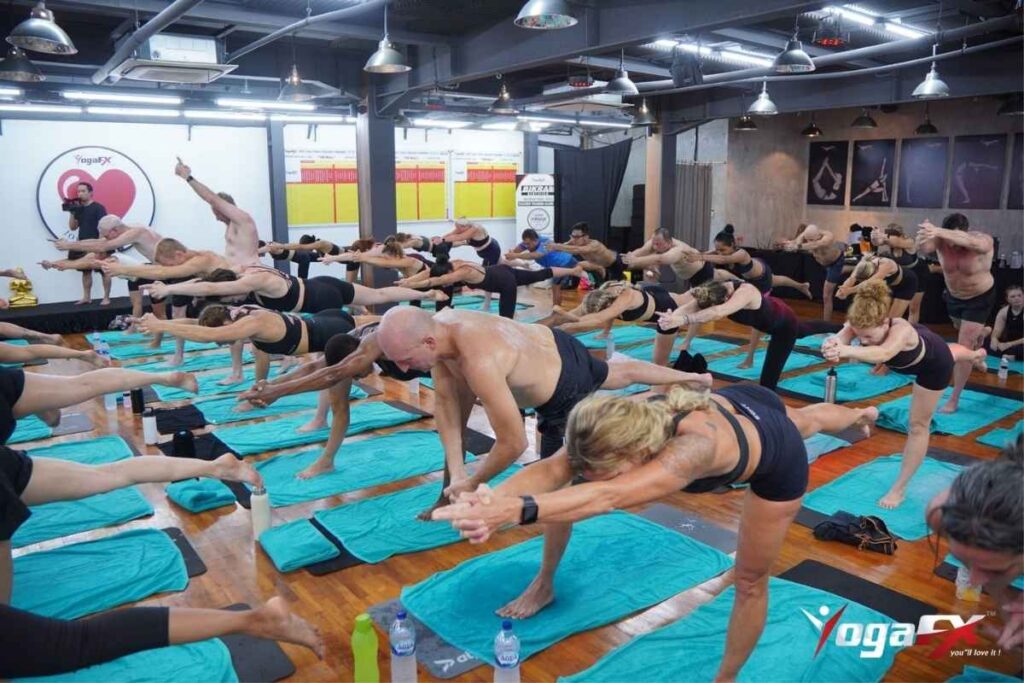
While the full 26-posture sequence produces the documented anxiety-reduction effects as a system, certain postures are particularly relevant to the mechanisms described above:
Pranayama Series (Opening Breathing)
The opening breathing exercise is the most direct anxiety-relevant component of the entire sequence. Six cycles of maximum inhalation followed by forced complete exhalation activate the parasympathetic nervous system through a mechanism well-documented in the respiratory physiology literature: slow, complete exhalation lengthens the expiratory phase, which directly increases vagal tone. Practitioners who feel anxious before a class frequently report that the opening Pranayama alone produces a measurable calming effect before any posture work has begun.
Eagle Pose (Garurasana, Posture 4)
Eagle Pose requires complete concentration on a single fixed point while managing the physical challenge of wrapping both arms and legs simultaneously. The single-pointed focus required is incompatible with anxious rumination. The joint compression and release also promotes whole-body circulation and produces a specific physical grounding effect that many practitioners describe as immediately calming.
Standing Balance Series (Postures 5 to 7)
Standing Head to Knee, Standing Bow, and Balancing Stick all require the kind of absorbed concentration that leaves no room for anxious thought. Balance postures specifically require the practitioner to continuously return attention to the present moment, mirroring the attention-training mechanism of formal meditation practice. The physiological peak of the cardiovascular demand in this section also produces endorphin release.
Half Tortoise Pose (Posture 21) and Rabbit Pose (Posture 23)
These two floor postures are the most directly parasympathetic-activating postures in the sequence. Half Tortoise produces lumbar decompression with a measurable heart rate drop. Rabbit Pose combines forward compression with the inversion of hips rising overhead, promoting blood flow return and deep parasympathetic activation. Both are practiced in the floor series after the cardiovascular peak has passed, creating a physiological transition from high-activation to deep recovery that models the nervous system regulation that anxiety sufferers are specifically working to develop.
Hot Yoga vs Regular Yoga for Anxiety: Does the Heat Matter?
The Hui et al. 2022 study specifically compared hot yoga to room-temperature yoga and found hot yoga "particularly effective" in reducing state-anxiety, suggesting the heat adds something beyond what the yoga postures alone provide. The proposed mechanisms are the whole-body hyperthermia effects described above, which are absent in room-temperature practice at equivalent intensity.
At YogaFX Bali, this is additionally relevant because our studios operate in natural tropical heat, ambient humidity above 70 percent without electric heaters, which produces more complete deep tissue thermal penetration than the dry heat of electric-heated studios at equivalent stated temperatures. More on the temperature and humidity specification that distinguishes this from generic hot yoga.
What to Expect If You Are New to Hot Yoga With Anxiety
It is important to be honest about the first-class experience for someone with anxiety: the first Bikram class is not relaxing. The 40-degree heat, the unfamiliar postures, and the sustained cardiovascular demand produce exactly the physiological sensations, elevated heart rate, breathlessness, and heat, that many anxious people find triggering. This is temporary and manageable, but it warrants preparation rather than surprise.
- Tell your instructor before class. A good Bikram instructor can offer specific guidance during the class and watch for students who need additional support. At YogaFX, tell the teacher before the class starts that you are new and managing anxiety, and they will cue you specifically.
- Savasana (rest) is always available. In a Bikram class, lying down in Savasana at any point is a valid choice and not a failure. New practitioners, particularly those managing anxiety responses, often benefit from taking additional rest during the standing series until heat tolerance develops over sessions 1 to 10.
- Hydration before class matters more than during. Arrive hydrated. Dehydration exacerbates the anxiety-like physiological sensations that heat produces, including dizziness and elevated heart rate.
- The first five sessions are the hardest. Heat adaptation typically completes around sessions 5 to 10. The anxiety-reduction benefits documented in the research accumulate over consistent weeks of practice, not from a single class.
When Hot Yoga May Not Be Appropriate
For some anxiety presentations, the physiological sensations of a first Bikram class may temporarily worsen anxiety before they improve it, particularly for people with panic disorder whose anxiety is specifically triggered by physiological arousal cues such as elevated heart rate. This does not mean hot yoga is contraindicated for panic disorder, but it does mean that starting with the guidance of a mental health professional, and potentially beginning at reduced intensity or with shorter sessions, is advisable.
Additionally, some medications prescribed for anxiety affect thermoregulation. Certain antidepressants, benzodiazepines, and other psychiatric medications can impair the body's ability to manage heat. If you are taking medication for anxiety and considering starting Bikram yoga, a conversation with your prescribing doctor about heat tolerance is recommended before your first class.
FAQ
Does hot yoga help with anxiety?
Yes, according to peer-reviewed research. The Hui et al. 2022 study (PMC10268545) found hot yoga "particularly effective in reducing negative affect and state-anxiety." The Harvard MGH 2023 RCT (PubMed: 37883245) documented significant anxiety and depression improvements over eight weeks of Bikram hot yoga at two to three sessions per week. The mechanisms include vagal nerve activation from the breathing and floor series, whole-body hyperthermia effects on serotonin and endorphin levels, and the stress inoculation produced by repeated safe exposure to physiological arousal.
What type of yoga is best for anxiety?
Different yoga formats work through different mechanisms. Slower practices like Yin and restorative yoga activate the parasympathetic nervous system through long passive holds. Hot yoga, including the Bikram format, produces the additional mechanism of whole-body hyperthermia and stress inoculation through heat exposure. The Hui et al. 2022 research found hot yoga superior to room-temperature yoga for anxiety specifically. For practitioners who can tolerate the heat environment, Bikram or 26 and 2 yoga has the strongest specific evidence base for anxiety reduction of any yoga format.
Is hot yoga good for anxiety and panic attacks?
For most people, yes, particularly with consistent practice over several weeks. For people whose panic attacks are specifically triggered by physiological arousal sensations such as elevated heart rate or breathlessness, the first several classes may initially feel challenging because the heat produces those same sensations in a safe context. This is precisely the mechanism by which repeated practice reduces panic sensitivity over time, but it means the initial sessions should be approached with preparation and, ideally, with the knowledge of a treating mental health professional.
How many times a week should I do hot yoga for anxiety?
The Harvard MGH 2023 trial used two to three sessions per week over eight weeks as its protocol, producing the documented anxiety and depression improvements. This is the research-validated frequency. Below two sessions per week, heat adaptation may not fully develop and the cumulative effects are more gradual. Three sessions per week appears to be the optimal balance for most practitioners combining anxiety management with the physical benefits of the practice.
Should I tell my instructor I have anxiety before a Bikram class?
Yes. Informing your instructor before class allows them to offer specific guidance during the session, watch for signs of heat distress, and cue you on the Savasana rest option if needed. A good instructor will not single you out or draw attention to your disclosure during the class. At YogaFX, all instructors are trained to support new practitioners managing specific health considerations.