
A 30-minute Bikram yoga session is a structured abbreviated practice, not a random selection of postures, and not a rushed version of the full 90-minute class. Knowing which 8 poses to prioritise, how to structure the sequence, and what you can realistically achieve in the time makes the difference between a meaningful session and a wasted 30 minutes.
A Bikram Yoga 30 Minutes practice selects the highest-impact postures from both the standing and floor series. While the full 90-minute class delivers the complete therapeutic benefit, a structured 30-minute session maintains flexibility, nervous system activation, and movement rhythm when time is limited. 30 minutes preserves the practice. 90 minutes develops it.
Why 30 Minutes Is Not the Same as Skipping
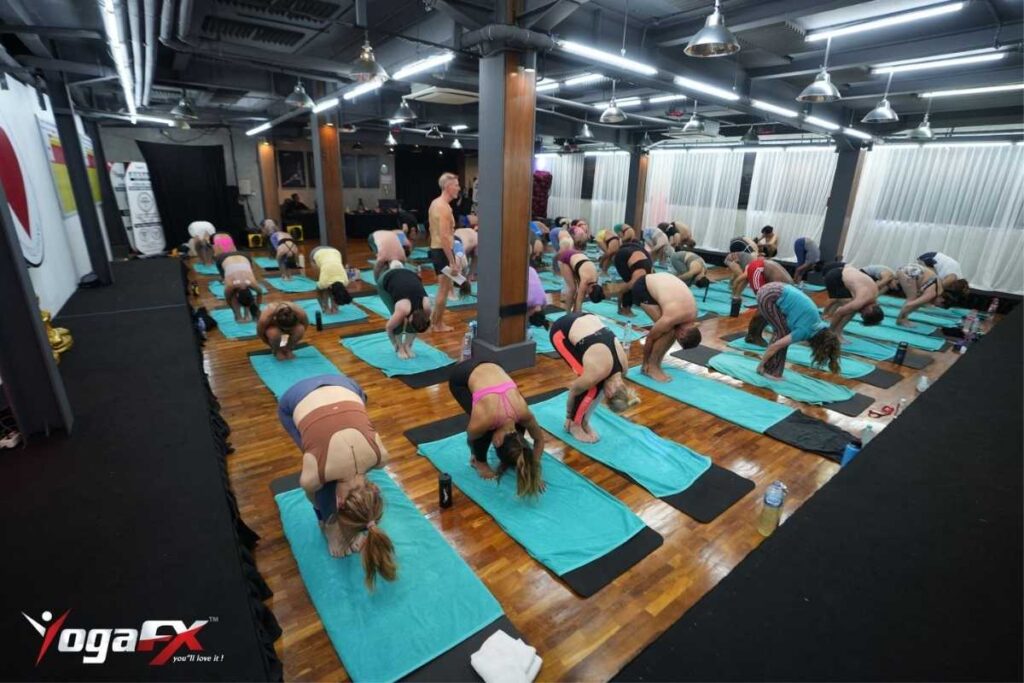
The full 90-minute Bikram class works through a specific physiological logic: the standing series heats the core, the double sets compound the stretch-compress-release cycle, and the floor series requires a deeply pre-heated body to access its full therapeutic depth. No amount of shortcutting replicates this complete cycle in half the time.
What a bikram yoga 30-minute practice does preserve, according to YogaFX founder and lead instructor Mr. Ian Terry (E-RYT 500, 12,000+ teaching hours, 5 direct training events with Bikram Choudhury):
- Breathing activation through Pranayama — the nervous system and respiratory warm-up that begins every full class
- Initial heat acclimatisation — particularly valuable when returning after a break or travelling without studio access
- Mental focus and present-moment concentration — the meditative quality of the sequence is available even in abbreviated form
What a 30-minute practice does not deliver: the double-set benefit on most poses (research shows the second set produces disproportionate gains in flexibility and strength), the full floor series depth that requires the pre-heated core from 45+ minutes of standing work, and the complete 330–460 kcal metabolic effect of the full session.
The 8 Poses to Prioritise in a 30-Minute Bikram Session
The selection below follows a specific logic: maximum physiological coverage with minimum time. Most practitioners either attempt to rush through all 26 (producing a shallow, ineffective sequence) or improvise without a rationale.
| No. | Pose | Series | Hold | Why Prioritised |
|---|---|---|---|---|
| 1 | Standing Deep Breathing (Pranayama) | Opening | 2 min | Always first — sets respiratory and mental state. Cannot be skipped without losing the transition from everyday life to practice |
| 2 | Half Moon (Ardha Chandrasana) | Standing | 10 sec × side | Full lateral spine stretch and backbend in one posture. Covers the most spinal planes per minute of any standing pose |
| 3 | Awkward Pose (Utkatasana) | Standing | 10 sec × 3 parts | Primary lower body activation. Three-part structure provides quad, adductor, and ankle work that no single pose replicates |
| 4 | Eagle Pose (Garurasana) | Standing | 10 sec × side | Opens 14 major joints simultaneously. Most joint-efficient posture in the sequence — disproportionate benefit per minute |
| 5 | Standing Bow Pulling Pose (Dandayamana Dhanurasana) | Standing | 10 sec × side | Peak cardiovascular posture of the standing series. One set per side still produces the tourniqueting cardiovascular effect |
| 6 | Triangle Pose (Trikanasana) | Standing | 10 sec × side | Most complex standing posture — works 12 body parts simultaneously. Closes the standing series with maximum muscular engagement |
| 7 | Cobra Pose (Bhujangasana) | Floor | 10 sec × 2 | First floor backbend. Activates spinal erectors and posterior chain with minimal warm-up required |
| 8 | Spine Twist (Ardha Matsyendrasana) | Floor | 20 sec × side | The only true spinal rotation in the sequence. Done once per side, covers lateral vertebral mobility the standing series cannot |
⚠️ Poses Omitted and Why
Full Locust, Bow Pose, Fixed Firm, Half Tortoise, Rabbit — these postures require the deep pre-heat from a full standing series (45+ minutes) to be effective and safe. Performing them without adequate core temperature reduces benefit and increases strain risk.
Camel Pose — omitted because it requires the full standing series pre-heat and should not be the primary backbend in a short session without Cobra and Locust preparation first.
How to Structure Your 30-Minute Home Practice
Step 1 — Prepare the room
Target 35–40°C. Close all windows and doors 10 minutes before you begin. A portable heater on low or a bathroom pre-heated with hot water running works. Set up a full-length mirror if possible — self-correction is significantly easier with visual feedback. Place your mat, towel, and water within reach.
Step 2 — Hydrate
Drink 500ml of water in the 90 minutes before practice. Do not drink large amounts immediately before — sip only between poses during the session. Arrive already hydrated, not hoping to hydrate during the 30 minutes.
Step 3 — Begin with Pranayama
2 minutes of standing deep breathing. 6 full inhale-exhale cycles. This is not optional and not a warm-up — it is the physiological and mental transition into practice. Every Bikram session, regardless of length, begins here.
Step 4 — Execute the 8-pose selection in sequence
Follow the order in the table above without modification. Each pose is performed as a single set (not double set) at full prescribed hold time. Do not rush the transitions — the brief standing rest between poses is part of the thermoregulatory cycle.
Step 5 — One set per pose at full hold time
The temptation in a 30-minute session is to reduce hold times to fit more poses. Resist this. One set at full hold time (10–20 seconds) produces more benefit than two sets at half hold time. Depth and precision over volume.
Step 6 — End with Kapalbhati
60 rapid exhales in kneeling position, 1–2 minutes. This closes the practice regardless of session length — it resets the nervous system and completes the breath cycle opened in Pranayama. Do not end the session on a floor posture without this breath reset.
Step 7 — Short Savasana (3 minutes — do not skip)
Lie flat on your back in complete stillness for a minimum of 3 minutes. The physiological recovery that happens in Savasana is not achievable while moving or transitioning to the next activity. Ending practice without Savasana is the single most common mistake in shortened home sessions.
What You Can and Cannot Achieve in 30 Minutes
| Achievable in 30 Minutes | Requires Full 90 Minutes |
|---|---|
| Maintain existing flexibility | Significant new flexibility gains |
| Activate the nervous system | Full cardiovascular training effect |
| Joint lubrication and mobility | Double-set therapeutic benefit |
| Mental focus and breath discipline | Deep floor series detox response |
| Heat acclimatisation (travel or breaks) | Complete compression-release cycle for all 26 poses |
| Prevent deconditioning between full classes | Full caloric expenditure (330–460 kcal per session) |
When a Bikram Yoga 30 Minutes Practice Makes Sense
- While travelling without studio access — maintaining the sequence in a hotel room preserves heat tolerance and posture familiarity between regular studio practice
- During busy weeks — as a maintenance session between full 90-minute classes. 3 days without practice produces measurable deconditioning; 30 minutes prevents this
- As a morning activation before work — 30 minutes of Bikram produces the mental focus and nervous system activation of the full session at lower time cost
- For beginners building heat tolerance — a 30-minute session in proper heat is a lower-risk introduction than attempting 90 minutes cold
- After injury recovery — the 8-pose selection above excludes deeper floor postures that most commonly stress healing tissue, making it appropriate for careful return to practice
FAQ
Can you do Bikram yoga in 30 minutes?
Yes — as a structured shortened Bikram Yoga 30 Minutes practice using a selected sequence of 8 high-priority poses. A 30-minute session omits the double-set structure and most of the floor series, but preserves Pranayama, key standing poses, and spinal work. Prioritise Half Moon, Eagle, Standing Bow, Triangle, Cobra, and Spine Twist for maximum benefit per minute.
What is the minimum time for a meaningful Bikram yoga session?
30 minutes is the practical minimum. Less than 30 minutes does not allow the full Pranayama opening (2 minutes), a sufficient standing series warm-up, and at least one floor posture before Kapalbhati and Savasana. Below 30 minutes, the session becomes too fragmented to deliver the physiological sequencing that makes Bikram effective.
Which Bikram yoga poses are best for a short session?
The 8 highest-priority poses are: Standing Deep Breathing (Pranayama), Half Moon, Awkward Pose, Eagle, Standing Bow, Triangle, Cobra, and Spine Twist. These cover the full spine in extension and rotation, the major lower body muscle groups, the primary cardiovascular peak, and the only spinal rotation in the sequence.
Can I do Bikram yoga at home without heat?
Yes — the postures still work at room temperature, but the flexibility benefit is significantly reduced. Without heat, connective tissue does not reach the extensibility that makes the deep postures safe and effective. Wear additional layers, close windows and doors, and use a portable heater if available. Aim for at least 30°C minimum.
Is 30 minutes of hot yoga enough to lose weight?
A 30-minute session burns approximately 115–175 kcal at moderate intensity for a 70kg practitioner — meaningful but limited for weight loss alone. For significant caloric expenditure, the full 90-minute session (330–460 kcal) is required. Combining both formats across the week maximises the overall effect.
How often should I do 30-minute Bikram sessions?
Two to three times per week as a supplement to full 90-minute classes, or daily if full classes are temporarily inaccessible. Daily 30-minute sessions prevent deconditioning during travel or busy periods. They do not replace the progressive development that only full-length classes produce — the goal is maintenance between complete sessions, not substitution.
How does a 30-minute class differ from the full sequence?
A Bikram Yoga 30 Minutes session uses one set per pose (not double sets), covers 8 selected postures rather than all 26, and omits most of the floor series. The temperature and breathing principles remain identical. The standing series receives priority; the deep floor postures (Camel, Rabbit, Fixed Firm) are omitted because they require the pre-heated core that only a full standing series produces.
What should I bring to a 30-minute hot yoga practice at home?
A full-size yoga mat, a large non-slip towel (essential — you will sweat even in 30 minutes at temperature), a 500ml–1 litre water bottle, and a warm room heated to 35–40°C. A full-length mirror is strongly recommended for self-correction in home practice — alignment feedback from a mirror partially compensates for the absence of a live instructor.