
If you have your RYT 200 and you are wondering whether to invest in a 500-hour programme, the honest answer is: it depends on what you want to do with it. The credential itself is not the same thing as the career outcomes it is supposed to unlock. This guide covers what the 500-hour pathway actually requires, what it does and does not do for your teaching career, when specialisation is a better investment than a generalist 500-hour programme, and the specific question for Bikram and 26 and 2 teachers: whether a style specialisation pathway produces comparable authority to the 500-hour credential.
What the 500-Hour Credential Actually Is
The Yoga Alliance 500-hour credential is not a single 500-hour training. It is almost always a combination: your existing RYT 200 plus a 300-hour advanced training, which together add up to 500 hours. You do not repeat the foundational content you add the advanced layer. The 300-hour component typically covers advanced anatomy, sequencing theory, philosophy and yoga studies in greater depth, therapeutic applications, and teaching methodology for complex student situations.
Once you hold an RYT 500, the next designation available is E-RYT 500 (Experienced Registered Yoga Teacher, 500-hour level), which requires 2,000 or more post-certification teaching hours and at least four years since your initial certification. The E-RYT 500 is what enables you to lead teacher training programmes registered with Yoga Alliance it is the designation that unlocks the highest-income activities in the yoga teaching profession.
RYT 200 vs RYT 500: The Credential Comparison
| Dimension | RYT 200 | RYT 500 | E-RYT 500 |
|---|---|---|---|
| Hours required | 200-hour Yoga Alliance registered training | 200-hour + 300-hour advanced training | RYT 500 + 2,000 teaching hours + 4 years since initial cert |
| Typical cost | USD 1,500 to 7,000 | Additional USD 2,000 to 6,000 for the 300-hour component | No additional training cost accumulated through teaching |
| Typical timeline | Days to months depending on format | 6 months to 2 years after RYT 200 | 4 to 7 years of full-time teaching after initial certification |
| Can teach group classes | Yes, from day one of certification | Yes, same as RYT 200 | Yes |
| Can lead teacher training | No | No | Yes, the primary unlock of this designation |
| Per-class pay premium | Baseline market rate | Modest (5 to 15%) in most markets | Significant, teacher training income is the highest per-hour in the profession |
| Yoga Alliance annual fee | USD 65/year | USD 65/year (same tier) | USD 65/year (same tier) |
When the 500-Hour Is Worth the Investment
The Reddit r/YogaTeachers thread "Has anyone got their 500 hour?" (10 or more comments, 3 years old and still active) reflects the real question practitioners ask after their RYT 200: "I'm teaching weekly but I don't know if the 500 is worth it." The honest answers from that discussion are consistent: the 500-hour credential is worth pursuing if one or more of the following applies to your situation.
You Want to Lead Teacher Trainings
This is the clearest justification for the 500-hour pathway. The E-RYT 500 is the only Yoga Alliance designation that qualifies you to lead registered 200-hour teacher training programmes. A studio or academy that runs teacher trainings needs at least one E-RYT 500 lead instructor. The per-student income from teacher training (typically USD 1,500 to 3,500 per student, with 8 to 20 students per cohort) is the highest-per-hour income available in yoga teaching. If this is your five-year goal, the 500-hour pathway is the right investment, but the E-RYT 500 itself requires 2,000 teaching hours, meaning the practical timeline is 4 to 7 years of active teaching regardless of when you complete the additional 300-hour training.
Your Teaching Market Specifically Values It
In some markets, corporate wellness, hospital-based yoga therapy programmes, university continuing education the RYT 500 is specifically requested rather than merely preferred. If you are targeting these markets, the additional credential signals the advanced training that differentiates you from the majority of RYT 200 graduates. In most general studio markets, the RYT 500 produces a modest pay differential rather than a categorical difference in employability.
The Specific 300-Hour Programme Covers Content You Need
The best 300-hour programmes provide depth in areas that most 200-hour programmes do not fully cover: trauma-informed teaching, yoga therapy applications, advanced anatomy for specific populations, philosophy and yoga studies beyond the foundational level. If a specific programme's curriculum fills genuine gaps in your teaching that your current students are exposing, the investment makes sense on educational grounds independent of the credential.
When the 500-Hour May Not Be the Best Next Step
You Have Not Yet Built a Teaching Practice
The most common mistake new RYT 200 graduates make is pursuing additional credentials before building a teaching practice. The credential does not produce students. Teaching hours, community presence, and reputation do. An RYT 200 who has been teaching consistently for two years at three studios, with a regular class following, is significantly more hireable and earns more than an RYT 500 with 50 teaching hours. The credential opens doors; teaching hours are what you do once you are through them.
Specialisation Would Serve You Better
For teachers who practice and teach a specific yoga style, specialisation often provides more career value than a generalist 300-hour advanced training. A Bikram or 26 and 2 instructor who deepens their style-specific credentials produces a more differentiated market position than one who adds a generalist 300-hour advanced programme that may not address the specific content of their teaching. The question to ask: does the 300-hour programme I am considering make me measurably better at what I actually teach?
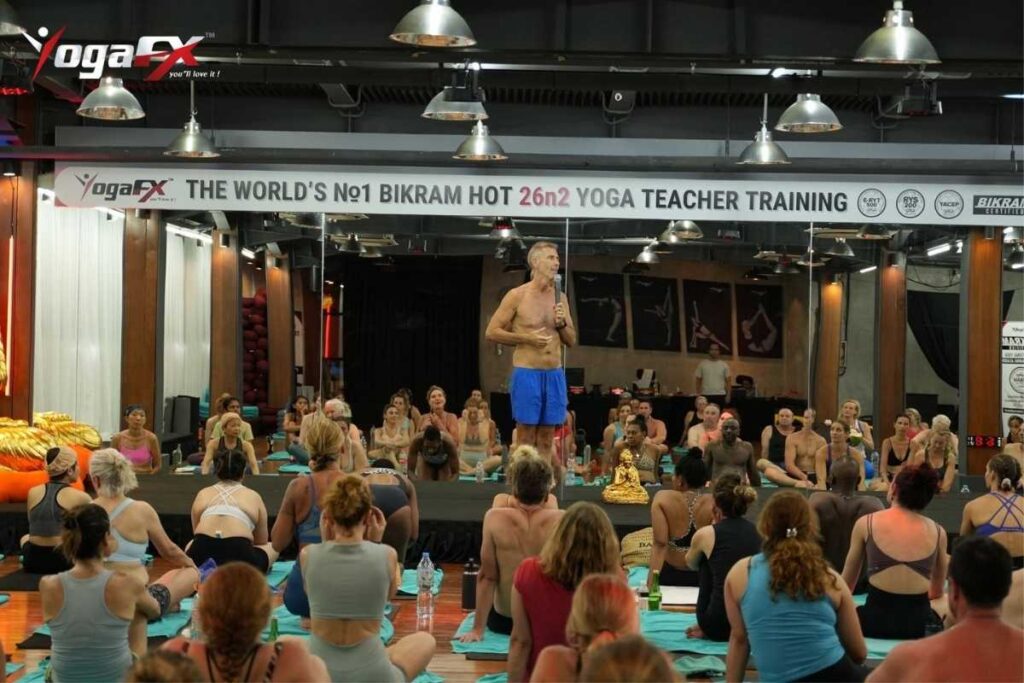
The insight that a format-specific intensive produces regardless of its hour count is qualitatively different from what general advanced training delivers. One practitioner who completed the YogaFX Bali intensive described the week as teaching her something that no other training had articulated: the distinction between being a practitioner who practices deeply and being a teacher who serves others' practice. That distinction is not in any 300-hour curriculum. It comes from intensive practice teaching under expert supervision in a specific format, which is precisely what a style-specific programme delivers and a generalist advanced training does not.
The Opportunity Cost Is Too High
A 300-hour advanced training costs USD 2,000 to 6,000 plus the time and potentially lost teaching income during the training period. For an instructor at the early stage of building a teaching practice, that investment in active teaching taking more classes, developing private clients, building workshop offerings often produces more career return in the 12 months after RYT 200 than the additional credential does.
The Bikram and 26 and 2 Pathway: Specialisation as Alternative Authority
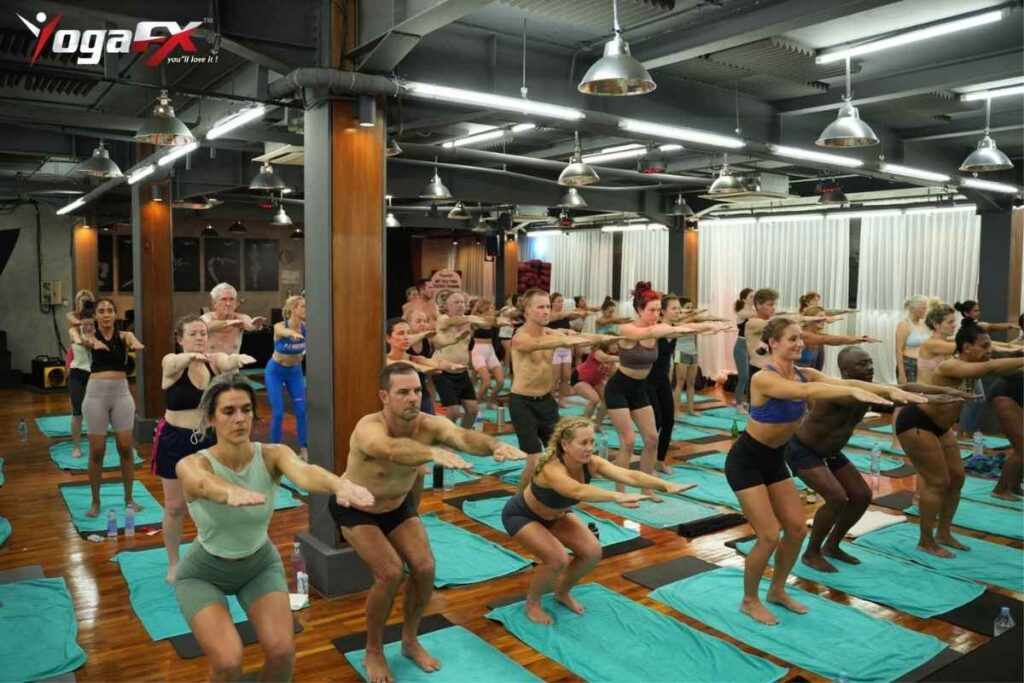
This section specifically addresses the question most relevant to Bikram and 26 and 2 yoga teachers: does the RYT 500 pathway produce equivalent or superior authority to building a specialisation credential stack?
The YogaFX programme awards two credentials simultaneously: RYT 200 (Yoga Alliance) and Bikram Hot 26 and 2 certification (style-specific). In the specific market of hot yoga instruction, this credential stack positions a graduate to:
- Teach the authentic 26-posture Bikram sequence in any studio globally (RYT 200 + Bikram cert)
- Access fitness centre, health club, and corporate wellness positions that require an ACE qualification alongside a yoga credential, positions that RYT 200 alone does not qualify for (ACE)
- Command the hot yoga instructor pay premium (15 to 25 percent above general yoga instructor rates at most studios) that reflects the specific credential requirement of the format
A Bikram instructor who builds from RYT 200 plus Bikram certification toward E-RYT 500 through active teaching hours is following the same pathway as any 500-hour graduate, the E-RYT 500 requires accumulated teaching hours regardless of whether you hold an RYT 500 or are still working toward it. The practical question for a Bikram teacher is not "RYT 500 or specialisation" but "what combination of credentials and teaching hours most efficiently builds toward the E-RYT 500 and the leadership positions it unlocks?"
The pathway for Bikram instructors who want to eventually lead teacher trainings:
- Year 0: Complete RYT 200 + Bikram certification through YogaFX. Start teaching immediately.
- Years 1 to 3: Accumulate teaching hours. 500 hours after certification qualifies for E-RYT 200. Build studio relationships, develop private clients, build a class following.
- Years 2 to 4: Pursue a Yoga Alliance RYT 500 by completing a 300-hour advanced programme when the specific content serves your teaching yoga therapy, anatomy depth, or pedagogy advanced training.
- Years 4 to 7: Reach 2,000 teaching hours and 4 years since initial certification. Apply for E-RYT 500 designation. This is when teacher training leadership becomes available.
The practitioner diversity within a single YogaFX cohort is itself instructive. Graduates have included complete beginners who arrived never having taught and left teaching full classes on stage, career changers completing the hybrid format around full-time employment, and experienced practitioners of 10 or more years who described the intensive week as one of the genuine highlights of a decade-long practice. The format-specific credential stack produces outcomes across this entire range precisely because the training is built around the specific methodology being taught rather than around generalist pedagogy.
For the full credential pathway from RYT 200 to teaching career, our how to become a Bikram yoga teacher guide covers each stage. For the career income reality at different experience levels, the hot yoga instructor career guide provides an honest picture of what teaching income looks like in year one versus year five.
How Long Does a 500-Hour Training Take?
There is no single answer because 300-hour advanced programmes vary in format as much as 200-hour programmes:
- Online self-paced (YogaRenew, My Vinyasa Practice): complete in 6 to 18 months depending on study pace, with no fixed schedule requirement
- Intensive residential (2 to 4 weeks): fast completion, high immersion, typically more expensive and requires extended time away
- Modular in-person (6 to 12 months, one weekend per month): the most common format for working teachers, slowest calendar time but no extended schedule disruption
The 300-hour training hours must be completed at a Yoga Alliance Registered Yoga School (RYS 300 or RYS 500) for the combined hours to count toward your RYT 500 registration. Verify the school's registration at yogaalliance.org before enrolling.
Can You Write Off Yoga Teacher Training on Your Taxes?
This PAA appears consistently in searches for 500-hour training because the cost is significant. The general principle: in the United States, professional development expenses that maintain or improve skills required in your current profession may be deductible as business expenses. A working yoga teacher pursuing an advanced training in yoga may qualify. However, education expenses that qualify you for a new profession, such as initial teacher training taken before you were working as a teacher typically do not qualify.
Tax rules change and vary significantly by jurisdiction and individual circumstances. Consult a tax professional before making tax planning decisions based on any general guidance. A qualified accountant familiar with self-employment and professional development deductions in your jurisdiction can give you the specific answer for your situation. This article is not tax advice.
Cost of 500-Hour Yoga Teacher Training in 2026
The 300-hour advanced component (which you add to your existing RYT 200 to reach 500 hours) ranges from approximately EUR 452 to EUR 5,779 on booking platforms (BookYogaRetreats.com current listings), with most quality programmes falling between USD 2,000 and USD 5,000 for the additional training. The variables:
- Online programmes are at the lower end USD 1,000 to 2,500 because there is no accommodation or in-person facility cost
- Residential intensive programmes are at the higher end, USD 3,000 to 7,000 including accommodation and meals
- Modular in-person programmes fall in the middle, USD 2,000 to 4,000 with no accommodation cost but requiring 6 to 12 months of weekend availability
Add the Yoga Alliance RYT 500 registration fee (currently included with your annual USD 65 membership once you submit qualifying hours) and any materials costs. The total investment for the 500-hour pathway from RYT 200 is typically USD 2,000 to 7,000 plus opportunity cost of time during the training period.
FAQ
Is a 500-hour yoga teacher training worth it?
It depends on what you want to do with it. The 500-hour pathway is worth it if you plan to lead teacher training programmes (the E-RYT 500 is the only Yoga Alliance designation that qualifies you to do this), if your specific market explicitly values the credential, or if the specific 300-hour programme covers content genuinely needed in your teaching. It is less likely to be the best next investment if you have fewer than 200 to 300 teaching hours post-certification, if you teach a specific style where specialisation is more differentiating than a generalist advanced programme, or if the opportunity cost of the training time would be better spent building your teaching practice.
What is the difference between RYT 500 and E-RYT 500?
RYT 500 is the credential you receive upon completing a 500-hour training programme registered with Yoga Alliance (200 hours plus an additional 300-hour advanced training). E-RYT 500 is the Experienced Registered Yoga Teacher designation at the 500-hour level, which additionally requires 2,000 or more logged teaching hours and at least four years since your initial certification. The E-RYT 500 is what enables you to lead Yoga Alliance registered teacher training programmes, the RYT 500 alone does not unlock this.
How long does a 500-hour yoga teacher training take to complete?
The 300-hour advanced component (added to your existing RYT 200) takes 6 to 18 months for online self-paced programmes, 2 to 4 weeks for residential intensive formats, or 6 to 12 months for modular in-person formats. The E-RYT 500 designation, which requires 2,000 teaching hours and 4 years since initial certification, typically takes 4 to 7 years of active full-time teaching from your initial RYT 200 certification.
What is the highest level of yoga teacher?
Within the Yoga Alliance framework, E-RYT 500 is the highest designation Experienced Registered Yoga Teacher at the 500-hour level, requiring both advanced training and 2,000 or more teaching hours. Beyond this, the Yoga Alliance YACEP (Yoga Alliance Continuing Education Provider) designation applies to those who develop and deliver continuing education programmes for yoga teachers. Outside the Yoga Alliance framework, some traditions use titles like senior teacher or master teacher based on lineage-specific criteria rather than standardised hour requirements.
How to get 500-hour yoga certification?
Complete a 200-hour training at a Yoga Alliance Registered Yoga School (RYS 200) to earn your RYT 200. Then complete an additional 300-hour advanced training at an RYS 300 or RYS 500. Submit your combined hours to Yoga Alliance to register as RYT 500. Verify that the school for your 300-hour training is specifically registered as an RYS 300 or RYS 500 at yogaalliance.org before enrolling not all 300-hour programmes are Yoga Alliance registered, and unregistered hours do not count toward your RYT 500.
Can I start with a Bikram RYT 200 and then pursue a 500-hour?
Yes. An RYT 200 from any Yoga Alliance registered school qualifies as the 200-hour component of the 500-hour pathway, regardless of the style. A YogaFX graduate holding RYT 200 and Bikram certification can pursue any Yoga Alliance registered 300-hour advanced programme to reach RYT 500. The Bikram specialisation credentials are additional to the Yoga Alliance pathway, not a substitute for it, they add market differentiation and specific teaching authority without replacing the standard credential progression.