
You can follow guided videos and general on-demand yoga apps to learn the postures of the 26&2 sequence at home, and several offer genuinely useful instruction. What none of them can replicate is the heat: 40 degrees Celsius and 40 percent humidity sustained for 90 minutes, which is the variable the original method's physiological research is actually built around.

What If You Skip the Heat Entirely, Instead of Trying to Recreate It
Some practitioners don't bother with space heaters or humidifiers and just run the 26&2 sequence at normal room temperature. The postures, breath, and fixed order still work as a structural practice. What changes is the mechanism, not an equivalent outcome to the heated version:
- You keep the same structural discipline, real strength and stability built more gradually since muscles aren't pre-warmed, and lower acute risk for anyone who genuinely can't tolerate heat.
- You trade away the heat-enhanced range of motion documented in the research above and the cardiovascular load that comes specifically from sustaining a high heart rate in a heated room.
Room-temperature practice of the sequence isn't hot yoga without the downside, it's a genuinely different, gentler workout that happens to use the same postures. For most healthy practitioners, the heat isn't an obstacle to work around, it's the specific variable the research measures. Anyone modifying for a real medical reason should do it on their doctor's guidance, not because the heat is optional.
What "Bikram at Home" Actually Means Once You Remove the Studio
Search for a way to practice this method without a studio and you'll find two very different categories of answer. The first is guided instruction: video-based classes, either free on platforms like YouTube or bundled into general yoga and fitness app subscriptions, that walk you through a Bikram-inspired sequence of postures in your living room.
The second is a much smaller, more determined group of practitioners who try to recreate the heat itself, using space heaters, humidifiers, and a sealed room, an approach active enough that it shows up regularly in hot yoga forums and subreddits from people troubleshooting how hot their apartment can safely get.
Both categories can teach you the postures. Neither, on its own, replicates the class you'd get in an actual studio, and it's worth being upfront about why before you commit to a subscription expecting the same experience. For a broader walkthrough of building a full home practice setup beyond apps and subscriptions, see our complete guide to Bikram yoga at home.
The One Variable No App or Subscription Can Replicate
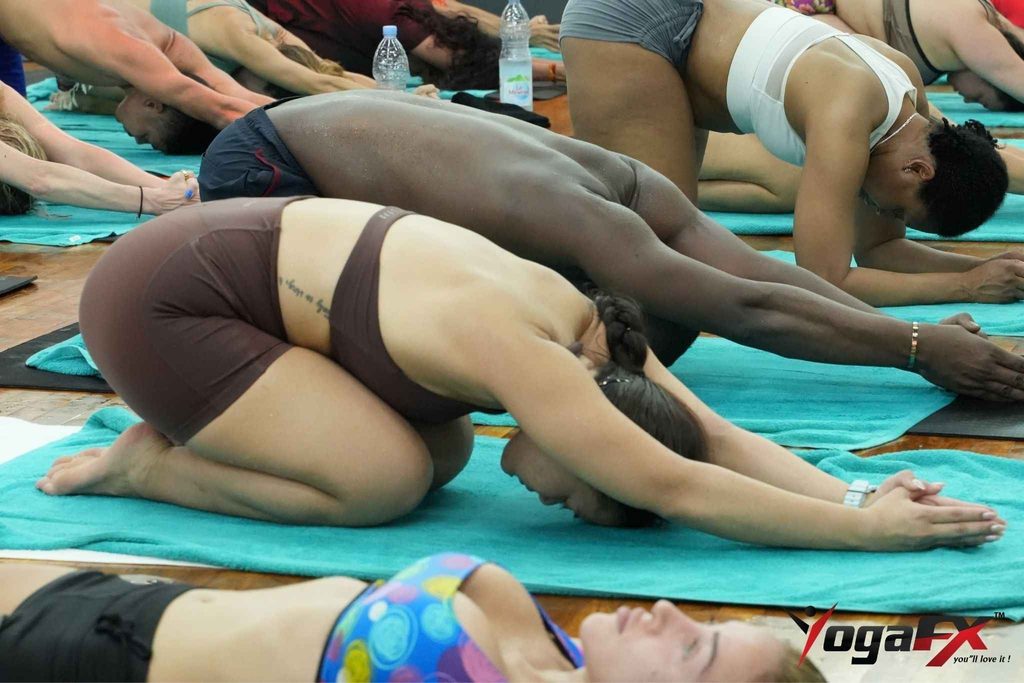
A guided app or video can teach you the sequence, the breathing, and the pacing. What it cannot control is the temperature and humidity of the room you're standing in, and that's not a minor detail.
A 90-minute class held at roughly 40 degrees Celsius and 40 percent humidity produces measurable physiological effects that have been studied specifically at that heat load: heart rates sustained around 80 percent of maximum and calorie burn of roughly 460 kilocalories for men and 333 for women per session (Porcari et al., 2014).
Do the identical sequence of postures in a cool living room and you're doing a flexibility and strength routine, a reasonable one, but not the same cardiovascular workload the research describes.
This matters for the mental health research too. Studies linking the practice to meaningful reductions in depression and anxiety symptoms were conducted on the full heated format, not a room-temperature version of the sequence (Nyer et al., 2023; Hui et al., 2022).
A broader 2025 systematic review covering 43 studies and more than 900 participants found consistent improvements in flexibility, bone density, and general well-being specifically tied to Bikram-style practice under its studied conditions (Willmott et al., 2025), findings that, again, describe the heated version of the practice rather than a cooler at-home approximation.
None of this means a cooler, app-guided version of the postures is worthless. It means it's a genuinely different activity that happens to share a posture sequence with the original method, and knowing that going in sets more realistic expectations than a subscription's marketing usually does.
What Online Subscriptions and Guided Apps Actually Offer
Stripped of brand names, the online options generally fall into three categories. General yoga and fitness apps with large video libraries typically include a handful of "hot yoga inspired" or "Bikram-style" classes among hundreds of other styles, useful for learning the postures but rarely built around the specific 26-posture sequence in its original order.
Dedicated on-demand video series, sold as a one-time purchase or a standalone subscription, sometimes follow the traditional sequence more closely and can be a reasonable way to memorize posture order and pacing before ever stepping into a studio. Live-streamed classes, run by individual instructors or smaller studios, offer real-time cueing similar to an in-person dialogue, though the room you're sweating in is still whatever temperature your own space happens to be. Our guide to free classes and livestreams breaks down specific platforms and what each actually includes.
None of these are a substitute for the heat, and none of them can verify your form the way an instructor physically present in the room can, which matters more in this practice than in most yoga styles given how many postures ask the body to move to its edge of range of motion. What they're genuinely good for is exactly what they sound like: learning the sequence, building familiarity with the dialogue's pacing, and deciding whether the practice appeals to you before committing to a studio membership or a trip built around trying it in person.
On the "affordable" question specifically, it's worth comparing what you're actually paying for. A monthly app or video subscription is genuinely cheaper than a studio membership, but you're paying for general instruction, not the heat, the room, or an instructor correcting your alignment in real time. A side-by-side view of what each option actually delivers makes the trade-off clearer than either option's own marketing does.
| Option | Heat accuracy | Instructor feedback | Typical cost | Best for |
|---|---|---|---|---|
| General yoga app subscription | None, room temperature | Pre-recorded, no live correction | Low, often shared with other content | Learning postures and pacing before committing further |
| Dedicated hot yoga video series | None, room temperature | Pre-recorded, follows sequence order | Low to moderate, one-time or subscription | Memorizing the full 26+2 sequence |
| DIY heated home room | Approximate at best, hard to sustain evenly | None unless live-streamed | Moderate to high once equipment is included | Determined practitioners willing to accept real safety trade-offs |
| In-person studio class | Accurate, purpose-built environment | Live, real-time alignment correction | Per-class or membership, varies by studio | The full physiological experience the research describes |
Where each option makes sense depends on what stage you're at. Someone deciding whether the sequence itself even appeals to them is better served starting with free instruction than paying for either a subscription or a studio membership upfront. Someone who already knows they want the full physiological effect the research describes has less reason to pay monthly for an approximation and more reason to go find an actual heated room, even if that means a single drop-in class rather than a subscription.
For most people asking how to start at home with guided apps, a sensible order looks like this: learn the sequence and posture names first using free instruction rather than paying for anything upfront, practice in front of a mirror or record yourself occasionally to check basic alignment since no app can do that for you.
Treat hydration exactly as seriously as you would in a heated room even though the physiological demand is lower, and think of the at-home phase as preparation for the real format rather than a permanent substitute for it.
Skipping straight to a paid subscription before confirming you actually want to keep going with the practice is the most common way people waste money on this particular decision.
A Realistic Setup If You Want to Try It at Home Anyway
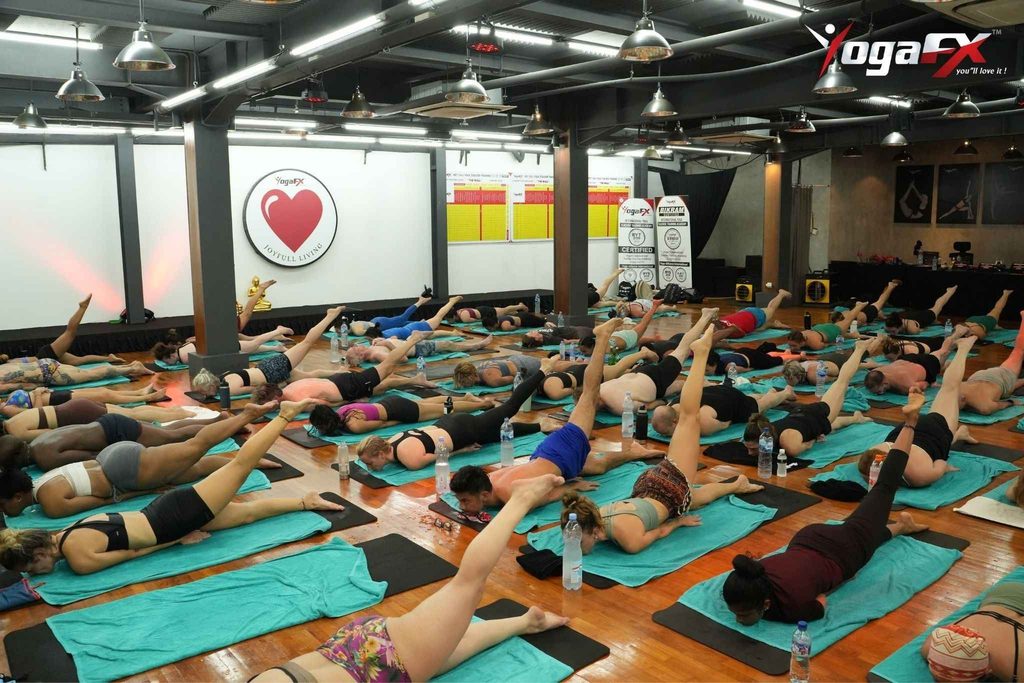
For anyone determined to approximate the heat rather than skip it, a few things are worth knowing before spending money on space heaters. Getting a small room to a genuine 40 degrees safely requires more than a single space heater pointed at a yoga mat; it typically means a well-sealed room, a reliable thermometer and hygrometer to actually verify temperature and humidity rather than guessing, and enough ventilation to avoid overheating the space to a level that becomes a safety issue rather than a practice enhancement.
Electric space heaters also don't distribute heat as evenly as a purpose-built studio, which is part of why hot yoga forums are full of people troubleshooting cold corners and overheated ones in the same small room.
Anyone attempting this should treat it with real caution: heat exhaustion is a genuine risk in a poorly ventilated or improperly monitored space, more so alone at home than in a studio with an instructor watching the room.
Starting with lower temperatures and shorter sessions, keeping a phone or way to call for help nearby, and never locking yourself into a sealed room alone are basic precautions worth taking seriously rather than treating as optional. Anyone with a heart condition, respiratory issue, or other health concern should consult a healthcare professional before attempting heat exposure at home without supervision.
The cost side is also worth being realistic about. Space heaters, a hygrometer, humidifier equipment, and the electricity to run all of it for repeated sessions add up quickly, and a serious home setup can end up costing more over a few months than an ongoing studio membership would, without ever fully matching a purpose-built room's even heat distribution or an instructor's real-time supervision.
For most people weighing "affordable online subscription" against "build a home hot room," the honest answer is that the subscription is cheaper and safer, and the home hot room is neither of those things once you account for equipment and the risk of getting it wrong.
Free Tools Built for Exactly This Stage
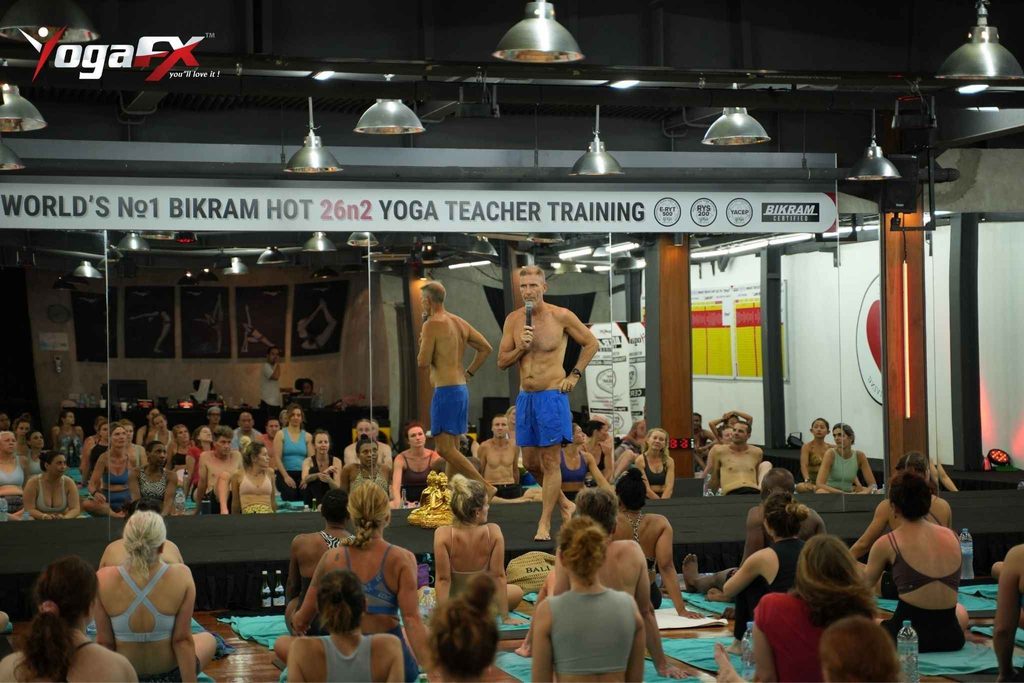
This is the stage where YogaFX's own free tools are actually more useful than a paid subscription, because they're built around learning the real sequence rather than approximating a general hot yoga experience. The Interactive 26 Poses Guide at hotyogateachertraining.com walks through the full sequence in order, in English and Sanskrit, with hold times and benefits for each posture, which is a more accurate reference for learning the actual method than a general app's "hot yoga inspired" playlist.
The Journey Tracker helps practitioners log progress against the real sequence rather than a generic fitness app's workout categories, and the Calorie Calculator, built on the same Porcari 2014 data referenced above, gives a realistic picture of what a full-heat session actually costs energetically, rather than what a room-temperature version at home might.
None of this is positioned as a replacement for the real thing, because it isn't one, and Mr. Ian Terry, E-RYT 500, is direct with prospective teacher training candidates about this: learning the sequence at home is a legitimate first step, but the heat, the dialogue delivered by a trained instructor, and the physiological load the research describes only happen in an actual heated room.
Candidates weighing that next step can see the full path in our guide on how to become a Bikram yoga teacher.
For practitioners using these free tools to learn the sequence before deciding whether to pursue certification, that's exactly the intended use, and it's a far more affordable way to test genuine interest than committing to a paid subscription or a home heating setup before you know whether the practice is for you.
The tools are free to use at hotyogateachertraining.com, and anyone who works through the sequence at home and wants to experience the full 90-minute format in person can try a class at YogaFX's Seminyak or Canggu studios through the Free Guest Pass, or explore the teacher training pathway directly.
FAQ
Can you actually do Bikram yoga at home?
You can follow the posture sequence at home using videos or apps, but you cannot replicate the 40-degree, 40-percent humidity heat without significant equipment and real safety risk. Most people use at-home practice to learn the sequence, then experience the full heated format at an actual studio.
Are there online subscriptions for hot yoga specifically?
Yes, ranging from general yoga apps with a hot yoga category to dedicated on-demand video series following the traditional sequence. None replicate the heat itself, since that depends on your physical room, not the video content.
Is it safe to recreate Bikram yoga heat at home?
It carries real risk if done without proper ventilation, monitoring, and safety precautions, since heat exhaustion is more dangerous alone at home than in a studio with an instructor present. Lower temperatures, shorter sessions, and never practicing in a sealed room alone are basic precautions.
What is the cheapest way to start Bikram yoga?
Free resources, including YogaFX's Interactive 26 Poses Guide, are the cheapest way to learn the sequence itself. A paid subscription adds guided pacing and instruction, while a DIY heated room is usually the most expensive and riskiest option once equipment costs are included.
Do guided apps teach the real 26-posture sequence?
Some do, though many general yoga apps only include a handful of hot-yoga-inspired classes rather than the traditional 26-posture, 2-breathing-exercise sequence in its original order. Dedicated hot yoga video series are more likely to follow the traditional sequence closely.