
Walking into your first hot yoga class with the wrong gear turns an already intense 90 minutes into something genuinely harder than it needs to be. The good news: the list of what actually matters is short, cheap, and mostly things you already own. Here is the complete checklist, what each item is actually for, and what you can skip regardless of what a gear-review blog tells you to buy.
The Non-Negotiables
- A yoga mat. In a 40-degree room, your mat gets genuinely wet from sweat, not just damp. A standard mat becomes a slip hazard within 20 minutes unless it has a textured, sweat-grip surface designed for hot practice specifically, not a general all-purpose mat. Our full mat guide covers what to look for from an instructor's perspective.
- A large towel to cover the mat. This is the single most important item beginners underestimate. A hot yoga-specific towel with a non-slip backing sits on top of your mat and absorbs sweat directly, which matters more for safety than comfort: without one, standing balance postures become genuinely dangerous on a slick, wet mat surface.
- A small hand towel. For wiping sweat from your face and hands mid-class, separate from the mat towel. Sweat dripping into your eyes during a standing balance posture is a distraction you can eliminate for the cost of a second towel.
- Water, and more than you think. A 90-minute Bikram class at 40 degrees Celsius produces substantial fluid loss. Bring at least 750ml to 1 litre, and drink consistently through the standing series rather than saving it all for the floor series.
- Minimal, fitted clothing. Loose clothing clings uncomfortably when soaked and can interfere with your ability to see alignment cues in the mirror. Fitted shorts and a fitted top (or sports bra) for women, and fitted shorts for men, is the standard the format was built around. See our full guide to what to wear to Bikram yoga for fabric-specific recommendations.
How Much Water, Specifically
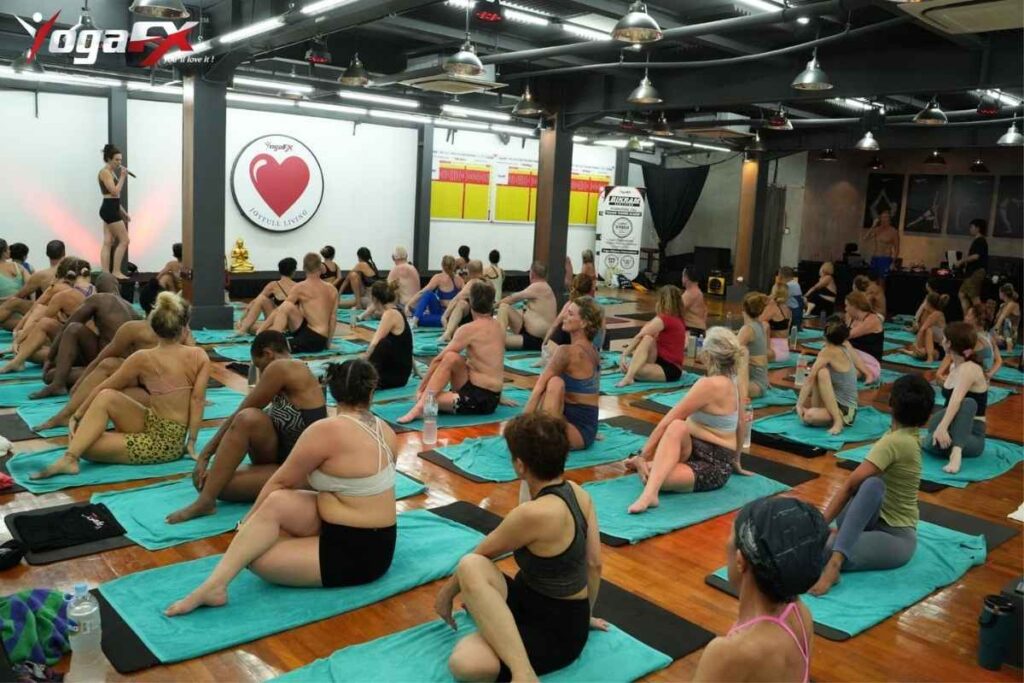
This is the question beginners get wrong most often in either direction. Too little water and you risk genuine dehydration in a 40-degree room; too much consumed rapidly during class can cause stomach discomfort during deep forward folds and twists. The practical guidance: drink normally in the hours before class rather than chugging water right beforehand, bring 750ml to 1 litre into the room, and take small sips during the brief pauses between postures rather than large gulps. Avoid drinking heavily in the final 30 minutes before class starts, since a full stomach makes several floor postures uncomfortable.
Electrolytes matter more for regular hot yoga practitioners than for a single first class. If you are trying the practice for the first time, plain water is sufficient. If you find yourself attending multiple sessions per week, replacing electrolytes lost through sweat, either through a diet with adequate sodium and potassium or a light electrolyte supplement, becomes more relevant, particularly in a genuinely humid tropical climate like Bali where fluid loss per session tends to run higher than in a dry-heat studio elsewhere.
What to Eat Beforehand
Food timing matters as much as clothing for a comfortable first class. A full meal within 2 hours of class typically causes discomfort during compression postures like Awkward Pose and the forward folds in the floor series. A light snack (banana, a handful of nuts, or a small piece of toast) 60 to 90 minutes before class provides enough energy without the digestive load. Arriving on a completely empty stomach after 6+ hours without food is its own problem, often producing lightheadedness partway through the standing series. For the full breakdown of exactly what and when to eat, see our complete guide to eating before hot yoga.
Optional but Genuinely Useful
- A hair tie if you have long hair. Hair sticking to a sweaty neck and face during backbends is avoidable with thirty seconds of preparation.
- A change of clothes for after class. You will be thoroughly soaked. Bringing a dry set of clothes and, if your studio has one, using the shower facility makes the transition back into your day significantly more comfortable.
- A reusable bag for wet items. Your soaked towels and clothing need somewhere to go on the way home that is not directly against your dry belongings.
Fabric Choice, Compared
Not all workout fabrics perform the same way once genuinely soaked for 90 minutes. This matters more for hot yoga than for almost any other exercise format.
| Fabric | Performance at 40°C |
|---|---|
| Cotton | Absorbs sweat but stays wet and heavy, clings uncomfortably, slower to dry. Not recommended for the room itself. |
| Polyester / nylon blends | Moisture-wicking, dries fast, standard choice for hot yoga-specific clothing lines. |
| Compression fabric | Stays in place during inversions and backbends, good for practitioners who find loose fabric distracting during alignment cues. |
| Mesh panels | Improves airflow in high-sweat zones (underarms, lower back), a genuine functional feature rather than a style detail. |
None of this requires buying a specific brand. Any fitted, polyester-blend workout wear you already own for running or cycling generally performs well in a hot yoga room, so there is rarely a need to buy new gear specifically for a first class.
What You Do Not Need
Beginners commonly over-prepare in ways that add cost without adding benefit. Cooling towels, electrolyte tablets beyond what a normal diet provides, specialty hot yoga gloves, and heavy compression wear are all optional purchases that gear-review content tends to push regardless of genuine necessity for a first class. Start with the non-negotiables above; add anything else only after you know your own response to the heat, since everyone's fluid and cooling needs differ.
Why Gear Matters More Here Than in a Regular Yoga Class
Most general yoga gear advice does not translate directly to a 40-degree room, and understanding why helps explain each recommendation above rather than just following it blindly. In a room-temperature class, a small amount of sweat is a minor comfort issue. In a Bikram or 26&2 class, sweat volume is high enough that it changes the physics of what is safe underfoot. A mat that grips perfectly in a cool studio can become genuinely slick within the first 20 minutes of a heated class, which is why hot yoga-specific mats and towels exist as a distinct product category rather than marketing dressed up as a distinction.
The same logic applies to clothing and hydration. A cotton t-shirt that feels fine in a 22-degree studio becomes heavy, clingy, and genuinely uncomfortable once fully soaked in a heated room, which is why the format's clothing convention (fitted, moisture-wicking, minimal) developed specifically around the heat rather than aesthetic preference. Water needs scale with the room temperature too. A 90-minute room-temperature class and a 90-minute 40-degree class place very different demands on your fluid balance, even though the movements themselves are similar.
Common First-Timer Mistakes to Avoid
- Bringing a regular bath towel instead of a hot yoga towel. A standard towel bunches up and slides during standing postures instead of lying flat and gripping the mat underneath, which creates more instability than practicing on the bare mat alone.
- Wearing a new outfit for the first time. First classes are hard enough without discovering mid-class that a waistband rolls down or a seam chafes. Wear something you have already tested during a lower-intensity workout.
- Skipping the pre-class snack entirely out of nervousness. Many first-timers show up not having eaten anything for hours, assuming an empty stomach is safer. It usually produces lightheadedness by the middle of the standing series instead.
- Overpacking. Bringing a full gym bag of extras for a single class adds stress before you have even stepped on the mat. Stick to the non-negotiables list above for your first visit, then adjust based on your own experience.
- Forgetting a plan for getting home. You will be significantly more depleted and sweaty than after a typical workout. Plan for a shower or a change of clothes rather than assuming you will feel fine to go straight to your next commitment.
Most of these mistakes share a common thread: they come from applying general gym or general yoga assumptions to a format that behaves differently once the room hits 40 degrees. None of them are serious problems on their own, but avoiding all five at once makes the difference between a first class you want to repeat and one that leaves you wondering why anyone does this voluntarily.
What YogaFX Provides at the Studio
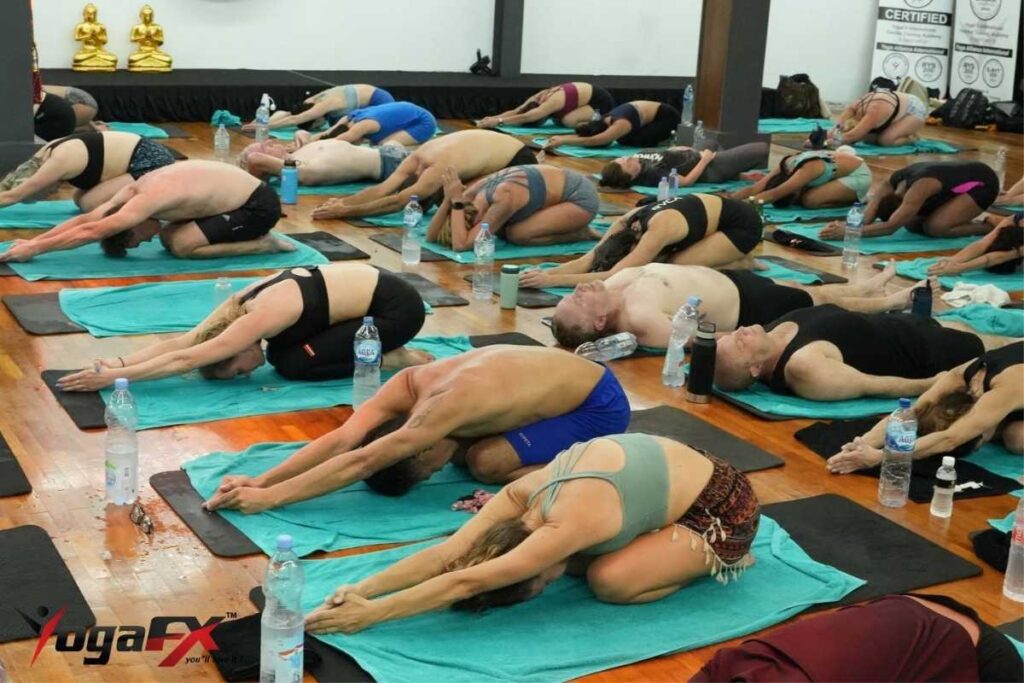
Both the Seminyak and Canggu studios provide mat and towel rentals specifically for first-time visitors who have not yet invested in their own gear, so a first class at YogaFX genuinely does not require owning anything beyond water and appropriate clothing. The natural tropical Bali heat used at both locations, rather than electric heaters, produces the same 40-degree Celsius, 40-percent-humidity environment the sequence was designed for, and front-desk staff will walk first-timers through exactly what to bring and what the studio supplies before their first class.
Mr. Ian Terry, E-RYT 500 and founder of YogaFX International Yoga Teacher Training Academy, built the studio's first-timer process specifically around removing gear anxiety as a barrier to trying the practice, since more than 12,000 teaching hours have shown that hesitation about equipment stops more beginners than the practice itself ever does.
Ready for your first class? Book your Free First Timer Pass and we will have a mat and towel waiting for you.
FAQ
What should I wear to my first hot yoga class?
Fitted, minimal clothing that will not cling uncomfortably when soaked. Fitted shorts and a sports bra or fitted top for women, fitted shorts for men. Loose clothing absorbs sweat and can obscure alignment cues in the studio mirrors.
How much water should I bring to hot yoga?
Bring 750ml to 1 litre and sip consistently through the class rather than drinking heavily at once. Hydrate normally in the hours beforehand rather than loading up right before class, since a full stomach makes several floor postures uncomfortable.
Do I need my own mat for hot yoga?
Not for your first class. Most studios, including both YogaFX locations, provide mat and towel rentals for first-timers. If you continue practicing regularly, a dedicated sweat-grip mat and hot yoga towel are worthwhile investments.
Should I eat before hot yoga class?
A light snack 60 to 90 minutes before class is ideal. A full meal within 2 hours typically causes discomfort during compression postures, while practicing on a completely empty stomach after many hours can cause lightheadedness.
What towel is best for hot yoga?
A hot yoga-specific towel with a non-slip backing designed to lie flat over your mat is essential, since it absorbs sweat and prevents the slip hazard a regular towel or bare mat creates once soaked. A separate small hand towel for your face and hands is also useful.