
Every 200-hour yoga teacher training on earth issues the same headline credential: an RYT 200 recognised by Yoga Alliance. What almost never gets compared honestly is the format underneath that credential, because a six-day intensive in a heated Bali studio, a nine-month weekend programme at a home studio, and a self-paced online course all satisfy the same 200-hour minimum on paper while producing genuinely different teachers.
If you are choosing between them, the format matters more than the certificate does. This guide breaks down what the 200 hours actually cover, compares the three formats candidates realistically choose between, and addresses the skepticism worth taking seriously before you pay a deposit.
Roughly 22,000 people search for some version of "yoga teacher training" every month, and a meaningful share of them are stuck at exactly this decision point rather than at whether to become a teacher at all. That is the gap this guide is written to close: not another list of programme names, but the actual decision framework for choosing between formats before you commit money and time to one.
What the 200 Hours Are Actually Made Of
Yoga Alliance, the industry's largest registration body, sets minimum hour allocations across five curriculum categories for any school seeking Registered Yoga School (RYS 200) status. If you want the full breakdown of what the RYT 200 credential itself represents and how it differs from higher-level designations, that is covered separately. A programme that skips this structure and just runs 200 hours of asana practice is not delivering a Yoga Alliance-aligned training, whatever it calls itself.
| Curriculum Category | Typical Hours | What It Covers |
|---|---|---|
| Techniques, Training & Practice | ~100 | Asana alignment, pranayama, hands-on adjustment practice |
| Teaching Methodology | ~25 | Sequencing, verbal cueing, classroom management, voice projection |
| Anatomy & Physiology | ~20 | Musculoskeletal system, contraindications, injury awareness |
| Yoga Philosophy, Lifestyle & Ethics | ~30 | Yoga Sutras, teacher-student ethics, business fundamentals |
| Practicum | ~10 | Supervised practice teaching with feedback |
| Electives | ~15 | School-specific specialisation (style lineage, dialogue, meditation) |
That last row, electives, is where schools actually differentiate themselves, and it is worth reading closely before you enrol anywhere. A programme built around the Original Hot FX lineage spends its elective hours on scripted dialogue delivery and heat-adapted teaching, which is a different skill set from a Vinyasa school spending the same hours on music sequencing and flow transitions. Ask any programme directly what fills that elective block. If they cannot answer specifically, that is diagnostic information in itself.
Intensive, Long-Format, or Online: The Three Ways to Get There
If your search so far has been broader than format specifically, our complete hot yoga teacher training guide covers certification and cost from the ground up. But search results for 200-hour training make it look like a single product with different price tags. It is not. It is three genuinely different learning experiences that happen to converge on the same certificate.
| Format | Typical Duration | Typical Cost (USD) | Best Suited To |
|---|---|---|---|
| Residential Intensive | 6 to 14 days, full immersion | 1,700 to 4,500 | Career changers with a fixed window, practitioners who learn faster through repetition and total immersion |
| Long-Format (Part-Time) | 4 to 12 months, weekends or evenings | 2,500 to 6,000 | Practitioners keeping a full-time job, candidates who want slower integration and time to practice-teach between modules |
| Online / Self-Paced | 2 to 6 months, self-directed | 500 to 2,500 | Practitioners in remote locations, those prioritising cost over live feedback, existing teachers adding a credential |
The trade-off nobody markets honestly is practicum quality. An online programme can teach philosophy and anatomy through recorded lectures without much loss, but it cannot replicate a real instructor watching your cueing voice crack under a room at 40 degrees Celsius and correcting it in real time. That correction, delivered live and repeated across six or more consecutive days, is what an intensive format is actually selling. It is not the postures. It is the compressed repetition.
Long-format part-time programmes sit in the middle, and for candidates working full-time, the middle is often the honest answer rather than the compromise it sounds like. Spreading practicum across months means you can practice-teach a real class, get feedback, adjust, and teach again before the training ends, which a six-day intensive cannot offer by definition.
Is 200 Hours Actually Enough?
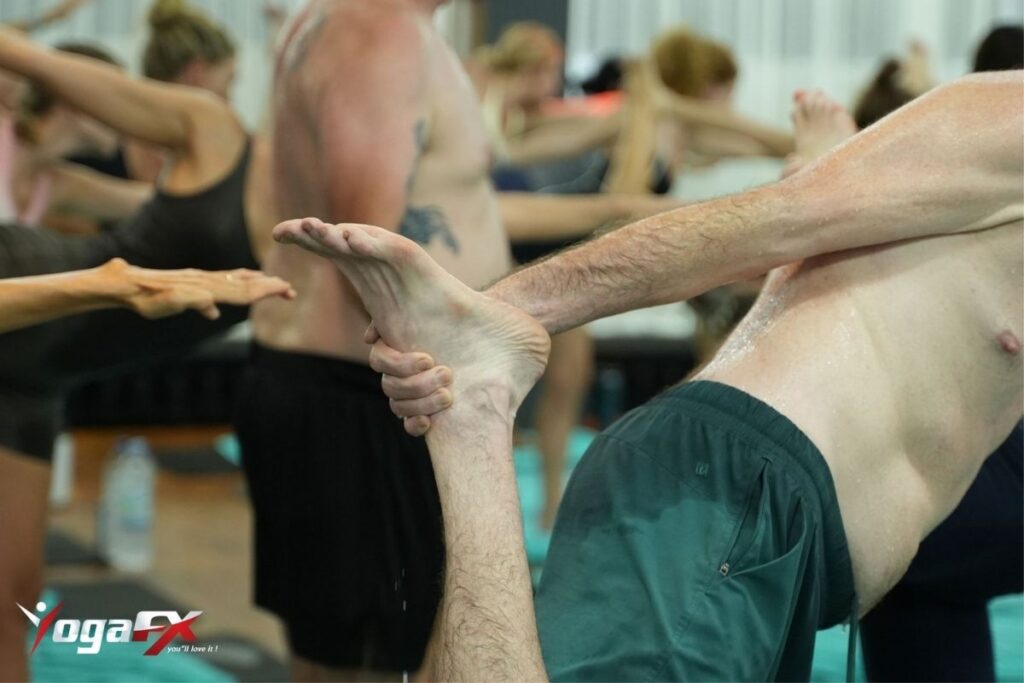
This is the question that shows up constantly in yoga forums, and it deserves a straight answer rather than a marketing dodge: no, 200 hours does not make you a finished teacher, and no legitimate school claims that it does. What it makes you is a credentialed beginner, cleared to teach general public classes safely, with a foundation solid enough to build real competence once you are actually teaching (and, eventually, to earn a real income from it, which our RYT 200 salary data breaks down by experience level).
The research on this is instructive even though it was not designed to answer the certification question directly. Willmott et al. (2025), a systematic review of 43 studies and 942 participants, found that measurable physiological adaptation from structured hot yoga practice builds over weeks and months of consistent repetition, not in a single training block. Tracy and Hart (2013) documented a 20 percent posterior chain strength increase over an 8-week protocol of three sessions per week. The pattern in both cases is the same: competence compounds with repetition, and 200 hours of training time is the floor, not the ceiling.
It gives you the technical vocabulary and the safety awareness to teach responsibly. The teaching skill itself, the part where you read a room and adjust your dialogue mid-class because half the students are clearly struggling with the heat, comes from the hundreds of classes you teach after certification, not from the certification itself.
Mr. Ian Terry, E-RYT 500, puts it plainly to every incoming cohort: the 200-hour training teaches you what to say and why. It does not teach you how to say it under pressure, in a room of forty-five strangers, when the humidity is climbing and someone in the back row looks unwell. That only comes from repetition, which is exactly why the elective and practicum hours matter more than most candidates realise when they are comparing price tags instead of curriculum structure.
How to Evaluate a Programme Before You Enrol
Every programme's marketing page reads the same way: transformative, life-changing, world-class faculty. None of that is verifiable in thirty seconds. These questions are.
- Is the school a Registered Yoga School (RYS)? Verify directly on yogaalliance.org rather than trusting a badge on the programme's own website.
- Who is teaching the practicum hours specifically? A lead instructor's credentials matter less than who actually watches you teach and gives feedback. Ask for that person's name and teaching hours.
- What is the maximum cohort size? Practicum feedback quality drops fast past roughly 20 students per instructor. A programme that will not state its cap is a programme that has not capped it.
- What happens after certification? Some schools offer mentorship, job placement leads, or alumni communities. Others hand you a certificate and disappear. Ask what support exists in month two, not month one.
- What is the deposit and refund policy? A programme confident in its own quality will have a clear, written cancellation policy. Vague answers here tend to predict vague answers everywhere else.
Matching the Format to Your Actual Situation
Most candidates pick a format based on price alone, then discover halfway through that the format was fighting against their actual life circumstances the whole time. It is worth being honest about which of the following four situations you are actually in before you book anything.
- You are changing careers with a fixed window of time off. An intensive format is usually the right call. You want the certificate completed inside a defined block, not stretched across months while you are also job-hunting or winding down a previous role.
- You are deepening an existing practice and already have years on the mat. An intensive still tends to work well here because the technical foundation is already in place; the training accelerates dialogue and teaching skill rather than building asana competence from zero.
- You are working full-time and cannot take consecutive days off. A long-format part-time programme is the honest choice, even though it takes longer, because it lets you keep earning while you train and gives you room to practice-teach real students between modules.
- You live somewhere with no accessible in-person training and cost is the primary constraint. Online is legitimate here, provided the school holds genuine RYS online-eligible status, but go in aware that your practicum feedback will be video-based rather than live, and budget extra time to build teaching confidence once you start taking real classes.
None of these paths is objectively superior to the others. They are answers to different questions. The mistake worth avoiding is choosing a format that matches your budget but ignores your calendar, since a long-format programme abandoned halfway through because work travel got in the way costs more, in both money and momentum, than paying slightly more for the format that actually fits.
The Original Hot 26&2 Intensive at YogaFX in Bali
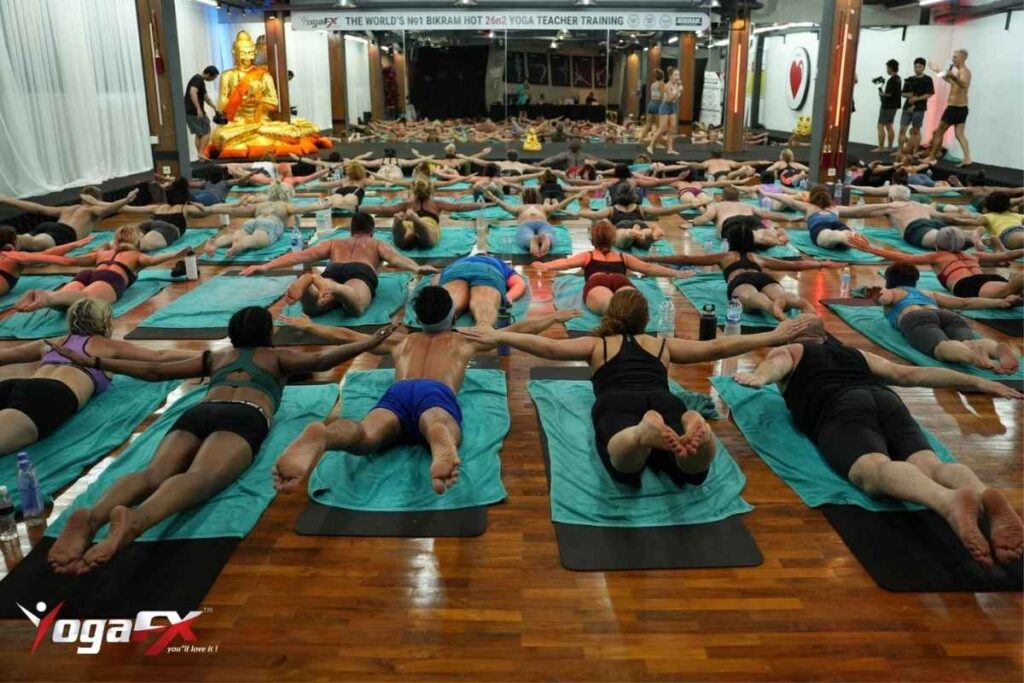
YogaFX International Yoga Teacher Training Academy runs its 200-hour programme as a hybrid: online pre-course modules covering anatomy and philosophy, followed by a 6-day residential intensive in Bali (see our full Bali teacher training guide for how the island's programmes compare more broadly) under the natural tropical heat that the Original Hot 26&2 method was designed around, never an electric heater.
The intensive format is a deliberate choice, not a shortcut. Candidates arrive having already absorbed the theory hours online, which frees the entire Bali week for the part that cannot be replicated remotely: live practicum, dialogue delivery under real heat, and direct correction from Mr. Ian Terry, E-RYT 500, who has logged more than 12,000 teaching hours and trained 1,500-plus graduates from over 80 countries since founding the school in 2017.
Cohorts are capped at 19 students, which keeps the practicum-to-feedback ratio close enough that every candidate gets corrected in person, not just observed. Graduates leave with dual certification: a Yoga Alliance RYT 200 and the Bikram Hot 26&2 credential in a single fee, priced between USD 1,699 and USD 2,799 depending on accommodation package.
One recent graduate described arriving nervous and unsure whether six days was enough, then leaving certified and confident once the dialogue clicked under real heat rather than in a cool classroom. That is the specific bet the intensive format makes, and for candidates with a fixed travel window rather than months to spread a long-format programme across, it is usually the right one.
The natural heat itself is not incidental to that bet. Bali's tropical climate replicates the 40-degree, 40-percent-humidity environment the Original Hot 26&2 method was built around without a single electric heater running, which is the same specification every dialogue-delivery skill in the practicum hours is trained against.
Learning to project a scripted cue clearly while your own body is adapting to genuine heat is a different skill from learning it in an air-conditioned studio, and it is one reason candidates who complete the intensive in Bali describe the week as more physically and mentally demanding, but also more directly transferable to real classroom conditions, than programmes run in climate-controlled rooms.
FAQ
Is a 200-hour yoga teacher training enough to teach professionally?
It is enough to be legally and safely credentialed to teach general public classes. It is not enough to be a fully seasoned instructor. Most teachers report real competence building over their first 100 to 300 classes taught after certification, which is why many pursue a 500-hour training once they have practical teaching experience behind them.
What is the difference between an intensive and a long-format 200-hour programme?
An intensive compresses all 200 hours into 6 to 14 consecutive days of full immersion, ideal for a fixed travel window. A long-format programme spreads the same hours across 4 to 12 months of weekends or evenings, letting candidates practice-teach real classes between modules while keeping a full-time job.
Is an online 200-hour yoga teacher training accepted by Yoga Alliance?
Yes, provided the school holds current Registered Yoga School status specifically for online delivery, a distinct category from in-person registration. Verify this directly on yogaalliance.org rather than trusting a badge on the programme's own website, since that distinction determines whether your certificate is actually recognised industry-wide.
How much does a 200-hour yoga teacher training typically cost?
Online programmes range roughly USD 500 to 2,500. Long-format part-time programmes run USD 2,500 to 6,000. Residential intensives, which bundle accommodation and meals into one fee, typically fall between USD 1,700 and 4,500 depending on destination, duration, and whether meals are included.
Do I need a 500-hour training after completing 200 hours?
Not immediately. Most schools recommend teaching for at least a year first to identify genuine gaps in your skill set before investing in a 500-hour programme. Advancing without real classroom experience in between often means paying for depth you are not yet positioned to use.